Code and Labour
The new issue of Cultural Studies Review follows up from the 2012 Code-conference that was held in Melbourne, at Swinburne University. The event was marvelous, thanks to the organizers. And now, Esther Milne and Anthony McCosker have edited a lovely special issues Coding Labour. With a line-up including Anna Munster, Ned Rossiter, Mark Cote,Rowan Wilken and many more – as well as for instance Meaghan Morris in the same issue – one can expect much.
My own article is about the slightly heretic crossbreeding of German media theory and cognitive capitalism. It briefly discusses the notion of cultural techniques as a way to elaborate cognitive capitalism in the context of practices and techniques of software, code and labour. Hence it ends up in a curious short example from the 1970s, the management and organisational arrangement of metaprogramming, as a way to discuss how we might approach techniques of “creative” work in software culture.
You can find the text here and below a short abstract.
This article addresses cultural techniques of cognitive capitalism. The author argues that to understand the full implications of the notion of cognitive capitalism we need to address the media and cultural techniques which conditions its range and applications. The article offers an expanded understanding of the labour of code and programming through a case study of ‘metaprogramming’, a software related organisation practice that offered a way to think of software creativity and programming in organisations. The ideas from the 1970s that are discussed offer a different way to approach creativity and collaborative and post-Fordist capitalism. The author brings together different theoretical perspectives, including German media theory and Yann Moulier Boutang’s thesis about cognitive capitalism. The wider argument is that we should pay more attention to the media archaeological conditions of practices of labour and value appropriation of contemporary technological capitalism as well as the cultural techniques which include ‘ontological and aesthetic operations’ that produce cultural, material situations.
Plant on Tulipmania
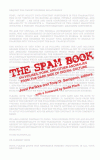
Sadie Plant is such an iconic figure in the study of digital culture and media theory. Here’s her short text on tulips, viruses, spam and modern economy. She wrote this as the Foreword to our Spam Book and here you can access it as a teaser-trailer to the book itself! It speaks of digital anomalies but through the colourful words of tulips and the tulipmania:
“Tulipmania was certainly a great irregularity, a malfunctioning of seventeenth century financial markets causing the first such large-scale economic crash. It was a kind of fever: the craze was as infectious as the virus itself, a runaway sequence of events triggered by the smallest of anomalies – which was, as it happens, effectively repressed as soon as its nature was known: once it was discovered, after nearly three centuries, that a disease was the agent of tulip variegation, the virus was eliminated by the tulip industry. Modern striped, multicoloured, and frilled tulips are the flowers of healthy bulbs, bred to emulate those of their virally infected predecessors: the effects remain, but the virus has gone. Order has been restored. ”
(As an addition, here’s our Introduction to the same volume, written together with Tony D. Sampson: “On Anomalous Objects of Digital Culture“).

Google DNS Freedom Fight: 8.8.8.8
In the midst of the past (less than) 24 hours of Turkey’s Twitter-blockade, we have seen a flood of tweets, comments, analysis and information – a lot of them, paradoxically, from Turkey. Some operators might not have yet been quick enough to shut down access, and at the same time people have found access via alternative means. The situation has again meant an increase in people’s understanding of the internet and looking into how DNS works as well as VPN’s. Indeed, tips were spread online to assist Turkish people – such as the three simple methods. And information was passed offline too – demonstration of a yet another connection of the streets and the online.
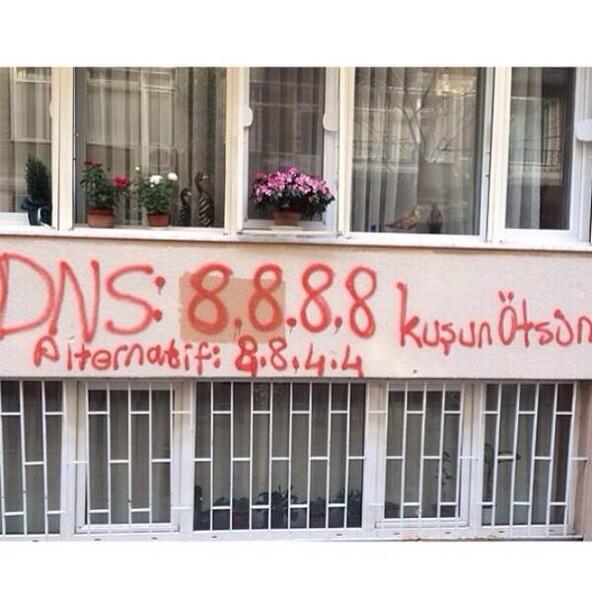 That people are able to bypass the DNS-based censorship is one thing to ponder about – especially because the new internet law in Turkey would allow other measures too. But what Geraldine Juárez pointed out on Twitter was of course this: 8.8.8.8. points to Google Public DNS. Corporate freedom services, the rhetorics of net freedom, etc. play as part of this wider scenario where alternatives to authoritarian nationalist politics seem to be the Corporate system. And that it’s pretty odd/scary/eerie that this gets rather automatically picked up as the political alternative, even to the extent of Google becoming infrastructurally used as the politically “open alternative” – or just more bluntly, as “Freedom”:

In such situations, one does need quick and dirty solutions – infrastructural affordances, whether corporate or not, need to be taken into use for short-term goals; but in terms of the wider political situation of networks – networkpolitics on the level where infrastructure meets the political imaginary – this leads into rather an odd choice between “closed” and “open” that does not imply as clear of a choice as one would assume based on the older political vocabularies. This is indeed not to downplay the significance of this sort of activism – distributing DNS information on streets, as in the image below. It is just to ask the fundamental questions regarding political choice, alternatives and how much the lack of alternatives is increasingly attempted to be hardwired into a material actualisation of the lack of political imaginary: “no choice but”.

Update [March 22, 2014]: Turkish government has now blocked access to Google Public DNS too.
– related reading includes (of course)
Evgeni Morozov’s analysis of network politics and its relation to Silicon Valley but also Benjamin Bratton’s work on “the stack” and the changing political nomos in the age of planetary computation.
The memoirs of an aspiring lichenologist
Rebecca Birch’s voice draws the hand drawing the landscape. It tells stories of trips and meetings, people and things. The projection of her unfolding drawing/narrating tells the story of her artwork in (auto)ethnographic style, and becomes an art performance itself. Birch’s work was recognized in Art Review’s March issue as one of the Future Greats and the magazine organised a party for her – addresses to a lichen covered stick.
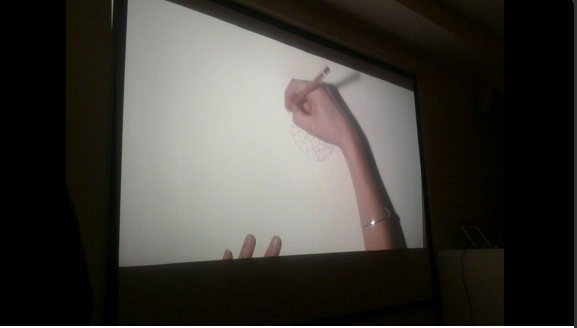
A lichen covered stick was part of a particular roadtrip-performance-screening -project of Birch’s, and became the theme of the evening too. I was invited to be one of the speakers – addressing this assemblage and offering variations on the theme and Birch’s art. Below a short text based on my talk, one of several talks/performances alongside Francesco Pedraglio, Erica Scourti, Karen Di Franco and a playlist provided by Bram Thomas Arnold.
Imagine this talk voiced by an alter ego — a part real, part imagined Finnish lichenologist from the late 19th century, in his hallucinations of a future ecocatastrophy, and past earth times since the carboniferous era.
The memoirs of an aspiring lichenologist: media & ecology
In his short text about Rebecca Birch, Oliver Basciano gives us an image of her art works and refers to the capture of light as much as shadow through the role of the camera itself comparable to that stick covered in lichen.
“[the stick] acts as a sort of MacGuffin around which collaboration and conversation circle within the hermetic confines of a car. With this, one can perhaps understand the videocamera as taking a similar role – giving Birch the opportunity to embed herself in a community or situation that would remain closed otherwise”
Indeed, the stick persists as a thematic motif; it resides there as a silent interlocutor. The closed technological environment of the car hosts both human chatter as well as this stick of nature smuggled as part of the roadtrip.

The camera, the visual registers and works with light as well as lack of it – the shadow, darkness. In the context of lichen, consider another perspective too. Focus on the lichen as the first element that registers light, sound, movement, chemistry around it. It participates in Birch’s work so that it’s not only the camera, which registers the sounds and visions, but the lichen, a symbiotic organism itself. This refers to the scientific context of lichens as bioindicators – they register the changing chemical balance of the world. In short, lichen is a medium – a medium of storage, an inscription surface that slowly but meticulously and with the patience of non-human thing pays attention to the growth in air pollution. It’s symbiotic status is symbiotic in more than the biological way: it is involved in the material-aesthetic unfolding of ecologies social and nature.
It was a Finn, Wilhelm Nylander, who discovered in the 1880s details about the possibilities of using lichen as biodetectors; through experiments exposing lichen to chemical elements such as iodine and hypochlorite Nylander found out that one can “read” nature through this natural element. It meant a discovery of an important feature that tells a different story; it is less a narrative than a sensory registering of the environmental change that technological culture brought about gradually since the 19th century: atmospheric pollution, leaving its silent mark.
Lichen has over the years and years observed to be full of life and circuited as part of different ecologies. They have been not just objects of our attention, addressed by narratives and images but became part of the modern cycle of industrialised life. They silently observe our chatter, listen in, as well as through their earless senses know what we are doing to our surroundings. They provide housing for spiders and insects, but also some of lichens are (re)sourced as part of the high-tech industries for pharmaceuticals (antiobiotics) and cosmetics (sunscreen).
This participation in multiple ecologies, a cycle of different duration is a fascinating topic considering both our theme today as well as the broader discussions of past years concerning the anthropocene. In short, it is the discussion that started in contexts of geology and environmental debate about categorising our epoch as the Anthropocene – a geological period following the Holocene and branded by the massive impact humans, agriculture, geoengineering, and in general the scientific-technological culture has had on the planet. And now, it has gathered the wider scientific and arts/humanities community as part of the discussions that reflect a different , growing perspective to the environmental.
The anthropocene -and the obsceneties accelerating it as the anthrobscene – can be unfolded through lichen. In a rather important move, such Macguffins tell a hidden story of change. The technological culture in which nature becomes entangled with the human induced scientific changes. Visual, oral narratives give an image of this change. We tell stories of our nature, our interactions in ecology, in the environment with media which stores the remains of the planet as part of our human narratives- roadtrips, conversations, social events, accidental meetings, small details, landscapes – drawn by Birch in her performance that remediates the earlier.
In other words, lichen is besides a conversation piece also a medium. It saves this story through its biological means as storage that in our hands becomes memory – the scientific-aesthetic context of memory read through lichen. Even pollution becomes a sort of a mediated environment, like with photochemical smog. The lichenologist Nylander was on to something, more than observations about lichen. A lichenologist plays homage to the conversations lichen shares as it tells the story of a slow change since the coal pollution (sulphur dioxide) of England since the 18th and 19th century to the contemporary air of nitrogen compounds. So besides the conversation going on in Rebecca Birch’s car, there is this silent partner always present, as it has been for a longer while, and now also articulated in the visual arts/ecology-mix of an evening – Addressing the stick, but also: the lichen as the address which receives transmissions of industrial modern culture.
***
Nb. The party was sponsored by Absolut Vodka, with signature drinks:

Understanding Media: McLuhan 50 years Later
The new issue of Journal of Visual Culture is a celebration of Marshall McLuhan. The Canadian media theorist’s classic book, Understanding Media: Extensions of Man, was published 50 years ago and editor Raiford Guins asked several writers to remember the book with a very short text. The texts in the issue are reactions, variations, recollections and remediations of McLuhan and his themes.
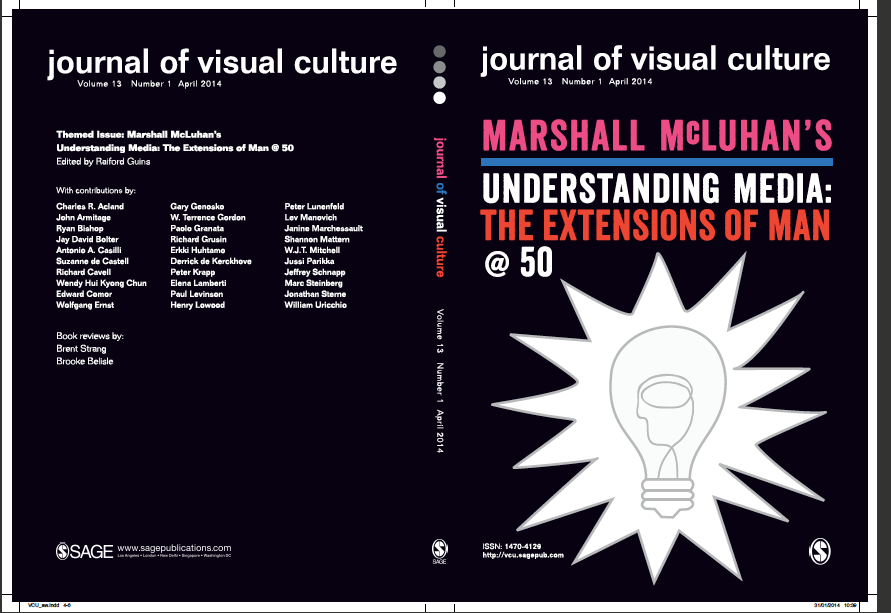
My own text (pp.91-93) was written in Istanbul: a short variation on McLuhan, urban space, weaponization and media environments.
Jussi Parikka: “McLuhan at Taksim Square”
I was carrying a fresh copy of Understanding Media with me on Istiklal Street, Istanbul, alongside people in gas masks and police in riot gear. It no longer felt relevant to write about past experiences of engaging with the book or to reflect on McLuhan as a forerunner of media archaeology. This time I did not want to write about ‘anti-McLuhan’ minor histories of media technologies: the ones that do not take media as extensions of Man but as extensions of the animal – for instance, insects – as their starting point (Parikka, 2010).
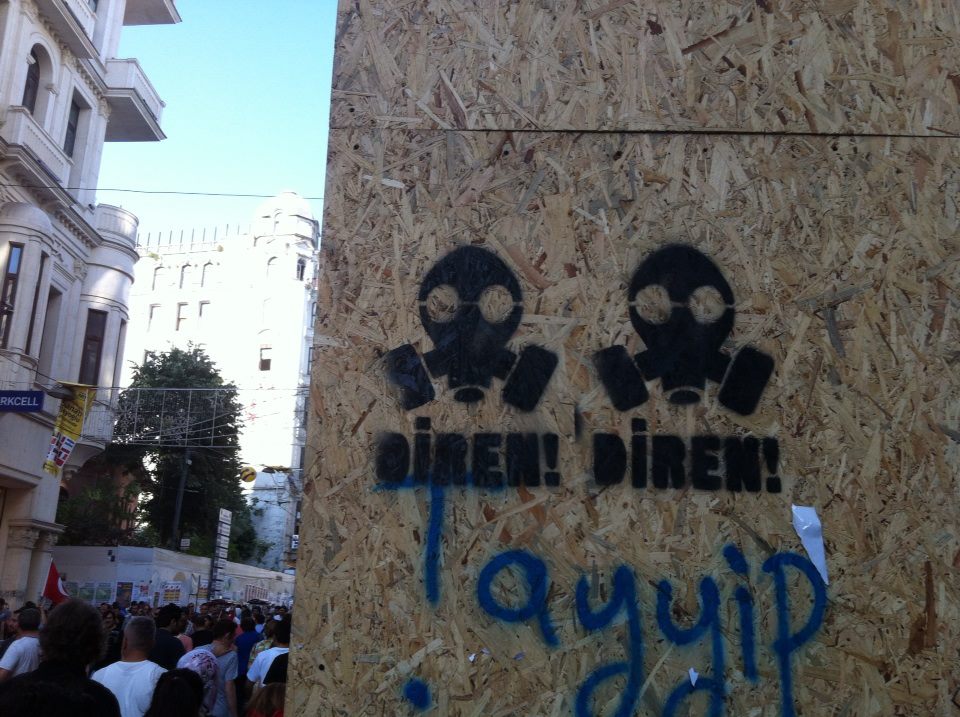
Travelling from the Anatolian side of Istanbul with a ferry to Kabatas, the chapter on ‘Weapons’ seemed to strike a chord. Extensive tear-gassing and police operations had turned some parts of the city into something unrecognizable, like in a state of emergency. The events at Gezi Park and its occupation grew from an environmental protest to widespread demonstrations across Turkey. Besides the environmental context, the demonstrations were against the authoritarian measures of the state: excessive tear-gassing, random arrests, and persecution of journalists, spokesmen and – women. In the light of McLuhan one starts to think about the various cultural techniques and media contexts of the events in Istanbul. The usual suspects – social media such as Twitter – were quickly acknowledged as important platforms of knowledge sharing but also for a circulation of the affects of outrage, disbelief and defiance. Online media services seemed to quickly open up a new forum for political discussion, crystallized in the inventive use of hashtags as forms of software literacy. When the mainstream media were airing documentaries on penguins, tweets from Gezi were distributing a whole different set of images about what was happening to public space in Turkey. Tear gas produced its own eerie atmosphere on the streets of Istanbul, which had quickly transformed into policed spaces accessible only with gas masks: a denial of the breath (Sloterdijk, 2009).
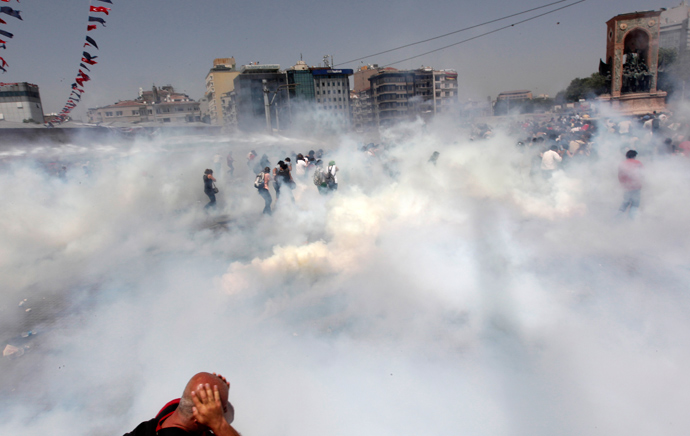
Walking up from Kabatas port towards Taksim, one could observe this sort of expansion of the meaning of media. This is where McLuhan is at his best. Media are not only about cinema, television, and radio. We start to see the world as media in itself: roads and surfaces, windows and squares become ways of mediating our relation to time and space. Walls are painted with ad hoc slogans; sprayed with images and words in order to mark a territory but also to leave a trace for the next passerby. The huge letters ‘GAZDOGAN’ referred to the prime minister Tayyip Erdogan and the tear-gas tactics of the government. Not only Facebook walls, but the city walls became quick and dirty media surfaces: I was struck by a photograph of an older Turkish man, in his 70s, drawing the face of Mustafa Kemal Atatürk on the wall. Then he walked to another street corner and drew another face of Mustafa Kemal. It was Kemal who introduced the Latin-based alphabet to Turkey in the 1920s and 1930s: in addition to a Europeanization of Turkey as a way to detach from the writing systems of Arabic and Persian origins, it was also ‘modernization’ in relation to the media technologies of telegraphy and the printing press to which the discrete nature was better suited. The alphabet escorts both a geopolitical orientation as well as entertains a relation to various technological changes not without an effect on our perceptual dispositions.
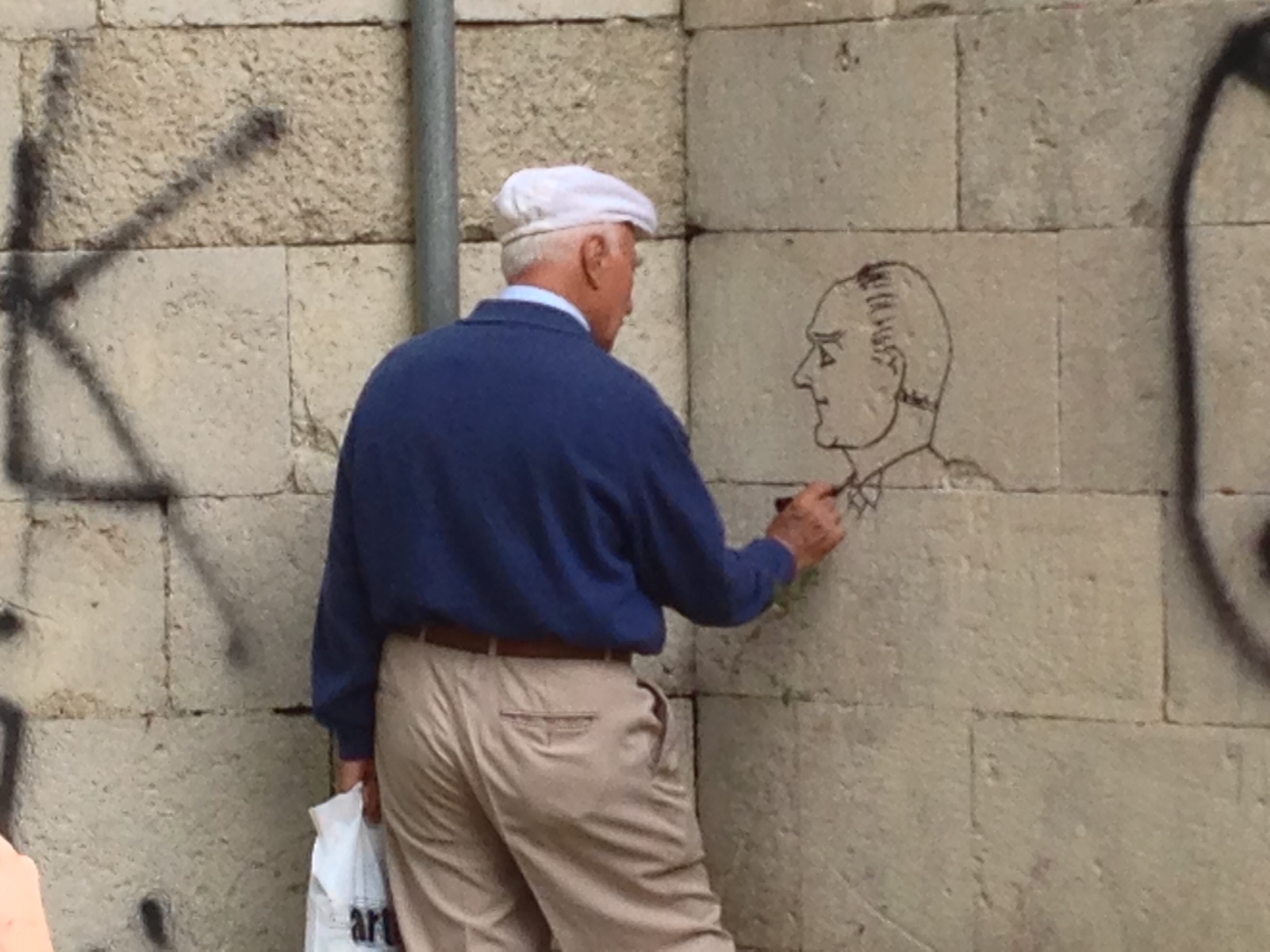
Atatürk persists as a symbolic reference point for various nationalist protestors: his political heritage nature is remediated as content of chants and demands of political nature. The visual space is not only about figures of Atatürk but also more carnevalistic: penguins (as a reference to mainstream media censorship) are suddenly as popular a source of remix and memes as cats usually are in internet culture. Political expression takes the form of artistic expression: ‘the artist must ever play and experiment with new means of arranging experience, even though the majority of his audience may prefer to remain fixed in their old perceptual attitudes’, writes McLuhan (2001: 276) in the chapter on the telegraph.
The online and the city are paired up in this production of visual resistance, but let’s not get too focused on content. One is struck by McLuhan’s reminder that ‘the city, itself, is traditionally a military weapon, and is a collective shield or armor plate, an extension of the castle of our very skins’ (p. 374). This idea is informative of the role of security, war and the city, but it also misses the point about the past years of security regimes which turn the city into an autoimmune disorder: the inhabitants become the targets of police forces, in relation to global events such as G8/G20 meetings (Renzi and Elmer, 2012), as well as such events as those in Turkish cities. But this autoimmune disease of the city does not extend the skin, but attacks the respiratory organs of people with tear gas. It burns the skin when the chemicals are infused with the water in water cannons. McLuhan is constantly useful as a reminder that media are everywhere, and are able to lock our senses in particular ways – perhaps not in the way that there would be always one dominating media episteme, such as literacy (cf. McLuhan, 2001: 373), but more temporarily as a form of attention management. Instead, there is a constant contestation as to the forms of media power: mainstream television might be producing visions of coldness, like documentaries about penguins, but that feeds back to remediations that expand the time and space of what we mean by media itself.
References
Renzi A and Elmer G (2012) Infrastructure critical: Sacrifice at Toronto’s G8/G20
Conference. Winnipeg: Arbeiter Ring.
McLuhan M (2001[1964]) Understanding Media. London: Routledge.
Parikka J (2010) Insect Media: An Archaeology of Animals and Technology. Minneapolis: University of Minnesota Press.
Sloterdijk P (2009) Terror from the Air, trans. A Patton and S Corcoran. Los Angeles: Semiotext(e).
On and Of Practice
Winchester School of Art PhD students have a lovely exhibition up at Hartley library in Southampton. Image-Text-Object: Practices of Research features the range of practice-based research we engage in at the School but also underlines more broadly connections of theory and practice. Curated by Jane Birkin, the pieces illuminate through various different materials the critical audiovisual, installation and time-based mobilize as insights to cultural reality. From archives to gender culture, to non-Western perspectives, contexts of religon and culture and in general, image-text relationships, the pieces are themselves ways in which to unfold the methodologies of practice at a research-led art school (WSA is part of the Russell Group University of Southampton).
“Notes on Practice” the first pages of the short catalogue leaflet promises. “To text experimentally, to put to test; n. the actual application or use of an idea, belief, or method, as opposed to theories relating to it; v. to perform an activity or exercise a skill repeatedly or regularly in order to acquire, improve or maintain proficiency.” The dictionary definition resonates with the manner of doing things as research. But the exhibition also reminds that theory itself is a practice that unfolds through its engagements – the necessity to stay open to the encounter of – the world in its audiovisual, affective materiality.

A close-up of Nina Pancheva-Kirkova’s “How to Create an Ideal Past”-installation.
Art schools occupy an interesting role in post World War II Britain, addressed also in John Beck and Matthew Cornford’s Journal of Visual Culture-text “The Art School in Ruins“. Indeed, it’s an important realization that with the increase in generalised discourse about “creativity” which penetrates the social and economic fabric – including business-talk – the waning of art schools has been ensured by lack of public funding. It is telling of a current odd ideological production of reality of creative culture. In current contexts of importance of art and design, it is encouraging to see how notions of art practice emerging in a university context too can inform the wider set of academic and critical questions in visual culture and design; textile and fashion; as well as gender and political reality (of for instance post-Communist era as in one of the pieces).
Photochemical Smog as New Media
Perhaps photochemical smog is the only true new visual media of post World War II technological culture. It represents the high achievements in science and technology, combined with (synthetic) chemistry and sunlight. It modulates the light like advanced visual media should and embeds us in its augmented reality as we suck it into our lungs.
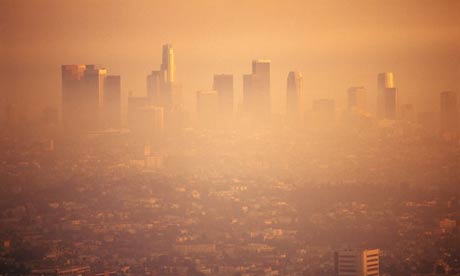 It encapsulates the mediatic cities of Los Angeles and Beijing, as encompassing surely as Hollywood’s machinery. Just like the material basis of technical media of more conventional kind – such as photography and film – it is chemical based. It is media the same as any photochemical process is about how light gets absorbed on our planet’s atoms and molecules.
But it’s new media, particular to the modern industrial age and the chemical reactions of more recent history. It feeds of industrial pollution and modern transport. It is about the screen as well – how the sunlight is offered this massive living chemical molecular screen on which to project its energetic images. A molecular aesthetics of an ecology of a dying planet.

No Such Agency: Kittler on the NSA
Friedrich Kittler’s words seem prophetic, telling the story of metadata and its politically sustained unreachability: “Maybe Jagger was wrong. We can always get what we want, from CDs to cable TV. Just not what we need: information on information. The fact that currents of media desires flow camouflages a situation in which information technology is strategy.
Paul Feigelfeld has done a great thing and translated Friedrich Kittler’s text “No Such Agency” from 1986 into English. What seems a rather visionary move – to talk of the NSA technological surveillance activities in the 1980s already – is just a proof of the German media theorists ability to perceive the intimate link modern forms of intelligence and technology have. Below our short intro to the translation, written together with Paul:
Introduction to Kittler’s “No Such Agency”
by Paul Feigelfeld and Jussi Parikka
German media theorist Friedrich Kittler’s short text on the NSA (National Security Agency) titled “No Such Agency” was originally published in 1986. The German newspaper and online publication TAZ decided to publish the piece from its archives in January 2014, after months of heated discussion about the NSA after the Snowden leaks. What the piece reveals is less the idea that Kittler should be branded a visionary, but that the NSA has a long technological history.
The text is a sort of a review of, or at least inspired by, James Bamford’s book The Puzzle Palace: Inside the National Security Agency, America’s Most Secret Intelligence Organization (1983) and its German translation, NSA. Amerikas geheimster Nachrichtendienst, which came out in German in 1986.
At the time, Kittler had just fought through Aufschreibesysteme: 1800-1900 as his habilitation, and Gramophone, Film, Typewriter was looming. More significantly, however, he had just bought his first computer and taken up programming. Like Kittler, the Arpanet was slowly switching to UNIX and C as a technical standard, before the internet of the 1990s. In Germany during the 1970s, BKA chief Horst Herold had implemented “Rasterfahndung” or dragnet policing as a countermeasure to the RAF (Red Army Faction) threat. And as Kittler demonstrates in his text, the NSA’s role of power in information infrastructures was not a reaction to the internet, but an act of design within those systems.
The piece shows Kittler’s interest in secrecy and the military basis of media technologies – but significantly, it reminds us that the media theorist was always as interested in institutions as their technical networks of knowledge.
 Photographer Trevor Paglen, famous for his photographic mapping of networks and sites of power in the post 9/11 US, and recently his NSA photography, argues how “secrecy ‘nourishes the worst excesses of power’” . But for Kittler, one could say that secrecy is power: the technically mediated possibilities of circulation, restriction and gathering of information way before the Internet and much before Edward Snowden was able to give us a further insight into the extensive contemporary forms of surveillance excessively interested in us humans. For Kittler, however, this already marks the possibility that the information gathering and processing machines are at some point not anymore even interested in human targets: “With the chance of forgetting us in the process.”
Read Kittler’s “No Such Agency” here.
A Geology of Media
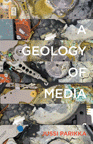
I am pleased to announce that I have signed a contract with University of Minnesota Press for a new book tentatively called A Geology of Media.
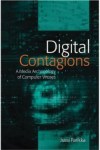
Planned for 2015, A Geology of Media forms the third, final part of the media ecology-trilogy. It started with Digital Contagions: A Media Archaeology of Computer Viruses (2007) and continued with Insect Media (2010). This book on the geophysics and the non-organic ground of media complements the earlier takes by offering a media materialism from the point of view of geological resources, electronic waste and media arts. Through engaging with several contemporary art and technology projects it provides a media theoretical argument: to think of materiality of media beyond the focus on machines and technologies by focusing on what they consist of: the chemistry and geological materials of media, from metals to dust.
In short, I am interested to see if what pejoratively sometimes is called “hardware fetishism” is not hard enough, and even media and cultural theorists need to focus on the rocks and crust that make technical media possible. Earth history of deep times mixes with media history, which becomes a matter of not only thousands, but millions of years of non-linear history (to modify Manuel Delanda’s original idea). This way media materialism becomes a way to entangle media technologies, environmental issues and themes of global labour. Perhaps instead of the Anthropocene, we should just refer to the Anthropobscene.
I’ve been in recent talks and short posts been addressing the geological in media, and my piece in The Atlantic offered a short preview of what’s to come. In addition, below a very tentative table of contents. This project (and the Erkki Kurenniemi book I am working on with Joasia Krysa) will keep me busy for a while.
A Geology of Media
Preface
1) Introduction: Grounds of Media/Culture
2) An Alternative Deep Time of the Media
3) Psychogeophysics of Technology
4) Dust and the Exhausted Planet
5) Media Fossils
Afterwords: Half-Life
Appendix:
“Zombie Media”, by Garnet Hertz and Jussi Parikka
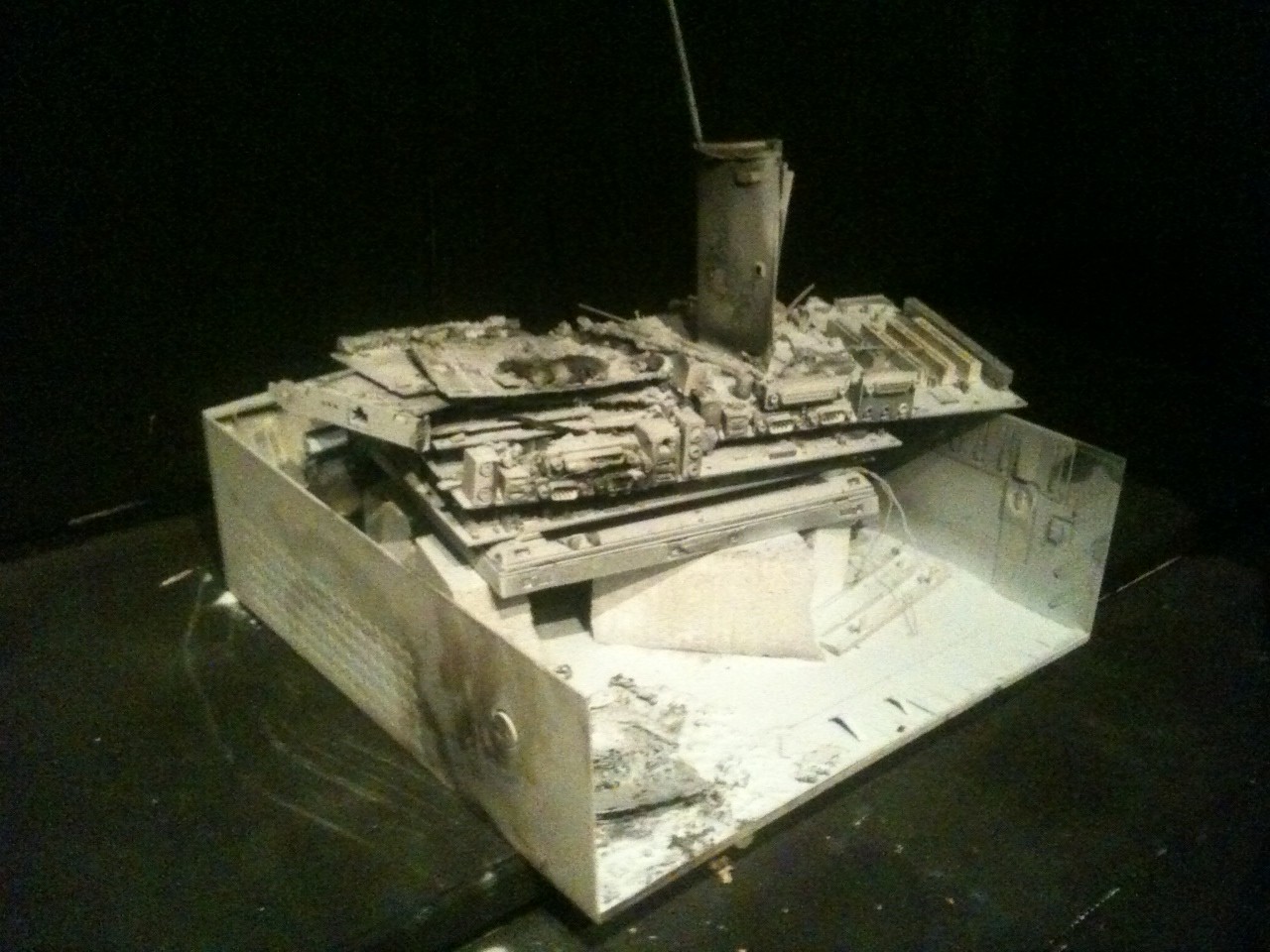
From the Crystal World-project (Howse, Jordan, Kemp)
Archaeology
Siegfried Zielinski asked me to write a very short dictionary type of entry on “Archaeology” for an exhibition catalogue. The exhibition will take place at Edith Russ Haus for Media Art in 2014 and they are going to do an exhibition on Zielinski’s AnArchaeologies and Variantologies, including some artistic positions by David Larcher, Herwig Weiser, Anthony Moore and others. Below my contribution.
Archaeology
The 19th century disciplinary invention of “archaeology” has had major impact in and out of academia. Besides the specific methods for investigating the material remains of human cultures, of building on the fragments to create collections, narratives and modes of preservation for a varia of objects and documents, the archaeological imaginary penetrates our audiovisual culture. It persists as an imaginary of itself: the narratives and images of hidden treasures waiting to be ungrounded. And it persists as the conceptual legacy that comes not only from archaeology proper, but also from Immanuel Kant.
Kant’s idea of philosophical archaeology itself ungrounded the idea of conceptual work building on the ruins of earlier philosophers. As Giorgio Agamben argues, this lead to the more fundamental notion of arkhé that refers not to origins, but to command and commencement. In a way that resonates with the media archaeologist Wolfgang Ernst’s understanding of the “arche” in (media) archaeology, this archaic moment is less the historical than the conditioning beginning of any analytical and genealogical investigation. For Agamben “[a]rchaeology is, in this sense, a science of ruins, a ‘ruinology’ whose object, without constituting a transcendental principle properly speaking, cannot really claim to be there as an empirically given totality.”
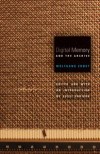
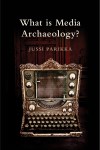
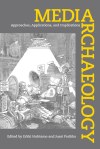
Such an understanding shifts from archaeology proper to the archaeology of knowledge in Michel Foucault’s sense. It displaces archaeology restricted to material excavations and works it into a method of archival and philosophical conditions of knowledge – its objects, statements and assumptions. With media archaeology as practiced by a variety of scholars from Siegfried Zielinski to Erkki Huhtamo, Thomas Elsaesser to Wolfgang Ernst, and even with Friedrich Kittler’s earlier writings, the material returns at the centre of the archaeological dig. It has many different meanings and ways of adopting to the object of investigation but it insists on irreducibility to the textual.
Indeed, what in archaeology are the methods necessary to approach the time before writing and the document pertains for media archaeologists both to the pre-cinematic as a similar rhetorical field of investigation and to the ontologically important idea of the arche as a command – even a technological command as the starting point for ungrounding media cultural ruins still present.








 Machinology