Archive
On Disobedient Electronics
Here’s a short manual to what design can – and perhaps often, should – be about: “how to punch Nazis in the face, minus the punching”.

Garnet Hertz’ new critical design zine Disobedient Electronics is a quick and rough, inspiring and useful manual for the Trump, Brexit, post-truth era that needs to address forms of actually working resistance that don’t however merely function only in the realm of already designated possibilities. Hence, throw in a good chunk of speculative design imaginary.
The protest zine is a collection of feminist and other social justice driven projects that carry forward a particular legacy of speculative design that is, in Hertz’s words, slightly less RCA/Dunne & Raby-style than it is confrontational and imaginary in the manner of the Critical Art Ensemble and the Yes Men. The selected projects cut through issues that tell a particular story about North America but also other geographic regions and political realities: issues of gun control and campus carry, gender pay gap, street protest kits, right to abortion, digital privacy and encryption feature centrally. Many of the projects appropriate a seemingly militant form: the Transparency Grenade, the sound cannon in the Device for The Emancipation of the Landscape and the I.E.D. (Improvised Empathetic Device) carry references to forms of violence that are however overturned into devices of creating alternative worlds. Sometimes the devices cross borders such as the Abortion Drone (Women on Waves & Co.) as a particularly inspiring way of diving into the issues of women’s rights across what is far from a unified political space of Europe.
The style of design proposed through the zine and the projects leads the reader to think of Brian Massumi’s ontopower: “a power that makes things come to be: that moves a futurity felt in the present, into a presence in the future.” This sort of a stance to design is useful as well as speaks to the sort of experiments Disobedient Electronics employs. And the projects that are featured are in many cases experiments in their own right – not only in terms of a device that is pitched and presented but as experiments in collective forms, imaginaries and situations. In many ways, you can observe how this fits in with the wider context of Hertz’ own work and The Studio for Critical Making at Emily Carr University of Art and Design, which he describes as a lab of sorts that combines research, humanities and building in ways that results in “technology that is more culturally relevant, socially engaged, and personalized.” Disobedient Electronics is a good example of such work that the project supports both in the space of the studio and in the context of wider discussions about the role of speculative critical practice.
The Mediocene And the Lab Scene
The Mediocene conference takes place later this month in May in Weimar. Organized by the IKKM, the conference picks up on the Anthropocene from a specific media-focused vantage point. In the organizers words, “The concept of the Mediocene […] sees media and medial processes as epoch-making. As a determining force, they leave their permanent imprint on the world, affecting animate and inanimate nature alike — human existence, technology, society, and the arts as well as the shape, organization and history of the global habitat itself.”
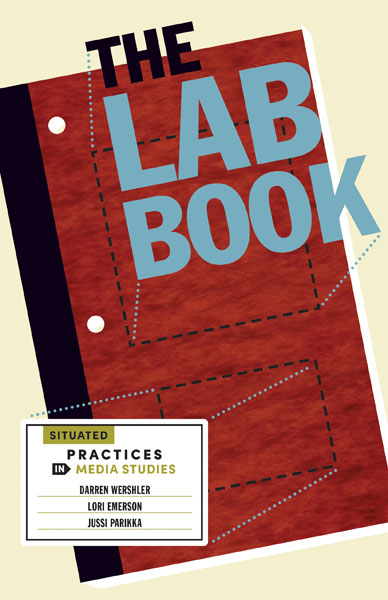
My take draws on our current laboratory-project, and below is a short (draft!) text of the beginning of the talk still in the process of writing and without a full range of references. The idea of the talk is to set the laboratory as this particular term, an imaginary and a fever around which multiple scales of planetary media come to the fore. It will also discuss topics especially in the art and technology-nexus including briefly the emergence of art labs in the Cold War institutions of technical media (a topic that will be well covered by Ryan Bishop and John Beck in their new work), as well as experimental work in the arts about the lab, including Bureau D’Etudes on the Laboratory Planet as well as probably such work as Neal White’s on post-studio. Any further thoughts, tips and ideas are warmly appreciated.
The Lab is the Scene
One could be forgiven for thinking that the world’s nothing but a lab. From endorsing the centrality of the factory as a key site to understand modernity and as the site of production, material transformation, commodity culture, labour relations, pollution and what not, the laboratory seems to have in some accounts taken a similar role. It speaks to a range of topics of media and culture: historically, a central place of inventing and engineering technical media; thematically, one crucial vantage point for the multi-scalar operations that define the tie between the planetary (dis)order and its situated practices. It does however come with a legacy that is only partly about the science lab. Indeed, the other important lineage relates to the technology, engineering and design/art labs that throughout the 20th century started to offer a parallel narrative: experimentation, a demo or die-attitude (at the MIT Media Lab, see for example Halpern 2015), prototyping, and more. Hence this lab story of experimental culture is not restricted to the science lab as if a separate entity from the arts and humanities; and in any case, the science labs of many kinds have already had their fair share of attention from social scientists and humanities scholars, even post-studio artists up until the recent days with the continuing enthusiasm for CERN residencies.
The proliferation of laboratories outside the strict confines of the science lab seems to have taken place with the entry of a range labs of different kinds: design labs, maker labs, hack labs, media archaeology labs, studio-labs, digital humanities labs, humanities, critical humanities labs, media labs and critical media labs – and then, fashion labs, brew labs, coffee labs, gadget labs, creativity labs, the list goes on. The usual thought would be that this is part of the metaphoric inflation of the meaning, site, scientificity of the laboratory that brands a particular attitude to postmodern culture. Of course, as Henning Schmidgen echoing the likes of Peter Galison and others points out, “the laboratory is undergoing a process of dissolution and dispersal,” with the massive distributed networks that constitute the laboratory now (think of the Human Genome project, think of CERN) but this dissolution and dispersal happens on other levels too, as the examples pertaining to humanities and media labs demonstrate. There’s almost nothing that could not be a lab. But perhaps the lab is itself symptom more than the answer, and as such, a trigger to consider issues of the mediocene in art and technology; issues such as scales of data, infrastructure and different methodologies. It becomes itself a rather fluidly moving term not merely designating a particular specialist place but also a particular project about the lab imaginary. Here, the notion of the project is crucial due to its future-oriented sense.
A focus only on the most recent would miss the point how the laboratory was already early on a contested term – especially when going on in the pre-scientific laboratories and their heterogeneous sets of spaces and practices that avoid too easily to be pinned down only as steps towards the perfection of a form – but the problem about the term persisted also later, during the emergence of the science laboratory.
As historians of science have noted, the lab as elaboratory was one formative way of understanding what then went on in the early modern spaces preceding labs. Elaborating materials for medicine and chemistry, working with the variety of materials in ways that was not merely under human control: the) elaboratory was a place where to let things go their way, even if offering a stage by way of the thermomedia control (see Nicole Starosielski’s work on temperatures and media) that allowed the transformations to be accelerated from earth time to lab time. Interestingly enough, such a broader understanding of labs and elaboration in relation to natural formations persisted; Sir Humphry Davy’s voiced in 1815 that “the soil is the laboratory in which the food is prepared.” In 1860 in a very different scientific context regarding the Physical Geographies of the Sea, Louis Ferdinand Alfred Maury spoke of the sea as the “a laboratory in which wonders by processes the most exquisite are continually going on”, as a sort of an model for understanding atmospheric movements even.
Indeed, reverse from our current laboratory fever some 100 years and a bit more, and shift the focus to Bangor in Wales where Sir William Thomson, 1st Baron Kelvin of, indeed, the kelvin fame of temperature measurement but also having worked with maritime compasses among any other things crucial for planetary media. Thomson opening the new spaces of physics and Chemistry labs in 1885 at University of Bangor seemed to be offering a rather extended way of understanding the topic. Let’s quote him:
“The laboratory of a scientific man is his place of work. The laboratory of the geologist and naturalist is the face of this beautiful world. The geologist’s laboratory is the mountain, the ravine, and the seashore. The naturalist and the botanist go to foreign lands, to study the wonders of nature, and describe and classify the results of their observations.”
Thomson was no mere romantic fool of course, but a man of modern science. He was not haunted by a romantic longing to a past of gentleman travels across the planet observing this beauty of nature but more of a pragmatist. Also the field research must be tightly linked to the possibilities of the lab, its equipment and its techniques, so as to ensure there is a tight connection between the insides and the outsides (Gooday 790). A properly equipped lab is what ensures that the field itself becomes an extended part of the technical apparatus, a laboratory that spans across the territories of the planet. A lab is where scales meet, to remind of the ways in which Bruno Latour spoke of Louis Pasteur for example.
For a longer period medicine, chemistry and metallurgy, and then of course physics remained the central disciplines of the laboratory (see Gooday, Schmidgen 2011). 20th century brought technological laboratories into the scene: engineering and material labs, electronics labs to the varieties of other forms of centralised facilities that systematised the production of engineered culture. Much before there were things called media labs, labs were essential to media to become what they became in relation to the actual apparatuses as well as their impact on the thresholds of perception. Labs were one sorts of conditions for much of that work that came to be called media. Many of the labs in engineering were the institutions central to the backbone of various national and international infrastructures such as the Bell Labs, the centrality of “innovation labs” from Menlo Park to many others, and of course, the centrality of the art and technology labs of the Cold War that themselves were the grounding of so much of what we call now “media arts” and where the particular techniques of speculative, experimental use meet up with the other sort of speculative that is attached to forms of value creation.
The lab as place, invention and extension of “media” is part of the continuum of the technological work in labs and the artistic practices as one background to the notion of experimentation. The media and arts approaches produce a particular discourse, a particular stance on the experiment, but also in some cases a corporate take on a speculative mapping of scales that reach out spatially to planetary infrastructures as much as local scales as well as to the future-oriented dimension. Here, I believe there’s a way in which it resonates with the question of the Anthropocene as one of scales that map out the lab as something of an epistemological and medial arrangement that spans further than its space. This happens both discursively and in terms of its objects of knowledge: emerging from the Cold War period art-technology labs, or the studio-lab, it also becomes a scene where the continuum between technological culture and its creative practices are put into a conversation, creating the particular scene and the fantasy of visionary future-oriented experimental work inventing the media worlds to come. The Mediocene is this particular aesthetic-technological framing of scales (temporal, spatial, potential, not-yet actualised, speculative) and quite often, also in this arts-technology nexus it does happen through the hinge of the lab. Now, using the term, as is clear from already now, I am forced to ignore many current examples that also use the term in other ways that I will narrate in this talk. The term has multiple uses and as such, my version does not do justice to the full plethora of labs of critical, experimental practice as much as it connects the term to a particular different sort of a genealogy. Hence, bear with me, as I sketch some ideas.

Tap My Head, Mike My Brain: Experiencing Digital Culture
March 7th, Tuesday, we will be launching our new books with Tony Sampson in London. Tony’s wonderful study The Assemblage Brain and my Digital Contagions (2nd, revised edition with a new preface by Sean Cubitt that can also be read for free online) will form the context for our short talks under the broad rubric of “experiencing digital culture”.
A short description below and to book tickets (free) see Eventbrite. Kings College London and their Arts & Humanities Research Institute are hosting the event.
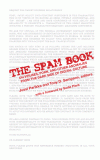
We’ve worked with Tony since our joint edited book The Spam Book: On Viruses, Porn and Other Anomalies from the Dark Side of Digital Culture, which I still feel is a timely book with a pretty impressive cadre of writers such as Matthew Fuller and Andrew Goffey (on evil media!), Steve Goodman, Luciana Parisi, Susanna Paasonen, Greg Elmer, Alex Galloway, Eugene Thacker and many others. Ever since, I’ve always gotten a lot out from following Tony’s work, and same applies to his new book.
I also wrote the blurb for The Assemblage Brain and can warmly recommend it:
‘Tap my head and mike my brain’; Tony Sampson’s new book might silently echo Pynchon’s famous lines, but this is also an original, inspiring, and theoretically savvy take on the culture of the affective brain, from sciences to business, cybernetics to political power. Warmly recommended.
Description
Insects and Media (a short interview)
During an earlier transmediale I was interviewed by Daniel Fetzner in Berlin. This short interview is now downloadable here as a PDF [insects-and-media-interview] and briefly discusses Insect Media with also a nod to Digital Contagions and “viral capitalism”.
Reference to the interview:
Fetzner, D./Dornberg. M. (2015) BUZZ – Parasitäre Ökologien. Freiburg
J.R. Carpenter’s The Gathering Cloud
J.R.Carpenter’s new hybrid print and web-based work The Gathering Cloud unfolds as fittingly dreamy, beautiful piece with hypertextual hendecasyllabic verses that attach solidly to the undergrounds of contemporary data clouds.
Like her earlier work, it engages in a contemporary that is entangled between the past and the now. The topic of the cloud becomes the vehicle that drives the work, from Luke Howard’s “Essay on the Modifications of Clouds” (1803) to querying the environmental significance of any word, any seemingly fleeting moment captured as image, uploaded, and stored on the cloud as part of the transactions of data that are the humming backbone of our digital poetics.
Elements – a new book series
Over the past decade, studies of culture have crystallized around the elements, as scholars have endeavored to think with material substances. The classical elements of earth, water, air, and fire for example, have inspired several recent books, including Jussi Parikka’s A Geology of Media (2015), Jeffrey Jerome Cohen’s Stone (2015), and Thinking with Water, edited by Cecilia Chen, Janine MacLeod, and Astrida Neimanis. Nigel Clark and Kathryn Yusoff drawing together histories of fire, cultural theories of the sun, and pyrotechnics, have proposed that a “generalized study of combustion” is key to understanding human energetic exchanges.[1] More broadly, Jeffrey Jerome Cohen and Lowell Duckert recently published a collection driven by all the classical elements, assembling elemental criticism as an explicitly ecological project: Elemental Ecocriticism: Thinking with Earth, Air, Water, and Fire. Other forms of matter, from ice to plastics, are forming new centers for emerging environmentally-oriented conversations.[2] And we expect that more scholars will undertake projects focusing on the chemical elements of contemporary science, as carbon, rare earth minerals, and polymetallic sulfides—entangled in climate change, ocean acidification, terrestrial mining and deep sea mining—become the focus of scientific, ethical, and political concerns.
Book series tend to be bound by geographic areas, disciplinary focus, a shared set of theoretical questions, and objects of study. The Elements series would include texts with a commitment to examining social and cultural processes in relation to particular forms of matter, regardless of disciplinary approach. We imagine that the series will include historical texts that explicate discourses and knowledge about the elements, ethnographies that track how the elements are socially engaged and culturally constituted, studies of scientific knowledge of the elements, and works that think through the representation and material role of the elements in the production of art, texts and technologies. Regardless of their site, we welcome texts in which the elements, whether as part of the waves of the ocean or the circulations of the atmosphere, are not a neutral background, but lively forces that shape culture, politics, and communication. We are interested in manuscripts that track the elements in their classical sense, that follow particular scientific elements, molecules, and materials, or that offer inventive sites for rethinking what constitutes the elemental.
The elemental approach has reached the point where researchers have begun to offer philosophies and paradigms for its analysis, including David Macauley’s Elemental Philosophy: Earth, Air, Fire, and Water as Environmental Ideas (2010), Jeffrey Jerome Cohen and Lowell Duckert’s edited collection, Elemental Ecocritcism: Thinking with Earth, Air, Water, and Fire (2015), and John Durham Peters’ The Marvelous Clouds: Towards a Philosophy of ElementalMedia (2015). These works offer a number of strategic reasons to adopt the elemental as a framework for ecological analysis, rather than concepts such as “environment” or “nature.” Macauley writes, for example, that understanding the elements does not entail “referring back to ‘Nature’ itself as an entirely stable sphere of meaning—a repository of the ontologically pregiven—so much as gesturing forward (sideward and wayward) to the possibility of discovering a more fluid, open and unfolding philosophical framework and ecological field.”[3] Although many of the elemental works mentioned above have been motivated by a need to better understand the ecological crisis, many others do not fit within existing ecocritical and environmental frameworks. And similarly, just as many of these works are informed by work in the new materialism, not all operate under this rubric.
As is true of the elements themselves, the books we witness engaging them, and which we would feature in this series, are not always neatly constrained in a particular field such as geography, history, anthropology, literary criticism or philosophy, nor within areas such as digital media or new materialism, even as their study has profound implications for all of these fields. In assembling diverse inquiries into particular forms of matter, we hope that the series will be a meeting ground for work on earth, water, air, chemicals, minerals, fuels, plastics, and other such substances as they circulate and interact with and as part of environmental, technological, cultural and political formations. Our interest is not in creating a set of definitions for what the elemental might be, but to open a space for such innovative work at Duke University Press. Duke’s strengths in theory, cultural analysis, environmental studies, and science studies, and the fact that the Press has already published many works emerging around this topic, make it an ideal location for these exchanges.
In order to maintain a distinctive focus on the Elemental, we are not soliciting projects that lack sustained attention to substances and materialities. While the books in the series will all be theoretically informed—and some may be primarily theoretical—all of the projects should still engage, in a serious and sustained way, with the elements—broadly conceived.
Submission Process
Each book in the Elements series will go through the standard submission process of Duke University Press and will be approved by the series editors. For consideration in this series, please email proposals, sample, chapters, or completed manuscripts to Nicole Starosielski and Stacy Alaimo: ns119@nyu.edu and alaimo@uta.edu. Proposals may also be sent directly to Courtney Berger at Duke UP: cberger@dukeupress.edu; see also https://www.dukeupress.edu/Authors/
[1}Nigel Clark and Kathryn Yusoff, “Combustion and Society: A Fire-Centred History of Energy Use,” Theory, Culture & Society 31 no. 5 (September 2014): 203-226; See also: Kerry Ryan Chance, “Where there is Fire, there is Politics”: Ungovernability and Material Life in Urban South Africa,” Cultural Anthropology 30, no. 3 (2015): 394-423; Nigel Clark, “Fiery Arts: Pyrotechnology and the Political Aesthetics of the Anthropocene,” GeoHumanities 1, no. 2 (2015): 266-284.
[2] Jennifer Gabrys, Gay Hawkins, and Mike Michael, eds. Accumulation: The Material Politics of Plastic (New York: Routledge, 2013).
[3] David Macaley, Elemental Philosophy: Earth, Air, Fire, and Water as Environmental Ideas (Albany: SUNY Press, 2010), 4.
Digital Contagions,v.2
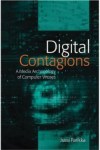
Last year I was contacted by the publisher of Digital Contagions, which was my first book in English: the commissioning editor proposed to edit a new, upgraded version of the book. Yesterday, the final product arrived and I am happy to tell that with a new cover, with some new text and in general edited, pruned and much more smoothly flowing, it is out – again! And I very excited that it has Sean Cubitt’s new preface too.

The new cover is from Eva and Franco Mattes’ installation Perpetual Self Dis/Infecting Machine (2001-04): a Custom made computer infected with the virus Biennale.py.
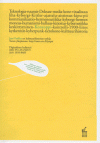
Here’s the back cover with a summary and some nice endorsements from Tiziana Terranova, Charlie Gere, Alex Galloway and Sean Cubitt!

You can find the book on Peter Lang website and on Amazon and hopefully other online bookshops. Please contact me if you require a review copy.
And as a blast from the past, here’s an interview Matthew Fuller did with me around the publication of the first edition.
The Office Experiment: An Interview with Neal White
Here’s a short interview chat we had with Neal White on art practices in and out of the lab, the office and more:
Neal White runs the Office of Experiments, a research platform that “works in the expanded field of contemporary art.” The Office employes methods of fieldworks and works with a range of partners including scientists, academics, activists and enthusiasts, and described as exploring “issues such as time, scale, control, power, cooperation and ownership, highlighting and navigating the spaces between complex bodies, organisations and events that form part of the industrial, military, scientific and technological complex.” Neal White is also starting as Professor at Westminster University, London.
This interview, conducted via email in June and July 2016, was set in the context of the What is a Media Lab-project and aims to address the questions of artistic practice, labs and the (post)studio as an environment of critical investigations of technological and scientific culture. Another,longer, interview with Neal White, conducted by John Beck, is published in the new edited collection Cold War Legacies (Edinburgh University Press, 2016).
JP: Can you start by describing what the Office of Experiments does? I am interested in its institutional form in the sense also Gilles Deleuze talks of institutions as “positive models for action” in contrast to law being a limitation on action. The Office also carries the legacy of modern institutional form par excellence – not the artist’s studio with its romantic connotations, not the laboratory either with its imaginary of science, but the office as an organizational site. Why an office?
NW: The Office of Experiments makes art through a process of collaboration in which all of those who undertake research, make or apply thinking to a project can be credited. We bring together artistic forms of research with experimental and academic research in the field, undertaking observational analysis, archival research, road trips, building platforms and prolonged formal visual studies that reflect the complexity of the subjects we approach. Our approach is to build a counter rational analysis or account of the world in which we live. To move this away from any poetic vision, we draw on ideas from conceptual art, and disciplines such as geography and science studies, architecture and political activism, as well as looking at physical space, data, and the material layer which connects the observatories, global sensors etc of our contemporary world; the interface between the technological and material world.
Having some formative education in Digital Arts, an MA in 1997 and then running a successful art and technology group in Shoreditch, London, in late nineties and up to 2001 (Soda), my experiences collaborating with others was critical to how I work now, and the work of others that interests me. As I wanted to deliberately move away from the hermetic space that media / digital art was creating for itself – the Lab, and to set up an independent contemporary art practice, that moved across spaces, enclosures, archives, in and out of galleries, often working in situ, and which was networked, I needed to find a way of working with others that was neither exploitative nor driven by serving another discipline or field.
Having opened conversations with John Latham in 2002-3, the now late British artist, I was introduced to Artist Placement Group. I was strongly influenced at this point both by Latham’s ideas of time/temporality (as applied to institutions) as well as incidental practices, and I applied those in an instituent form (Raunig) as Office of Experiments. The Office was therefore the solution to working collaboratively as an artist in a critical way, so that credit would be spread, and all those collaborating within each project get something out – whether as art or as an academic output/text, relevant to their individual discipline.
I was attracted to the term Office initially as it holds some idea of power, when thinking of a government department or Bureau, but is also instrumental – something that I felt was and is increasingly asked of art (evaluating audiences for funding etc). However, Office alone does not work, it is too close to that which it is critical of, so it is only when used with the term experiment, and the ideas of experimental systems (Rheinberger), which were also key to my work at this time, that an agonistic dichotomy comes to the fore. This works for me, as we could say the terms are counter-productive, the name undermines itself linguistically (i.e. As Robert Filliou put it “Art is what makes life so much better than Art’). In this respect, it serves the ideas that shape our research, to create a form of counter-enquiry that can hold to account the rational logic of hard scientific enquiry, ideas of progress, the ethical spaces of advanced industry and scienc
The link to post-studio practices and discourse is a thread that runs through the projects. Can you talk a bit more about the other sorts of institutional spaces or experiments in and with regulated spaces such as the laboratory that your work has engaged in?
To give some concrete examples, OoE was founded when working on an experimental platform, which was based on the design of a planetary lander, but we designed it for ‘on earth’ exploration; Space on Earth Station (2006), with N55 (DK). Later, OoE challenged the ethical space of clinical research in a project that used restricted drugs to explore ‘invasive aesthetics; The Void’ in which participants urine is turned blue. Our aim to move the site of the artwork to inside the body. We then explored the history of psychopharmacology and the use of so-called ‘truth serums’ in psychology of torture by the US military. More recently the Overt Research project made visible and navigable the concealed sites, laboratories, infrastructures, networks and logistical spaces of the UK’s knowledge complex, part military, part techno-scientific, a post-industrial complex. In Frankfurt, Germany, OoE acquired a piece of network infrastructure, – a cell phone tower in the shape of a palm tree, whilst we researched quantum financial trading networks and conspiracy theories based around Frankfurt itself. Currently, we are working on data from a globally distributed seismic sensor used to monitor the test ban treaty on nuclear weapons, and have used the data (which is not straightforward to acquire) from this vast instrument to create resonant physical audio experiences around what we call hyper-drones. In many of the cases, projects lead to engagements with society and the public on subjects of concern, whilst also providing tools, resources and shared knowledge with other researchers, enthusiasts and artists.
Considering art history and history of science, the studio and the lab can be seen as two key spaces of experimentation and the experiment, following their own routes but in parallel tracks as well. Does a similar parallel life apply to the post-studio, and the post-lab in contemporary context? In your view, what are the current forms that define the lab?
Starting with any lab today, we could perceive a hyper-structure (Morton) – that is a lab networked to other lab space, and not something discrete or visible as an observable object in the singular. To this extent, labs are also entry points connecting physical and digital layers; they reveal regulatory and permission based cultures in which ethics, health and safety, security and received opinion (Latham)/knowledge assert control. The idea of a lab therefore for art or media art, with any kind of techno-scientific logic not only implies but actually enforces limits (Bioart so often falls down in these terms). Whilst a studio gives an artist working within the constraints of their ability/media a private space to think and work, I find both underline both certain kinds of limits and a tradition of building through a controlled approach to both the experiment and experimentation.
In terms of the post-studio / lab, the ‘social’ (Latour) framing of art in the contemporary field of relations, social engagements and critical practices, experiments are produced through a scale of 1;1, but are also modelled in new ways. So this implies, that we not only need to find a new way to work, but to be present somewhere/somehow else.
So, if Office of Experiments projects explore space and time as dimensions of practice, then it is reflective of these shifts, being made up of a group or number of individuals, we are arguably post-studio in form. Where we might be sited is fluid too, but we do share an enthusiasm for working together by being situated in fieldwork, exploring places and non-sites, as well as complex infrastructures, some which are legally ‘out of bounds’ or ‘off limits’. So we have often worked together to produce platforms for research in the field that include methods as much as architectural projects, as well as resources such as archives and databases, to enable our activities to take place.
Whilst the work we have produced is shown inside leading galleries internationally, as performances, video, visual artwork and installation, we have also produced a number of bus tours, installations, temporary monuments and projects beyond these enclosures, in public space, the landscape or framed by urban and suburban life. So the spaces, or non-sites we work in are also the places in which we exhibit the work, including across media – on the scale of 1:1.
However, the idea of a scale of 1:1 I have wrestled with since reading Rheinbergers work on experimentation, as you could argue that it does not apply to the non-material word we inhabit. Perhaps it is more accurate to say, I have been looking at contemporary forms of production, rather than simply experiments, to think about or challenge these models of working as an artist in a social or collaborative context. For example, what happened in the lab can now be modelled inside the computer, across the network etc. And what was fabricated in the studio for the gallery, can be outsourced and produced by artisans to a better standard, or scanned, modelled and printed, for display across a range of spaces, real or not.
Art has therefore been subject to de-materialisation that started in the 1960’s (see Lippard), but as with so much of late capitalism and scientific and computational processes, it is no longer simply invisible but reduced to the indivisible, distributed and then reassembled. And the site of the reassembling is multiple, as are we.
A Secret Life of Media Ecologies
Next week, in Brazil it’s all about media ecologies. A Secret Life of Objects, A Vida Secreta dos Objetos, is the 2nd in the series of major conferences that address theory, media and materiality of cultural interactions. The first of the two events takes place in Sao Paulo, the second in Rio de Janeiro. I am also happy to tell that Winchester School of Art is one of the official partners! There is even a video trailer to set the mood for the events: I will be giving a talk at both events on topics that relate to geology of media and the issues of urban pollution and smart cities.
A Geology of Media – out and available
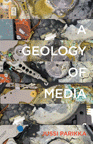
So this is a sort of an announcement: I was happy to receive my first copy of A Geology of Media during my visit to UNSW in Sydney. In other words, the book is now more or less out – a bit ahead of schedule and gradually available in online and offline bookshops, and of course in different e-formats (Kindle, epub, etc) already!
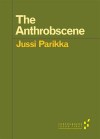
The earlier published little e-booklet The Anthrobscene was a short preview single of this main book that is also now out!

My talk in Sydney was the first “book talk” after the book is actually out, and it will be followed by several more during the Spring. The talks are primarily in Europe, and some launch celebrations are planned for May in Winchester (at WSA), and also London, Vienna, Utrecht and Stockholm. More details of dates and places to follow.
Please find below the official release text with information on how to obtain a review copy! Please spread the word to people who might be interested and consider asking your university library to order a copy.
A sweeping new ecological take on technology

A GEOLOGY OF MEDIA
By Jussi Parikka
University of Minnesota Press l 224 pages l April 2015
ISBN 978-0-8166-9552-2 | paperback | $24.95
ISBN 978-0-8166-9551-5 | hard cover | $87.50
Electronic Mediations, Volume 46
Media history is millions, even billions, of years old. That is the premise of Jussi Parikka’s pioneering and provocative book, A Geology of Media, which argues that to adequately understand contemporary media culture we must set out from material realities that precede media themselves – Earth’s history, geological formations, minerals, and energy.
PRAISE FOR A GEOLOGY OF MEDIA:
“Jussi Parikka’s A Geology of Media really expands what media theory can do. The materiality of media is no longer restricted to questions of economies of technics but extends all the way to its molecular composition. It connects the fast calculations of digital time to the deepest of temporalities, that of the earth itself. An essential contribution to a media theory for the Anthropocene.”—McKenzie Wark, author of Molecular Red
“A Geology of Media does not complete or close down an area of research, but rather opens one up. This book is vital to any continuing consideration of media today.”
— Steven Shaviro, author of The Universe of Things: On Speculative Realism
ABOUT THE AUTHOR:
Jussi Parikka is professor in technological culture and aesthetics at Winchester School of Art, University of Southampton. He is the author of Insect Media (Minnesota, 2010), Digital Contagions, and What is Media Archaeology?
For more information, including the table of contents, visit the book’s webpage:
http://www.upress.umn.edu/book-division/books/a-geology-of-media
Electronic Mediations-series.
For review copies or author interview requests, contact:
Heather Skinner, Publicist
University of Minnesota Press
111 3rd Ave S, Ste. 290
Minneapolis, MN 55401-2520
skinn077 — at — umn.edu
v * 612-627-1932
f * 612-627-1980







 Machinology