>More spam to the world
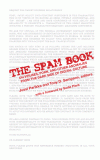
>Finally its coming out: The Spam Book – On Viruses, Porn and Other Anomalous Objects from the Dark Side of Digital Culture, edited by yours truly and Tony D. Sampson (UEL). Its was with the publisher for about 18 months, which testifies to the fact that always when you write cultural/media studies, write a) about history, b) write about metaphysics so that what you claim cannot be said to grow old when the next version of your favourite software/operating system comes out.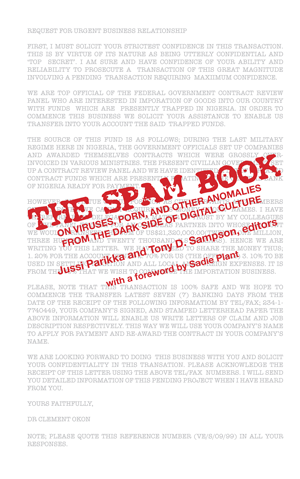
Writing about spam and editing this book was fun. It was bizarre to understand the lack of research into this defining feature of digital culture, and only now PhDs and research into spam cultures are emerging. For me, spam is a perfect index, or more accurately a vehicle that we can use to drive into such themes as security, delineation of order and disorder in software cultures, capitalism and the non-signifying production of value, desires of consumerism and the weird automated processes running wild on the underbelly of networks.
From the back cover of the Spam Book:
For those of us increasingly reliant on email networks in our everyday social interactions, spam can be a pain; it can annoy; it can deceive; it can overload. Yet spam can also entertain and perplex us. This book is an aberration into the dark side of network culture. Instead of regurgitating stories of technological progress or over celebrating creative social media on the Internet, it filters contemporary culture through its anomalies. The book features theorists writing on spam, porn, censorship, and viruses. The evil side of media theory is exposed to theoretical interventions and innovative case studies that touch base with new media and Internet studies and the sociology of new network culture, as well as post-presentational cultural theory.
And some blurps…
“Parikka and Sampson present the latest insights from the humanities into software studies. This compendium is for all you digital Freudians. Electronic deviances no longer originate in Californian cyber fringes but are hardwired into planetary normalcy. Bugs breed inside our mobile devices. The virtual mainstream turns out to be rotten. The Spam book is for anyone interested in new media theory.” —Geert Lovink, Dutch/Australian media theorist
“What if all those things we most hate about the Internet—the spam, the viruses, the phishing sites, the flame wars, the latency and lag and interruptions of service, and the glitches that crash our computers—what if all these are not bugs, but features? What if they constitute, in fact, the way the system functions? The Spam Book explores this disquieting possibility.”
—Steven Shaviro, DeRoy Professor of English, Wayne State University
Contents:
Foreword, Sadie Plant.
On Anomalous Objects of Digital Culture: An Introduction, Jussi Parikka and Tony D. Sampson.
CONTAGIONS
Mutant and Viral: Artificial Evolution and Software Ecology, John Johnston.
How Networks Become Viral: Three
Questions Concerning Universal Contagion, Tony D. Sampson.
Extensive Abstraction in Digital Architecture, Luciana Parisi.
Unpredictable Legacies: Viral Games in the Networked World, Roberta Buiani.
BAD OBJECTS.
Archives of Software—Malicious Codes and the Aesthesis of Media Accidents, Jussi Parikka.
Contagious Noise: From Digital Glitches to Audio Viruses, Steve Goodman.
Toward an Evil Media Studies, Matthew Fuller and Andrew Goffey.
PORNOGRAPHY.
Irregular Fantasies, Anomalous Uses: Pornography Spam as Boundary Work, Susanna Paasonen.
Make Porn, Not War: How to Wear the Network’s Underpants, Katrien
Jacobs.
Can Desire Go On Without a Body?: Pornographic Exchange as Orbital Anomaly, Dougal Phillips.
CENSORED.
Robots.txt: The Politics of Search Engine Exclusion, Greg Elmer.
The Internet Treats Censorship as a Malfunction and Routes Around It?: A New Media
Approach to the Study of State Internet Censorship, Richard Rogers.
CODA
On Narcolepsy, Alexander R. Galloway and Eugene Thacker.
>Recycling Centre for Digital Waste, or how to stop worrying, and love spam, porn and viruses
>I am still waiting to see the actual physical Spam Book that should be in print now. We are planning a launch event I believe for the 23rd of September in London, at Goldsmiths College. More on that later – now I am just anxious to see the actual book. Meanwhile, I wrote a very short Afterword for my friend Juri Nummelin’s new collection of Spam – a collection of spam poetry again. I like his way of applying some classic avant-garde art methodologies to current digital culture — in a way, taking “spam texts” etc. “seriously”, i.e. treating them as interesting pieces of living literature in themselves. Btw. after this text, I wanted to add my new favourite spam mail that I received today. Its only a variation of an old theme, but hilarious, I find.
Here’s the text, anyway:
Waste is the truth about our culture. Garbage, waste, all the residue from our daily chores is a reminder of a future-to-come that is constantly present in predictions about the impending eco-crisis and pollution of the living environment beyond repair. Waste is not only a passive negation of what is useful, but is itself a produced part of our culture, a continuous reminder of the libidinal urges of consumer culture. It’s the living dead, the zombie, that haunts the brains and bodies of consumers. Just like we produce goods, we produce waste.
In a parallel manner, all the waste that we call spam (e-)mail is the truth about network culture. It’s the hyperbolic development of the desires, perversions, and fantasmas that connect our brains to consumer cultural mechanisms. The continuous hints of your insufficient penis size or inability to perform in bed, the promises of gigantic richness, incredible deals in software or pharmaceuticals, all that is only a tickling of that cerebral state that capitalism has been preparing for decades. It’s part of the trend identified by the Italian philosopher Maurizio Lazzarato. Contemporary capitalism is decreasingly interested in producing concrete goods and products. It focuses more and more in a Leibnizian creation of worlds, in which consumerism can flourish. Capitalism produces worlds and desires. Our network world is the world of spam and excess. This book by Juri Nummelin is also a glimpse to the circulation of desires and perversions of this network culture of capitalism.
We all receive spam e-mails and other waste, so the idea of collecting, archiving and even publishing that excess is an act not entirely without absurd connotations. It continues the Dadaist and Surrealist interest in archiving the accidentalities of modern culture. Such acts of archiving the surreal of everyday culture are valuable in exposing the contingencies of any archival logic. So is Nummelin an archivist of garbage and waste? Or is he working as the recycling centre for digi-waste? Perhaps. But at the same time Nummelin is the Dadaist of network culture who has an extreme interest in the poetic in the banal, in such acts of communication (yes, we should call those software enabled non-human acts of mass spamming communication in this era of the posthuman) which approach the degree zero of language, in the found objects of digital culture, which hide in their everyday guise a very avant-garde aura.
Spam mail, viruses and all that we have learned to hate and despise in digital culture is a reminder of the fact that most of everyday Internet traffic is far from “useful” or “nice”. Most of the global info-wonder is built on spam, porn and in general to the darker sides of our libido. This is also why so much of spam email seems to be coming from the Others of our culture: Africa, Russia, outside the so-called organized society. Spam email is the travel literature of contemporary culture to the heart of darkness to have a date with Kurtz; of course, the only one we meet there is the pulsating core of our own consumer society. Spam emails, if you actually read them, maintain several such fantasies that are a combination of the sexualized Other and from universes not too far from Philip K. Dick’s novels.
And spam, porn, and viruses are far from useless nuisances. With them, we have seen the development of a gigantic subsection of digital industries, namely security. From security software to various trainings, we are being taught to be responsible Net-users by underlining the grave dangers of spam for our sanitized, clean digi-future. For years, there has been talk of the necessity of a new closed Internet. Corporations would be guaranteed a frictionless world of communication and flow of information, but would leave the so-called average people in their miserable worlds of porn and spam. Weirdly enough, it resonates with such science fiction scenarios where most of humanity has been left after the apocalypse to sink in a world of dirt and lowly libidinal drives.
In the midst of the gloomy future scenarios and production of fear, such poetic recycling is however more than welcome. They are the modern surrealist techniques of tackling with the absurdities and layers beyond meaning of communication; the accidental, the haphazard, the unconscious that can be revealed through artistic methodologies. Media theorists such as Alex Galloway and Eugene Thacker have written about such dream sides of software, and there is a growing body of net art that is more interested in the dark sides of network culture than its polished progress stories. Through such methods we learn of another kind of a message: don’t be afraid to embrace your spam! They tell you the truth about the processes of interpellation that try to hail you as the proper capitalist subject! Love your spam as you love your emails from friends!
And then, the email from Sergeant David Bruce:
Re:09-08-2009 |
No label
![[]](https://i0.wp.com/wm29.inbox.com/img/e.gif "Not starred (click to add Star)") |
| Sgt David Bruce sent it to me on Aug 9, 2009, 3:39 AM | Show details |
|
|
|
Dear Sir/Madam

My name is (staff Sgt.) David Bruce i am an American soldier, serving in the Military with
the
army's 3rd infantry division.


i have a very desperate need for  Assistance and have summed up courage to contact you.
I found your contact through internet serching and I am seeking your kind  Assistance to
move the sum of Five million United States dollars (us$5,000,000) to you, as far as I can
be assured that my share will be safe in your care Until i complete my service here.


Source of money: some money in US currencies were discovered in barrels at a Farmhouse
near one of saddam’s old palaces in tikrit-iraq during a rescue operation, and it was
agreed by staff Sgt Kenneth buff and i that some part of this money be shared  Between
both of us before informing anybody about it sinceboth of us saw the money  first.


This was quite an illegal thing to do, but i tell you what! no compensation can make up
For the risk we have taken with our lives in this hell hole, of which my brother in-law
Was killed by a road side bomb last time.


The above figure was given to me as my share, and to conceal this kind of money become a
Problem  for me but with the help of a British contact working here and with his office
Enjoying some immunity, i was able to get the package out to a safe location entirely Out
of trouble spot.


he does not know the real contents of the package, and he believes  that it belongs to a
British  American medical doctor who died in a raid here in Iraq, And before giving up,
trusted me to hand over the package to his family in country.


I have now found a very secured way of getting the package out of Iraq to you at home For
you to pick up, and i will discuss this with you when i am sure that you are willing To
assist me and that my money will be well secured in your hand.


I want you to tell me How much you will take from this money for the assistance you will
give to me.


One Passionate appeal i will make to you is not to discuss this matter with anybody,if you
have any reasons to reject this offer, please and please destroy this message as any
Leakage of this information will be too bad for the u.s. soldier's here in Iraq.


I do Not know how long we will remain here; month of May was the deadliest month for us to
be out Here. Totally, we lost 127 men and i have been shot,wounded and survived two
suicide Bomb attacks by the special grace of god.


This and other reasons i will mention later Has prompted me to reach out for help.I
honestly want this matter to be resolved immediately, please contact meas soon as Possible
with my private  e-mail address which is my only way of communication (e-mail:
sgtdavidbruce1@yahoo.co.jp)


May god bless you and your family"
From David Bruce.
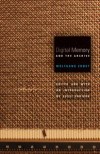
>A review of Digital Contagions
>
Anthony Enns raises good points in his flattering review of my Digital Contagions-book that just came out in the most recent issue of Leonardo Digital Review. Enns is himself well familiar with the debates in German media theory, having sat in the seminars of Friedrich Kittler and Wolfgang Ernst for years – and being still an avid visitor of Berlin like myself. Hence, it is no wonder that he places more emphasis on my book’s connections with the certain Kittlerian-mindset (but the “old”-Kittler of Discourse Networks and critic of digital culture). Enns is able to pick up on some really good points, but I just want to tackle some questions raised by the review.
1) Enns writes quoting me that viruses work through the principles of bottom-up emergence; I think this is only part of the picture, and I try to place them on the much wider strategic webs of definitions and articulations in which such ideas of emergence are read in their political contexts as well paying attention to the work of stratification that is as important as the idea of any distributed nature of viral networks. Such a focus on emergence is problematic if it is not specified, and instead of thinking virus software as a form of emergence, I try to think “emergence” as a form of interconnected complexity, a media ecology of sorts, where various scales of this phenomena are in constant interaction. We need to steer clear of the old ideas of internet as a distributed random network for emergence, and pay attention to for example the scale-free nature of contagions, as Tony D. Sampson has pointed out very well: we need to specify what kind of topologies are we dealing with in these milieus of accidents.
Later on in the book I refer to Katherine Hayles’s ideas relating to emergence: “Structures that lead to emergence typically involve complex feedback loops in which the outputs of a system are repeatedly fed back as input.” In other words, I also try to articulate how viruses are much a more systemic part of the loops in which software and even malicious accidents are tied to the new software business that was emerging, e.g. in the form of digital security.
2) This is why I want to steer clear of the idea that viruses are automatically vehicles of resistance; It’s not only that I reject that “viruses might represent the resistant logic of hackers attempting to subvert or appropriate corporate technologies” but that again, this image that stems from some 1990s tactical media inspired accounts, as well as a Deleuzian focus on viruses as tools of sabotage and non-communication, needs to be complexified. We need to pay attention to the singular modes of functioning of this specific software type, as well as the uses and misuses of the discursive iterations of its characteristics. This does not necessarily mean a straightforward failure of such programs of resistance, but a recognition of the multiple contextual forces in which resistance always takes place. In the Deleuzian context the idea of virus as a cut in communication made perhaps sense, but not in such contexts where accidents can be turned so easily as part of the strengthening of the security industry in itself – and this of course applies to much wider trends in security, as demonstrated after 9/11.
3) The first point also relates to how I don’t see capitalism as potentially even benevolent force, but as itself “viral” — viral capitalism is characterized less by substance than through its forces of deterritorialisation, variation, modulation. It feeds through differences, it spreads virally to a variety of practices and discourses that might superficially seem contradictory to itself. It’s not enough, as I argue following e.g. Luciana Parisi, to posit a dualism between the living “good” multitude and the big bad capitalism that sucks power out of the creativity of people, but to actually track the modes of invention, change and appropriation inherent in capitalism’s apparatus of capture. In other words, the only way I see capitalism as a living force is due to its powers of/for change. This follows from a variety of Marxist positions as well – and one could find really nice passages from Marx himself about capitalism & crises.
>A media archaeological day at the cellar
>

In short, Wolfgang’s way of doing media archaeology distances itself from more Anglo-American approaches. Media archaeology is about the actual “live” or “operating” technologies of the past that still work and hence are far from dead media. Or perhaps we could call them “zombie media” in these of technologies that perhaps have lost their mass media function, but still are functional in the technological sense – like an old military radio that still receives transmissions, or old analogue computers that can be wired up and made to work. The media archaeology archive/lab they have then consists of equipment primarily collected by Wolfgang and then fixed to work. This collection ranges from computational media to oscilloscopes, radios, visual media based in the Nipkow principles etc. One of the intriguing footnotes was a radio that was exactly the same model that Heidegger had in his remote place in the 1960s – at the time of the Cuban missile crisis, apparently one of the rare times he wanted to be reliant on mass media. (Wolfgang had interviewed Heidegger’s sons about this radio and then found exactly a similar copy for the collections.)
The key things that Wolfgang keeps on emphasizing and I find characteristic of his theoretical work are then:
– media archaeology looks not (only) at the macrotemporalities of media history. It is more interested in the microtemporal functionalities of technical media, and hence “opening up” media technologies to track down how they work.
– Media archaeology is then much more about the internal operating principles than about e.g. design – the cover, so to speak. Hence, this archive differs from museums in the sense that the technologies are not “closed” behind glass vitrines, but they depend on their “use-value”; how they exist in time, and remodulate, recirculate time-critical processes.
– Media technologies can then be seen as “”synthesizers” of various temporalities in their own right. Media consists of various technologies that are able to function as a coherent assemblage (well, when it works) and also across time – like an old educational computer from the GDR era that Wolfgang had sitting on his desk, with instructions how to “program” it for specific tasks.
– Media archaeology does then focus on such frequencies and layers that are not reducible to the human cultural semantics. There is much more to media – as physical, material instruments, apparata, mediators. Media archaeology is in this mode as much about wiring and programming as it is about writing.
– Media archaeology is then less about textual/discursive as it is about investigating the very concrete signalling work at the heart of technical modernity. I find this bit the fascinating one – and in my reading, I try to see it only entangled with the discursive/historical themes (an assemblage approach of sorts).
Now for me, one of the questions of future is to map how this fits – how it converges and diverges – with “new materialist cultural analysis”. Meanwhile, it made me really think about getting down and dirty and tinkering with such technologies; would be amazing to get research projects like that going…
For anyone wanting to read more about “time critical media studies/archaeology”, see Axel Volmar’s (ed.) Zeitkritische Medien-book.
Below, a sample of the zombie media sitting at the cellar of Humboldt’s media studies; photos used with permission from Lina Franke (also the photographer) and Wolfgang Ernst. Unfortunately no image of “Heidegger’s radio” yet, but that will follow.



>Summer readings
>Following Steven Shaviro’s and others’ lead, here is a brief summary of my summer’s reading list. Of course, this is more about good intensions, but in any way, represents some of the stuff I need to be catching up with. A painful reminder of things that should have been read ages ago. So read this post as masochism of sorts.
Karen Barad, Meeting the Universe Halfway (Duke 2007)
– such a crucial thinker for neomaterialist cultural analysis, one cannot neglect this book that ties Bohr’s quantum physics with feminist theory. She comes up with such great, and useful concepts as “agential realism” which I believe give tools to both science studies as well as posthuman theory. To quote: “… matter as a dynamic and shifting entanglement of relations, rather than a property of things.” (35).
Joanna Zylinska, Bioethics in the Age of New Media (MIT 2009)
– two reasons: going to Sussex Biodigital Lives conference soon, and wanted to catch up what Zylinska is saying in her new book; then doing a review of it for Leonardo Reviews. Zylinska offers a deeply ontologically rooted ideas concerning bioethics, and extends its regime from only medicine and the biodigital to such practices as blogging and phenomena such as make-up shows. Biopolitics is a parallel theme to bioethics, claims the book. Interestingly, the book tries to come up with Levinas something new, although claiming sympathy to Deleuzian approaches. Indeed, it seems that she shares a lot in this sense with some of Eugene Thacker’s Biomedia-ideas.
Eugene Thacker, Biomedia (Minnesota, 2004)
– a book I should have read a long time ago, but now trying to scan it through in its entirety, again partly because of the Sussex event. I think Thacker’s idea of biomedia as “enabling certain types of data to be mobilized across different media” – i.e. as a concept of mediation that does not lose sight of the material basis of such encodings and decodings is great also for a wider reconsideration of the agenda of media studies (media studies as the potentially key discipline to understand various exchanges happening across scales from science and technology to visual culture and for example science fiction).
Axel Volmar (ed.), Zeitkritische Medien (Kadmos 2009)
– a book that sums up many of the interest in Berlin media studies concerning “time critical media.” It looks like an excellent book that argues for the centrality of time as both an epistemological perspective for media studies and as an ontologically organizing principle for modern technical media culture. This is the stuff what Wolfgang Ernst is always on about (and for a good reason), and where the macrotemporal durations inspected by media archaeology could find a new ground in microtemporal modulations of technical media.
Charles Stross, Accelerando
– His Atrocity Archives was a bit of a disappointment (except for the excellent afterwords), but this one, a gift and a recommendation from Michael Goddard, is much more promising after 150 pages. Much more about political economy of ultra-technological culture. And hey, it’s got lobsters uploaded to computer networks, what more could you expect? I just wish I had read the lobster bits before submitting my Insect Media book to the publisher.
Axel Bruns, Blogs, Wikipedia, Second Life, and Beyond (Peter Lang, 2008)
– well, this is just one of the books you need to read to keep up with relevant social media stuff. Probably the best summarizing book on social media topics, something I should have digested a while ago.
Erin Manning, Relationscapes (MIT 2009)
– as with Barad, this connects with my interests in neomaterialist modes of analysing culture and arts. I have read some chapters, but I will try to go through the remaining as well. It’s an important book, and hopefully provides such a tool box that helps to articulate themes of event, relationality and movement not only in terms of dancing bodies but also e.g. such non-human topics I am working on as media ecologies. Having said that, we are just finishing an article on contemporary dance, movement and biopolitics, and it touches closely Manning’s themes. The article is on Tero Saarinen’s magnificent collaboration with Marita Liulia: Hunt.
Sven Spieker, The Big Archive (MIT Press)
– actually, just finished reading this but wanted to include it here because I liked it so much. In the midst of finishing the book on Media Archaeology, this spurred new ideas and summed some thoughts I also had. It focuses on the appropriation of the archive and other bureaucratic modes of data management with artistic methodologies, placing a lot of emphasis on early 20th century avant-garde. To my taste, it is a really good book not only on the artistic projects but on the “archival principle” of modernity in general. It touches on some of the key questions of 19th century archive and its change during 20th century. Where it stops is the digital; would have been interesting to look at the notion of the archive/database in the digital networked era through e.g. net art pieces.
Then there are other stuff that I really hope I can glance through, such as Michelle Hennings Museums, Media and Cultural Theory (in connection to a funding bid we have submitted with Robin Boast). Also, bubbling under so to speak is a something I ordered, by Gherasim Luca, something I really look forward as my holiday treat, but more on that later….
>The Infantile Star
>
I have never in any way really cared for Michael Jackson’s music, so the news of his death does not move me too much. I tried to gather an interest in him from a media studies perspective – he is after all perhaps one of the last big actualisations of the Disney era of sorts; a half-imaginated, half-real zombie of sorts that seemed to live most of his last years in a weird haze world. What was incidental of some of the reports / review articles of him after his death (reading some newspapers in Berlin), was the reference to his status as a victim of sorts. He was written in some articles as the not-completely-grown-up that was continuously struggling with relationships and his status as a public character. Of course, such ideas hit the mark all too well – and this is the status he wanted to give himself as well. All the fantasies of the boy who did not grow up, the Peter Pan, the infantile work now in his favor to create a polished picture that is not ready to discuss his possible pedophilia.
Indeed, describing him in terms of infantility is I believe the point and ranges from his music (all the high pitched screams, or his so soft talking voice, almost beyond language, infantile) and his public persona. It goes as far as hinting towards a legal status as well, which is interesting. Jackson is one of the first and last great Baudrillard-kind of characters of simulacra that do not seem completely real but governed by the logic of simulacra – a logic of signs floating around in a world of media cultural capitalism of sorts. In Jackson, this reached certain corporeality through his on-going metamorphosis and the years long media discussion concerning his nose and skin. What do we remember of him but those two things? The mutilated nose and the oh-too-white skin? Its emblematic of the Disney world as well, the urge for whiteness present in so many implicitly racist Disney narratives. Jackson the media persona at least shows the political contexts of any simulacra that in this case territorialized very concretely on issues of race and gender. Yet, such issues are accessible through a sans langue of the infantile with the intensities of the skin color, the voice, the fragility rather than a clear language-orientated grid of representation. No signifiers and signifieds, but intensities and bodies. In this sense Jackson shares something with Marilyn Monroe, as Milla reminded me; Marilyn also as a Hollywood-infantility according to some critics, her babylike face, infantile sexuality present in her soft voice that as if struggled to be heard at all, almost child-like
The Finnish media theorist Jukka Sihvonen pointed towards such a culture of infantility in his book on media education that I alas do not have at hand. I am sure it would inspire some really good points about our media culture as one of infantility more widely. Have to pick up the book when I get back to Cambridge just to remind myself of his arguments, which place the whole idea of “media education” in the important context of contemporary media in a post-enlightenment condition.
Media Ecologies: Extending Media Studies
I have been occupied trying to think through the notion of media ecologies in the wake of Matthew Fuller’s great work of the same name. I am trying to work through ex-Mongrel members’ Eco Media project and also referencing Garnet Hertz’s Dead Media project where both projects extend media ecologies to media archaeological ideas. The idea is to say how especially Eco Media project’s methodologies are practical transversal tools to bring media natural and media technological into proximity — or well, actually saying that they were never apart. Working through the art projects and via Simondon, Guattari and others, at the moment these three themes sum up what I am trying to say (this is from the article’s “conclusions” as it stands in the current draft version):
Needs work, but I love this opportunity to continue some of the Insect Media themes but without actually talking about insects per se. That was kind of the idea in that book, ; that insects acted as good vehicles towards thinking “relationality” and ethology of technological objects. The Eco Media project in itself is a wonderful, quirky project that also included the Eco Media open day; natural media olympics and the Pigeon vs. Internet race were among highlights! And of course, the fact that the pigeon won the race due to technical problems with the internet system…

Super-Cambridge
It’s not the first time I have made the reference to J.G.Ballard while talking about Cambridge (UK). It somehow just seems to share the similar psycho-pathologies of middle-class that Ballard is continuously on about; all the innocent looking fronts, civilized habits, closed communities, and so on. Cambridge is the academic Disneyland that attracts tourists to marvel the 800 years of history of knowledge production — the sublime Western heritage of closed institutions, privileged few and the close link of money with information.
>Politics in 140 characters
>Our funding success with AHRC (Exploring New Configurations in Network Politics-network project) could not have arrived at a better time. The events in Iran, and the buzz surrounding Twitter are something that has made people discuss about its political implications even more than with the past Moldova case. Some of the commentators have been worried that more full-fledged analysis is needed, and that of course Twitters and like cannot replace good old fashioned lengthy commentating — all comments which are true, but also neglecting that perhaps with such 140 character inserts its not a matter of interpretation, analysis or such, but a different mode of politics altogether; a politics of doing in a different key, and interacting with different scales than in the old-fashioned idea of doing politics through a public sphere of discussions. Indeed, despite many claims of such technologies reintroducing the importance of the public sphere, we have to be aware that such a mode of public is much more multi-scalar, heterogeneous and less spatial than temporal. Its not only a matter of redefining the public and the private but of such spheres of in-betweenness that elude concepts of the modern political era from representation to public, from citizen/private to action.












 Machinology