Humm your code, “dah-dit-dah-dit”
Media amateurism has been an integral part of modern culture way before social media kicked in with its own DIY spirit. The electronic hobbyists and tinkerers of 1970s were themselves too preceded by so many earlier forms of learning communication and building circuits. Code-based culture does not then begin with software as we know it – from the emergence of computing and the much later emergence of computer languages as separate entities that relate to the mythologies of coders, hackers and controlling the hardware through the magical language of code (for a wonderful recent excavation into ontologies of software, see Wendy Chun’s Programmed Visions).
“Thousands of Radio Amateurs find it easy to Learn Code”, read a main title in Popular Science (March 1932), describing the process of getting a radio amateur license and the earlier technological discourse concerning machine-knowledge. Radio amateurism and wireless DIY of the earlier decades of 20th century represents itself perhaps one of the most important media archaeological reference points when thinking about contemporary technological DIY culture, and one can find interesting ideas from that discourse. The way knowledge about machines, code and the professionalism is standardized and practice is itself fascinating – DIY as a crash course into key scientific discoveries of modernity, practically applied. Electrical functions needed to be internalized into a hands-on skill, as the article describes: “You must first master the elementary principles of electricity as given in the simpler textbooks on the subject. Then you must apply the principles of magnetism and electromagnetic action plus an understanding of the radio vacuum tube to mastering simple radio transmitting and receiving circuits. […] You don’t have to know all the ins and outs of complicated radio broadcast transmitting circuits, nor do you require a detailed knowledge of elaborate receiving circuits such as the heterodyne.” (72)
This class of amateurs was however someone who was part of a nationally regulated standardization process flagging the importance of this system of transmission – this regulation had to do with technical knowledge, ethics and legalities as well as speed of communication, or skills more widely: The amateur operation license test was the way to become an operator – the mythical figure still living in such discourses as The Matrix-film(s), the one in charge of the communication field – what message goes where, interpreting of code, sending of things, packets, people to addresses.
But it was grey, this area of knowledge – or at least reading through the regulations. Take paragraph 9 of the Radio Division Regulations for Operators: “Amateur Class. Applications for this class of license must pass a code test in transmission and reception at a speed of at least 10 words per minute, in Continental Morse Code (5 characters to the word). An applicant must pass an examination which will develop knowledge of the adjustment and operation of the apparatus which he desires to use and of the international regulations and acts of Congress in so far as they relate to interference with other radio communications and impose duties on all classes of operators.” Speed – speeding up of communication as part of modernity – was something that was still tied to the skills of the operators, and slowed down by the human needing to be trained.
Code, as indicated in the passage, meant of course Morse Code. Dit-dit-dit-dah. A tip given in Popular Science relates to a sensory approach to code as not only abstract pattern but something that relates to your ears and mouths: “In memorizing the code, try to think of the letters as different sounds rather than as so many dots or dashes. Think of the letter C, for example, as “dah-dit-dah-dit” and as dash followed by dot, followed by dash, followed by dot.” (73) Carnal knowledge? Code in the flesh sounds much too poetic, but at least we could say, code in your mouth, ringing in your ears, feedback to your fingers tapping. Code, signal processing, transmission share so much with cultures of music, rhythmics, sound and voice.
(Forthcoming and related: a podcast interview with Paul Demarinis about hands-on, carnal knowing of technical media and media archaeological art.)
Transmit, Process, Store: Launch of Media Archaeology and Goodbyes to Sophienstrasse
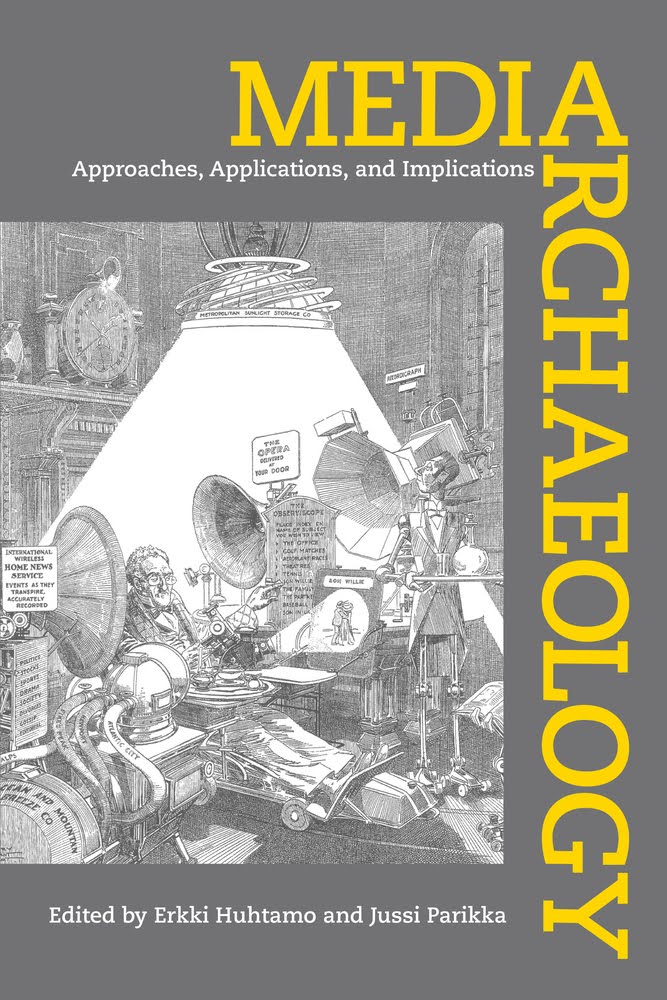 Welcome to our July 15 event at Institute of Media Studies, Humboldt University in Berlin – where we are both celebrating the launch of Media Archaeology and even more importantly, processing (excuse the pun) the closing of a certain era of German media theory. The by now legendary address of Sophienstrasse 22 is closing down and the institutes are moving premises. This is the address where Friedrich Kittler worked, and a whole generation of German media theorists can consider their alma mater…
TRANSMIT, PROCESS, STORE
Goodbye Sophienstrasse – Book presentation Media Archaeology
On the 15th of July 2011, the time of the Institute for Media Studies at Sophienstraße 22a is coming to an end and together with the other institutes, we will relocate to the Pergamon Palais on Kupfergraben, on the site of Hegel’s house. This transmission marks an occasion to bring together teachers, researchers, students and friends of Sophienstraße to process and store the times and ideas which emerged in this spot, in order to duly celebrate our farewell. Furthermore, we will present the new volume Media Archaeology, edited by our current research fellow Jussi Parikka together with Erkki Huhtamo.
We cordially invite you to join us in talks, discussion and celebration on Friday, July 15th 2011, starting 4 p.m. Berlin’s best book store Pro qm will be present with a book table.
Program:
Location: Medientheater (ground floor of Sophienstrasse 22a):
4 p.m.
Welcome: Prof. Dr. Wolfgang Ernst, Paul Feigelfeld und Dr. Jussi Parikka
4.15 – 5.45
Contributions by: Prof. Dr. Friedrich Kittler, Prof. Dr. Wolfgang Ernst, Prof. Dr. Claus Pias, Prof. Dr. Wolfgang Hagen
5.45
Book presentation “Media Archaeology” (University of California Press), edited by Jussi Parikka and Erkki Huhtamo. Talks and discussion with Jussi Parikka, Claus Pias, Wolfgang Ernst and Anthony Enns.
Followed by drinks and music, until security shuts us down.
A Manifesto for Digital Spectrology
Digital Spectrology is that dirty work of a cultural theorist who wants to understand how power works in the age of circuitry. Power circulates not only in human spaces of cities, organic bodies or just plain things and objects. Increasingly, our archaeologies of the contemporary need to turn inside the machine, in order to illuminate what is the condition of existence of how we think, see, hear, remember and hallucinate in the age of software. This includes things discarded, abandoned, obsolete as much as the obscure object of desire still worthy of daylight. As such, digital archaeology deals with spectres too; but these ghosts are not only

From the Microresearch Lab project pages "Detection workshop"
hallucinations of afterlife reached through the media of mediums, or telegraphics, signals from Mars, the screen as a window to the otherwordly; but in the electromagnetic sphere, dynamics of software, ubiquitous computing, clouds so transparent we are mistaken to think of them as soft. Media Archaeology shares a temporality of the dead and zombies with Hauntology. Dead media is never actually dead. So what is the method of a media archaeologist of technological ghosts? She opens up the hood, looks inside, figures out what are the processual technics of our politics and aesthetics: The Aesthetico-Technical.
– inspired by the work of MicroResearchlab – Berlin/London, the short text was written for Julian Konczak/Telenesia.
Do Some Evil
It’s the opposite to “do no evil”, a call to think through the dirty materiality of media. Trick, deceive, bypass, exploit, short-circuit, and stay inattentive.
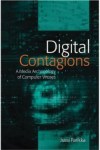
Hence, it is not only about “evil objects” as I perhaps myself have focused on (in Digital Contagions, and in other places), even if such objects can be vectors for and emblematic of stratagems of evil media. Evil media studies focuses on strategies that are mobilized as practices of theories. These strategies reach across institutions, and hence it is no wonder that Geert Lovink recently flags this as one approach through which to energize media studies.
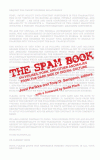
Or more formally – Evil Media Studies “is a manner of working with a set of informal practices and bodies of knowledge, characterized as stratagems, which pervade contemporary networked media and which straddle the distinction between the work of theory and of practice”, write Andrew Goffey and Matthew Fuller in the chapter by the same name in The Spam Book.
For me, the attraction in Goffey and Fuller’s call is that it is material – material that is dynamic, non-representational, machinating and filled with energies that flow across software, social and aesthetic.
- Bypass Representation
- Exploit Anachronisms
- Stimulate Malignancy
- Machine the Commonplace
- Make the Accidental the Essential
- Recurse Stratagems
- The Rapture of Capture
- Sophisticating Machinery
- What is Good for Natural Language is Good for Formal Language
- Know your Data
- Liberate Determinism
- Inattention Economy
- Brains Beyond Language
- Keep Your Stratagem Secret As Long as Possible
- Take Care of the Symbols, The Sense Will Follow
- The Creativity of Matter
(the list from “Evil Media Studies” by Goffey and Fuller, in The Spam Book: On Porn, Viruses and Other Anomalous Objects From the Dark Side of Digital Culture, eds. Parikka & Sampson, Hampton Press 2009).
MediaSoup: Trond Lundemo talk in Berlin – 15/6
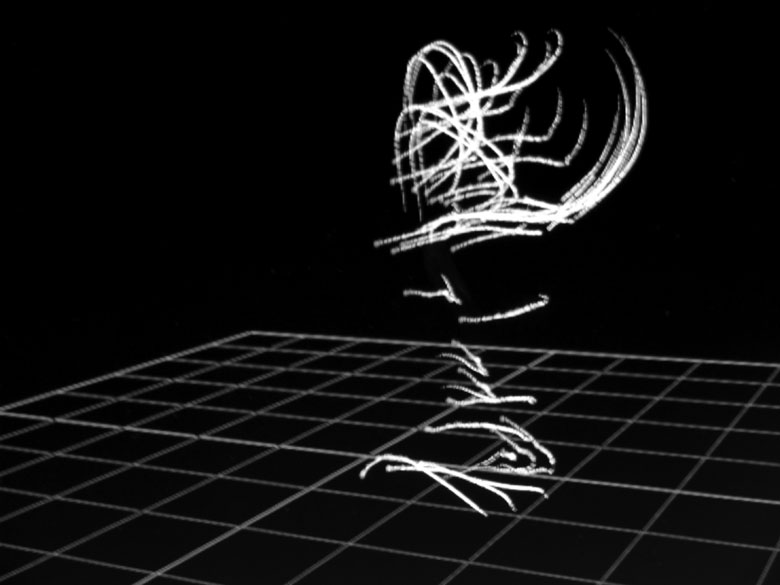
The MediaSoup-talks continue with Trond Lundemo: next Wednesday the Stockholm based professor of Film is talking about Motion Pattern Recognition. All welcome!
 MEDIA SOUP is an open colloquium of the Institute for Media Theories at Humboldt University Berlin, hosted by Paul Feigelfeld.
The talk starts at 6:15 p.m. and is followed by a Q&A and discussion.
Moderated by Paul Feigelfeld and Jussi Parikka.
Medientheater. Institut für Medienwissenschaft, Humboldt Universität Berlin, Sophienstraße 22A, 10178 Berlin
The (Un-)Attainable Gesture: Two Modes of Motion Pattern Recognition
The analysis of movement is the key agent in the development of cinema. The inscription of the gesture is a central concern for chronophotography (Marey, Charcot, Gilbreth), psychotechnics (Munsterberg) and in the new modes of perception sought by the various film movements of the 1920s (Vertov). Cinematic analysis gives access to the ‘optical unconscious’ (Benjamin, Epstein), through the means of the close-up, slow motion, repetion and frozen movement. How do these modes of inscription relate to the analysis of movement in the digital domain? In the biometrics of digital video surveillance, the analysis of the gesture remains a key problem for automated pattern recognition. Motion capture may prove to be a decisive breakthrough in this analysis, as it separates the motion pattern from the photographic representation. This presentation aims to explore some (bio-)political implications of these shifts in modes of inscribing and analysing the gesture.
Bio
Trond Lundemo, Associate Professor at the Department of Cinema Studies at Stockholm University. He has been a visiting Professor and visiting scholar at the Seijo University of Tokyo on a number of occasions. He is co-directing the Stockholm University Graduate School of Aesthetics and the co-editor of the book series “Film Theory in Media History” at Amsterdam University Press. He is also affiliated with the research project ”Time, Memory and Representation” at Södertörns University College, Sweden, and “The Archive in Motion” research project at Oslo University. His research and publications engage in questions of technology, aesthetics and intermediality as well as the theory of the archive.
Ding to Process – Object (and Non-Object) Oriented Media Studies
(Originally a removal from the manuscript of Media Archaeology and Digital Culture, this short post reworked and posted here:)
With Bruno Latour at the forefront, several theorists in the humanities and social sciences have been pointing out that how through both scientific practices, political decision making, and media technological assemblages, non-humans play a crucial part in constituting the social. In fields such as speculative realism as well as “new materialism” there is an intensive engagement with how to renew our vocabularies of the material with philosophical, cultural and media studies tools.
Latour (2005) outlines this intertwining of matter and things as part of the body politic by the conceptual move from “object-oriented-software” to “object-oriented-democracy.” In fact, the usually non-technological, non-object body politic of modernity that we find from Hobbes onwards is actually filled with such stuff which is the assembly point of concerns, networks and themes political. Such “composite bodies” in foundational meditations of politics such as Hobbes’ are for Latour (2005: 6) actually
thick with things: clothes, a huge sword, immense castles, large cultivated fields, crowns, ships, cities, and an immensely complex technology of gathering, meeting, cohabiting, enlarging, reducing and focusing. In addition to the throng of little people, summed up in the crowned head of the Leviathan, there are objects everywhere.
Whereas Latour’s thoughts have been a crucial node in the recent debates concerning “object-oriented-philosophy” as well (see e.g. Harman 2009: 151-228), we are also able to extend such ideas to a neologism as “object-oriented-media studies.”
What would that mean? Perhaps in a Latourian spirit we could start paying more attention to how objects, or processes that are technologically defined, enable new forms of sociability and action, as well as politics and aesthetics, and for that, we need to understand much more about the circuits, switches, relays, cables, protocols, various levels of software, screen technologies, and electromagnetic fields which are the at times neglected “media” in the middle of our media relations. Such are the “phantoms” (cf. Latour 2005: 28, 31) that constitute, ontologies and conditions for knowledge of technical modernity, but also the way politics and the public is constituted in the liminal zone of objects, things and constructions of the social. Hence, similarly as we for Latour need to include our objects in our politics – and move from Realpolitik to Dingpolitik – perhaps we need more object and technology focused media studies?
And yes, objects do not need to be objects only. Increasingly, this is the way in which we need to rethink materiality – post-objects, post-object vocabularies, and more for instance in terms of processes, or for instance events (I am here thinking of the temporality of the calculational machine called computer, it’s cycles, halts and interrupts). 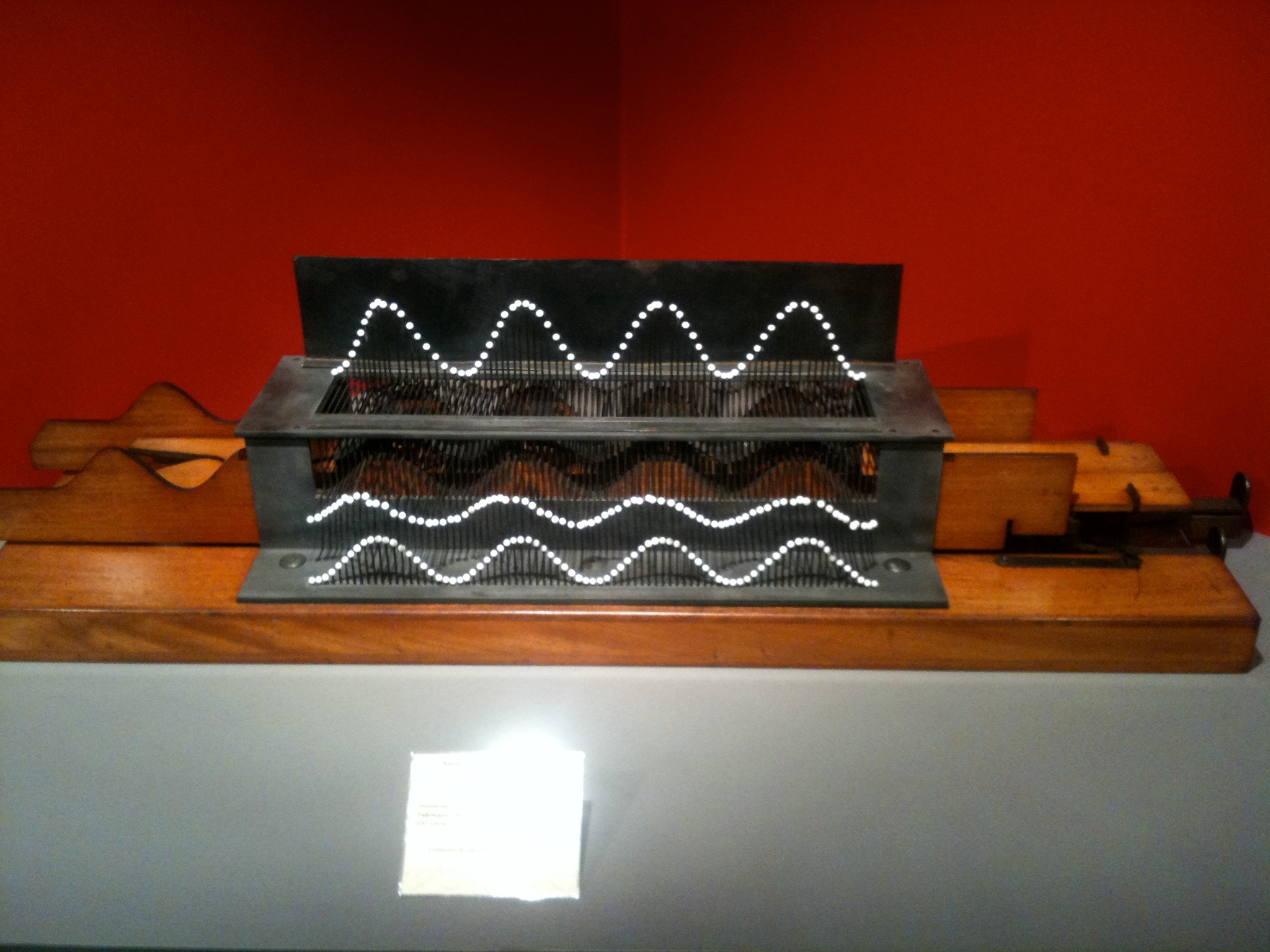
Media archaeology has been one rich curiosity cabinet collection, but how do we approach the non-object worlds of waves and streams, flows and cycles, oscillations and vibrations? Instead of things, it’s these materialities that we should turn to – both in terms of new materialist epistemology, aesthetics, as well as the political task of understanding the aesthetico-technicalities of cognitive capitalism.
Harman, Graham (2009) Prince of Networks. Bruno Latour and Metaphysics (Melbourne: re.press).
Latour, Bruno (2005) “From Realpolitik to Dingpolitik or How to Make Things Public, in Making Things Public – Atmospheres of Democracy, edited by Bruno Latour and Peter Weibel (Cambridge, MA: The MIT Press), 4-31”
ps. check out the recent-ish Mark Hansen talk, relates to process-oriented-media studies.
Towards Winchester
June 1st, I am starting a new job at Winchester School of Art (University of Southampton) as Reader in Media & Design. I am excited to be joining such a vibrant community of lecturers, researchers and ambitious plans for the future. I am part of an initiative to build an extensive research concentration on Global Media and Art – where the interchanges between art, technology and science are a key part of the agenda. It was not easy to leave behind Anglia Ruskin, ECFM, ArcDigital and CoDE – but they will continue to prosper with the help of their body of wonderful researchers!
MediaNatures-talk in Berlin (June 8)
I am giving a talk in Berlin as part of the MediaSoup-colloquium convened by Paul Feigelfeld (Institut für Medienwissenschaft at Humboldt University where I am a visiting research fellow for this Spring and Summer). On June 8, 6 pm (starts 6.15) I will be talking on MediaNatures, abstract below.
Place: Medientheater. Institut für Medienwissenschaft, Humboldt Universität Berlin, Sophienstraße 22A, 10178 Berlin.
MediaNatures
This talk riffs off from Donna Haraway’s influential concept of naturecultures which established one framework to think about the topological continuity from nature to culture. As such, it was an important spark for the discourse on “new materialism” in cultural studies, a form of rethinking materiality in new ways outside a Marxist or a representational framework. Naturecultures – also resonating with a range of positions such as Latour’s – is a way to think through the multiple materialities we encounter in terms of contemporary technological society.
The talk extends naturecultures into a more medium-specific direction with the concept of medianatures. By discussing media materialism and its relation to “new materialist” debates as well as “medium-specificity”, the talk addresses ways to think through the technical and scientific specificity of contemporary media – beyond meaning, representation and the human body, the fact that technical media engage in such processes, speeds, and phenomena that escape the phenomenological human register per se.
Yet, the talk points towards a different kind of reading of media materiality than often found in accounts for instance in media theory. We can question the notion of specificity and argue that there are various specificities from which we can draw upon. While German media theory (acknowledging that the term is in itself not very apt) has been insisting on drawing on materialities that can be directly connected to the important scientific contexts of technical media, we can think through a milieu theory of media: how media establish but also draw on nature, animals and other non-human intensities, forces and potentialities. Instead of thinking nature here in terms of the metaphorics it has offered for a long time for media cultural phenomena, and avoiding proposing any form of purity of nature, I want to look at the continuums of not only naturecultures, but medianatures that is slightly different from the emphasis of media cultures as the “new” environment for us human beings. Instead we approach medianatures as affordances, as intensities, as regimes of affects and relations and as processes of mediatic nature that offer a non-human view to new materialist media theory. Hence, we end up talking about minerals, waste and nature.
Signals, not signs
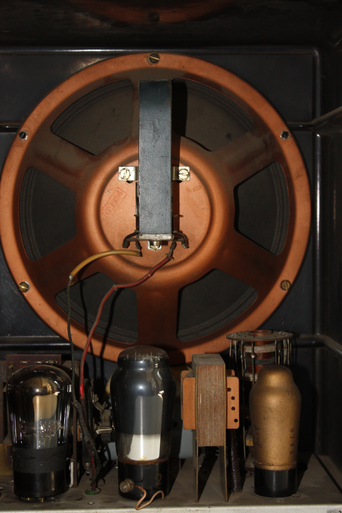 Most of my text-slaughter (i.e. cutting down the word count of my new book ms Media Archaeology and Digital Culture, and posting some blurbs online) happens here, but wanted to add this note, extracted from a chapter on”archives, in this blog space. It deals, very briefly, with some aspects of Wolfgang Ernst’s media theory:
Signals instead of signs, physics instead of semiotics – such a turn is at the core of how Wolfgang Ernst wants to define media theory. How do you do that methodologically? Theoretical work, analysis of diagrams, epistemologies, scientific frameworks for technical media are completemented in the case of Ernst by the existence of the media archaeological fundus – a certain kind of an archive of media archive – but an operational one. This is what he describes as based on the idea of epistemological “toy” – epistemisches Spielzeug (where the “Zeug” includes a Heideggerian connotation). Whereas I deal with Ernst, the fundus and their contexts in more detail in a range of forthcoming publications (in Theory, Culture &Society, in a book on Digital Humanities edited by David Berry and in my introduction to the forthcoming volume of Wolfgang Ernst writings from University of Minnesota Press) here is a short blurb into the direction of signs:
One of the aims of the fundus is to show that our perceptions are dependent on the signal processing capacities of our devices. This is evident with the example of online streaming, especially with a slightly slower internet connection that halts at times to load the content. But you can find this reliance on the signal as a time based process in earlier mass media as well. Perceptions become a function of the signal processes and the signal-to-noise ratio that is governed by complex diagrams usually more familiar to engineers and mathematicians whether we are talking about the statistics inherent in transmission, or the specific colour worlds this has related to:
“However, the broadcast of any football game illustrates the signal-to-noise ratio between plays on the field and amorphous shots of the spectators in the stadium only statistically. The archeology of media searches the depths of hardware for the laws of what can become a program. Has not the character of television shows after the introduction of color sets been determined decisively—indeed down to the clothes of the hosts—by the new standard and what it can do in terms of color and motion? Even today, the color blue has a mediatic veto in chroma key resolution; the same goes for the blue screen, and for manipulations of resolution and color filters. […] For media archeology, the only message of television is this signal: no semantics.” (Ernst: “Between Real Time and Memory on Demand: Reflections on/of Television” The South Atlantic Quarterly 101:3, Summer 2002: 627-628)
In such perspective, media artists such as Nam June Paik have been at the forefront of illuminating these technical aspects of transmission of signals by investigating the noise and non-meaning inherent in the medium. In one way, this is a reforumation of a McLuhan idea of medium as the message – the materiality of the mediation as the importance, but here turned into a more concrete physical detail: we would not see or hear anything were it not for the work of signals to transport, to transmit such phenomenological details to us.
A requiem for the slaughtered words
I guess this is dead media (archaeology).
I am doing farewells, and ritual slaughters of pieces of text that I need to cut from my new Media Archaeology and Digital Culture-manuscript (book forthcoming 2012 from Polity Press). I ended up realizing I am 15,000 words over the word limit so I need to become ruthless. This means picking up the academic chainsaw, the butcher’s knife, the well-sharpened axe that I keep under my bed anyway, and putting on my best Jack Nicholson (in The Shining) impression before the slaughter begins. Some of the remains (consider them sliced out organs, even if minor ones, of the text) are buried at Cartographies of Media Archaeology as part of the “Kill the Darling”-series (and part 1 here).








 Machinology