Funding Ethic and the Spirit of Neoliberal Academia
Pekka Himanen, the Finnish consultant, has been in the headlines over the past weeks and months. It all started when an interim report of his project got torn apart in media reviews, for instance in Suomen Kuvalehti and in various other subsequent articles. Basically, the language did not make sense: full of repetition and grammar that sounded like it had gone through google translator, the suggestions of Sininen Kirja, (PDF) “the Blue Book” were besides banal, badly written. The project about possible futures for Finland did not promise much.
Besides the substandard research, what was raised as a question mark was the funding: 700 k for this project for Himanen and Manuel Castells. And what was revealed then was how the funding was obtained: outside the normal funding calls, after a special deal arranged by the Finnish government and Prime Minister Jyrki Katainen. Of course, the PM has rushed to explain: nothing dodgy here, the research agencies were involved and interested. However, for instance Finnish academy begged to differ. Perhaps not direct pressure, but something not very fair play either, it was reported in interviews (see here and here for instance).
There is a range of really good blog posts (in Finnish) out there (for instance here and here), and I have not much to add, just to summarise and point to a wider theme this raises: dodgy funding arrangements in the midst of widespread university funding crises and claims that there just is not enough funding to sustain public universities. This is clearly not the case, but more about allocation: whether the money goes to supporting peer reviewed excellent basic work with students in free and public universities, and research that is respectable, or to consultancy projects, like Himanen’s.
Indeed, as raised for instance in a Filosofia.fi blog post, there are various issues at play. To paraphrase, and summarise:
– the project plan’s budget has unclear expenses that refer to the past, prior to the project
-the plan itself is something I would not accept even from a student: no words on methods, sources or research material; it presents a “comparative perspective” without telling what countries are being compared
– there are basic problems with the personnel of the project, regarding their duties in the project
– the project was not peer reviewed, or gone through any of the normal academic procedures for funding
What it does is an overuse of words “analysis” and “synthesis”.
Welcome to the world of neoliberal academia: a cynical disjuncture between the political economy of research & basic funding and the rhetorics of innovation, futurity, and ethical values ( such as the pet term “dignity” that Himanen spreads frequently). This neoliberal world of academia functions through privatisation of assets, architectures and mechanisms of public funding, channeling them to consultancy projects that are commissioned and tightly linked with political goals.
Interestingly Manuel Castells rushed to the defense of his colleague, professor Himanen (whose CV, it was claimed in an earlier piece of investigative journalism, does not include peer reviewed articles at all): the critics are motivated by envy. Himanen is a genius. But Castells fails to engage with any of the actual critique or even more so, with the actual puzzling core of the whole issue. Instead of political economy of funding, this is a matter of psychological problems of those without funding.
Indeed, in this case this is less about Himanen than about the wider Funding Ethic and the Spirit of Neoliberal Academia. Perhaps that is the book that should have been written instead of his Hacker Ethic and the Spirit of the Information Age. Of course, this issue is not solely about Finland, but we can recognize the same patterns across a range of other countries, including Britain: privatize public funding and commons, engineer the procedures so as to fit that financial channeling and top it up with beautiful rhetorics of ethics, respect, creativity, innovation, sharing and big societies where values are respected. Neoliberalism loves value: both in bank accounts and rhetorics. Terms such as dignity are beautifully empty signifiers that can be customised to fit the purpose.
The Air of Data: An Alternative Steampunk
There are no clouds, just data centres. But suddenly they tickled the science-fictional nerve again when Google released its “inside view” to their factories of data: it has colours! The rather glitzy pictures showed this seeming transparency and the spatial sense of data management. Besides space, it’s about the elements. Air, water plays a crucial role.

In a great phrase in Andrew Blum’s book Tubes, a Facebook data centre manager (Ken Pratchett) sums it up: “This has nothing to do with clouds. It has everything to do with being cold.” Cool, cold data is not just a linguistic or visual metaphor, despite that elegant modernism that still lives inside the architectures of data places: Mondrian as data. Instead, it has to do with climate control. Ecology. Air. Coolness is not a media theoretical attitude in this context but a media management issue that ties the earth to the escape velocity of data.
Data needs air. “Cool outside air is let into the building through adjustable louvers near the roof; deionized water is sprayed into it; and fans push the conditioned air down onto the data center floor” , explains Blum. Coolness of cyberpunk transforms into coolness of building’s climate control. Fans surround the terabytes of data. Pratchett continues about the building: “The air hits this concrete floor and roils left and right. This whole building is like the Mississippi River. There’s a huge amount of air coming in, but moving really slowly.”
It’s important to notice the persistence of issues of ecology from air to the soil as well as non-cognitive work: that we still talk of factories and rather physical processes having to do with our hardware and how we manage and work with data in its material level.
Blum: “The cloud is a building. It works like a factory. Bits come in, they get massaged and put together in the right way and sent out.”
A different sort of steam punk for the 21st century.

Digital Culture: Anomalies, Archaeology and Contagion-event (London)
 Digital Culture: Anomalies, Archaeology and Contagion
– a seminar and a book launch at Kings College, London, with Jussi Parikka and Tony D. Sampson
March 20, 2013 – Wednesday at King’s College, London, Strand Campus.
4.30-7.00
Seminar 4.30-5.30 in room K.311 and the book launch 5.30-7.00 in the the Small Somerset Room.
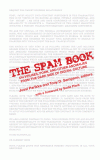
In 2009 Parikka and Sampson coedited The Spam Book, a collection of articles intended to probe the “dark side” of digital culture. The Spam Book addressed a shift from a digital culture very much defined in terms of the economic potential of digital objects and tools toward a discourse describing a space seemingly contaminated by digital waste products, dirt, unwanted, and illicit objects.
In this seminar and the following book launch, Parikka and Sampson discuss emerging ideas and theoretical approaches to digital culture. Parikka’s media archaeological approach and Sampson’s research on virality provide insights into worlds of affect, anomaly and the alternative genealogy from which our network culture emerges. Parikka’s recent book What is Media Archaeology? pitches media archaeology as a multidisciplinary 21st century humanities field that resonates with a range of recent scholarly debates from digital humanities to software studies and digital forensics. Media archaeological excavations and discussions on such theorists as Friedrich Kittler offer an alternative insight to the current digital culture/economy debates in the UK.
Sampson’s approach to digital culture brings together a Deleuzian ontological worldview with the sociology of Gabriel Tarde. His subsequent theory of network contagion does not, as such, restrict itself to memes and microbial contagions derived from biological analogies or medical metaphors. It instead points toward a theory of assemblages of imitation, viral events, and affective contagions. For Sampson, contagion is not necessarily a positive or negative force of encounter; it is how society comes together and relates. Sampson provides an assemblage theory of digital culture concerned with relationality and encounter, helping us to understand digital contagion as a positively sociological event, building from the molecular outward, long before it becomes biological.
Parikka’s media archaeology and Sampson’s contagion theory both figure the importance of a materialist approach to the imaginary and the nonconscious as central to an understanding of digital culture. Hence, the seminar asks the question: what is the nonconscious of digital culture?
The seminar is followed up by a book launch of Parikka’s What is Media Archaeology and Sampson’s Virality: Contagion Theory in the Age of Networks.
Both books are available at the event along with wine.
The event page on Facebook.
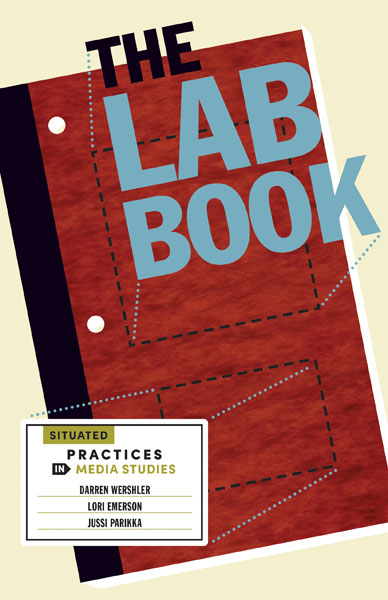
Jussi Parikka: What is Media Archaeology? Polity Press: Cambridge, 2012.
Tony D. Sampson: Virality: Contagion Theory in the Age of Networks. University of Minnesota Press: Minneapolis, 2012.
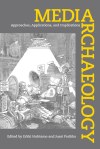
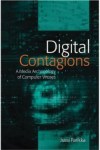
Jussi Parikka is Reader in Media & Design at Winchester School of Art, and author of Digital Contagions (2007) and Insect Media (2010) as well as (co-) editor several edited collections, including The Spam Book (2009), Media Archaeology (2011) and Medianatures (2011). He blogs at htt://jussiparikka.net.
Tony D. Sampson is a London-based academic and writer currently lecturing at the University of East London. A former musician, he studied computer technology and cultural theory before receiving a PhD in sociology from the University of Essex. His research blog is at http://viralcontagion.wordpress.com/
To find the venue:
London, King’s College, Strand Campus.
Directions.
4.30-5.30 in K3.11 on the Strand Campus of KCL.
K3.11 (King’s Building, Third Floor, Room 11)
To find K3.11 you take stairs up from the Second Floor King’s Building at the Strand end of King’s Building. You can ask for directions at the Strand Reception.
From 5.30-7.00 the Small Somerset Room
A Fundus for Media Theory
Lori Emerson has interviewed Wolfgang Ernst for the Library of Congress blog. It is a great conversation that also addresses the differences between digital preservation and Ernst’s Media Archaeological approach. The latter is, as mentioned on this blog as well, placed and spatialised in the Media Archaeological Fundus (Fundus= bottom, ground), part of his Media Studies Institute. (This idea worked even better at the original Sophienstrasse 22 address of the Institute, because it was located deep in the concrete bunker type basement).
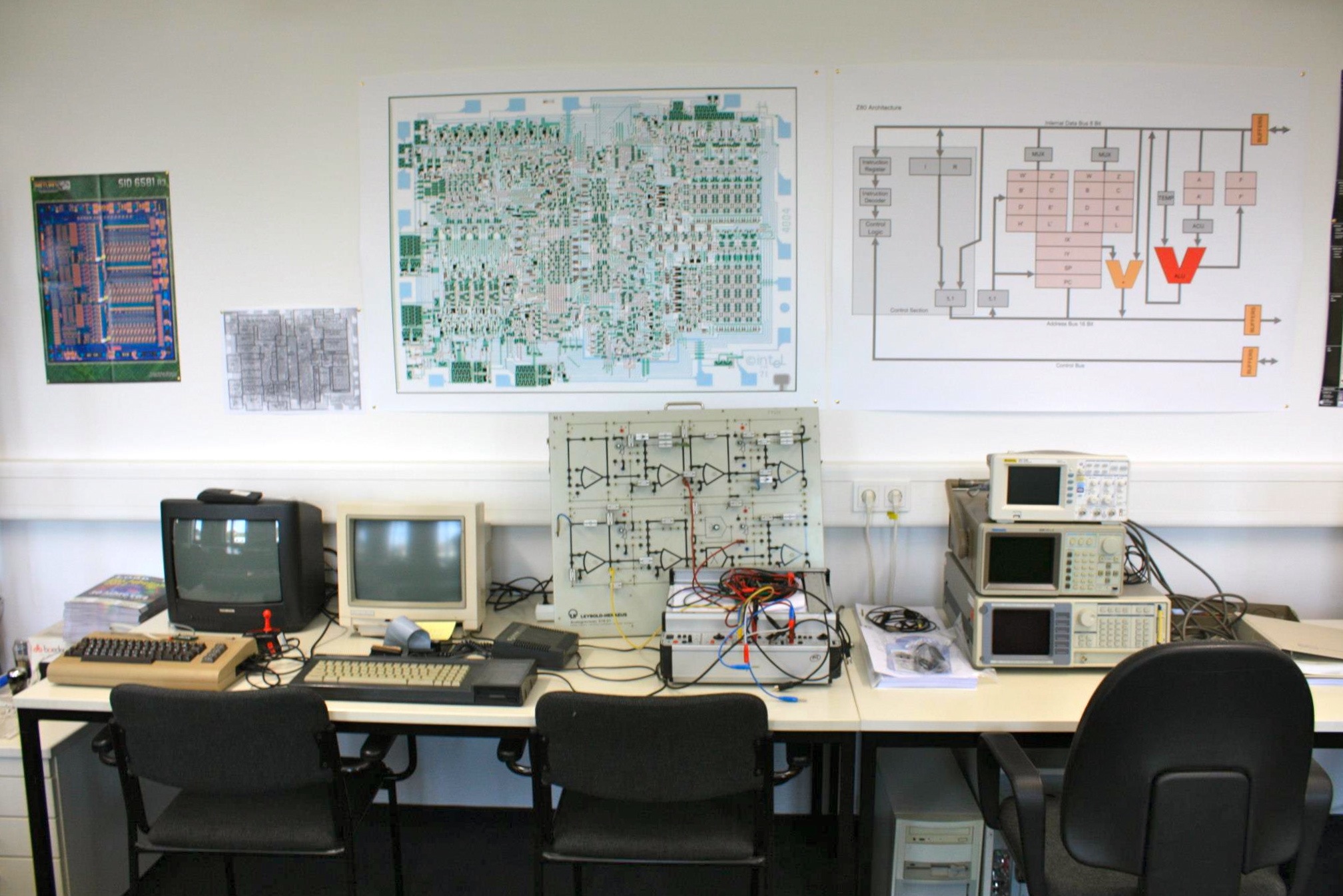
Ernst emphasises the connection between teaching media theory and practicing material “hermeneutics”: to have access to technological devices, opening them up, reverse engineering. Operationality is at the centre of this view concerning media studies. A dysfunctional television is just a design object: media starts when it can operate signals. Ernst’s approach draws from a Heideggerian pun (of sorts) of the objects of the Fundus as Epistemological Spielzeug (ref. to Heidegger’s Zeug), “epistemological toys” for pedagogical purposes.
Ernst responds to one of Lori Emerson’s questions:
“The bias of MAF based teaching is to train students to resist the nostalgic or even melancholic impulse which is normally associated with so-called “dead media”, and to discover the retro-futuristic element instead. The electric telegraph, e. g., operates with discrete signal transmission: a code which after an age of AM media (such as radio) returned in unexpected ways. Whereas digital data transmission is much too fast to be perceivable directly to human senses, the classic telegraph “dots and dashes,” when connected to an acoustic mechanism, may serve as a way of slowing down and sonifying the nature of coded signal transmission.”
Such a focus on spatialities of media studies emphasises more points concerning the current interest in thinking about “theory as practice”: the various techniques, institutions and spatialities in which cultural/media theory takes place. For instance the Fundus is a sort of a ground(ing) as well as underbelly of media theory, in how the technical and tactile engagment with technologies enables a connection to text and theory. Ernst is very reluctant to call this “Digital Humanities”: it’s media studies!
Read the full interview here.
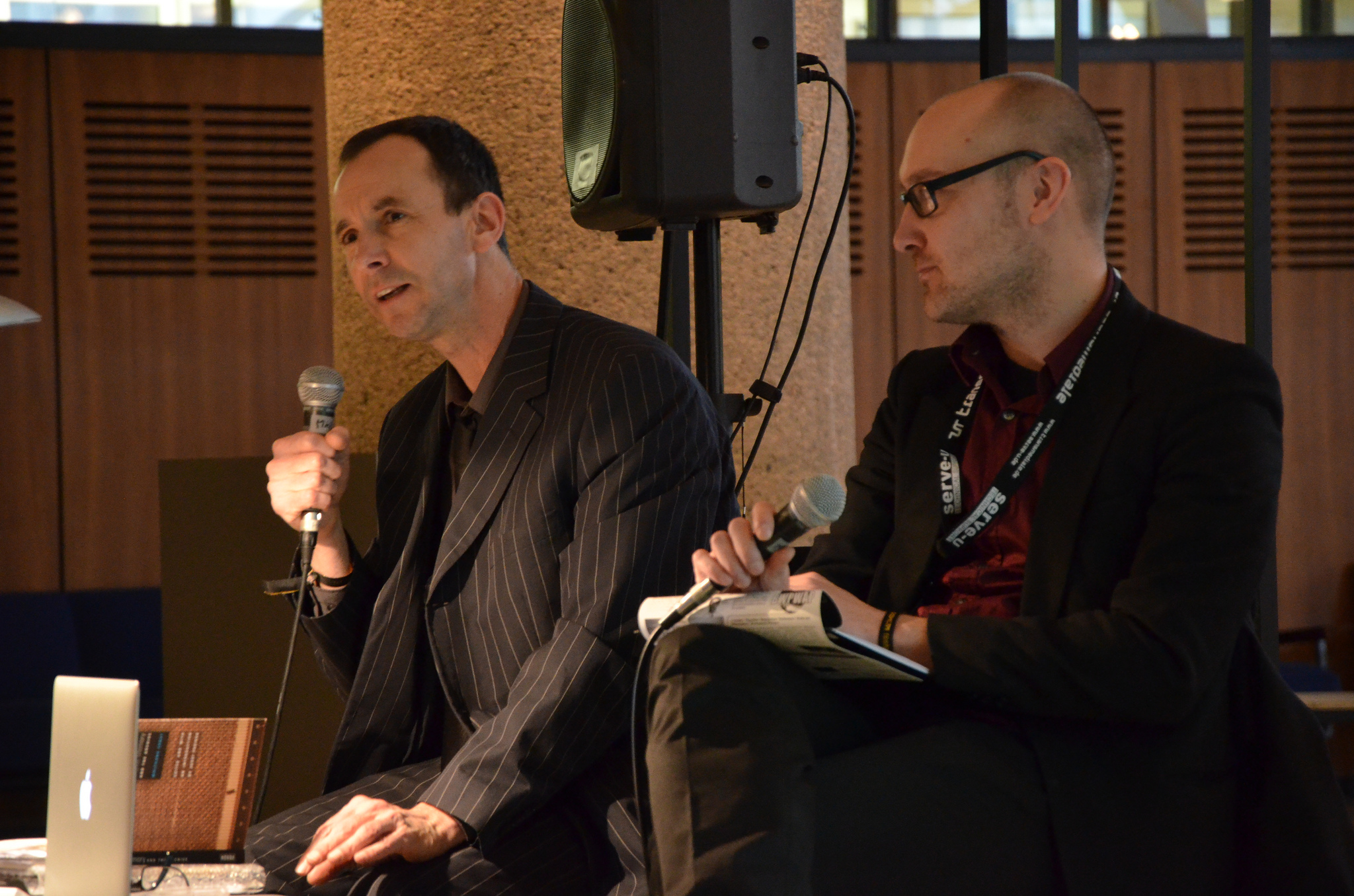
We had in Berlin just last week our joint book launch with Ernst: his Digital Memory and the Archive alongside my What is Media Archaeology? It was great to be launching the theory books in the midst of yet another great bunch of transmediale exhibitions of media archaeological resonance: the Octo Pneumatic Media System (a Rohrpost in action), the Evil Media Distribution Centre, Refunct Media vol. 5, and more.
Media & Materiality: A New Issue of Artnodes
The new issue of Artnodes is dedicated to matter. In the wake of different discussions concerning new materialism, speculative realism, objects and processes, I am glad to see this issue out: it takes a more mediatic and experimental view to some of these theoretical themes! Thanks to Jamie Allen and Pau Alsina for getting it done and published.
The issue papers are in Spanish, Catalan and English.
My little text on “new materialism of dust” is a follow-up and extension of the one in Depletion Design. It continues the same theme, and now has inspired me to write a longer essay on dust that will be published in Russian as a stand-alone booklet. The English draft of that is available on Academia.edu.
Berlin, BWPWAP, and Book Launch
Transmediale starts today with its puzzling, great theme Back When Pluto Was a Planet (BWPWAP). Except conceptual, temporal and spatial shifts and displacings of various sorts. This is the first year our Winchester School of Art also is collaborating with transmediale, and as part of that we are hosting a panel on military 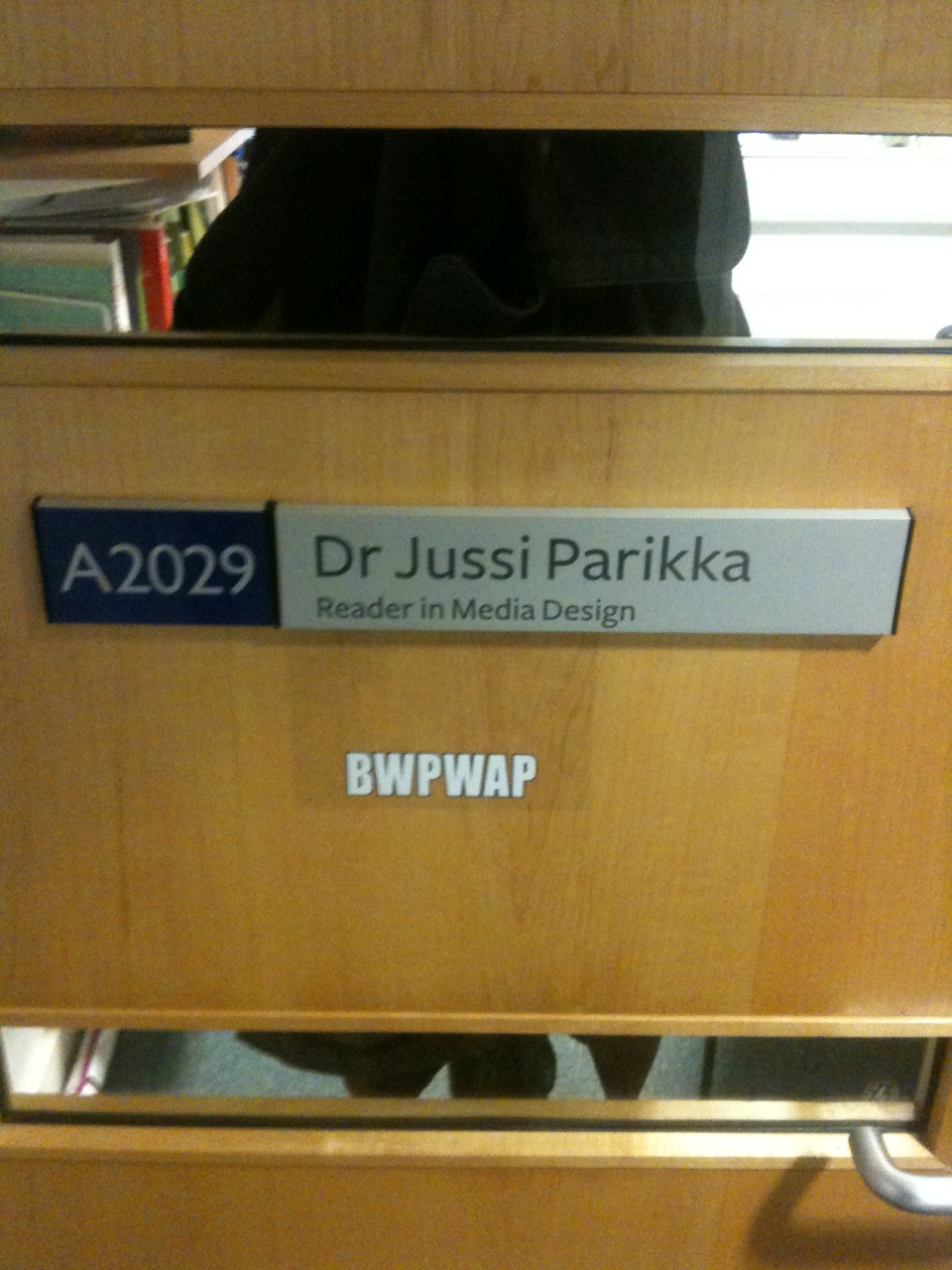 technologies, space and Cold War.
In addition, I am sharing a book launch with Wolfgang Ernst: It is the book I edited of his writings alongside my own What is Media Archaeology? Join us for that on Friday, 1st of February.
And as a Kittlerian cherry on top, on Saturday evening I am participating in the performance Sources, Synths, Circuits that focuses on the reconstruction of the late Prof Kittler’s synthetizer. We discuss that from the perspective of not only Kittler, music, technology but also archives.
On Virality
Tony D. Sampson’s new book Virality is a good read: on network culture, Gabriel Tarde, affect, HCI and politics. I interviewed Tony for the Theory, Culture & Society blog and he elaborated some of his thinking behind the book in relation to Evil Media and non-cognitive capitalism.
The TCS blog has also – for a limited time though – the PDF of the forthcoming TCS review of Sampson’s book.
Qué son los insect media?
The good people at the Barcelona CCCBlab commissioned and translated a small teaser-trailer text to Insect Media. Available now in Spanish and Catalan! Oh and the English version can be found here.
New Materialism and Non-Humanisation – an interview
Michael Dieter interviewed me for the Speculative Realities ebook (part of an earlier art exhibition that picked up on speculative realism as an inspiration for art methodologies). We talked about the posthuman, non-humanisation and labour, artistic practices — and a couple of words on my new project that itself speculates on the possibilities of crossbreeding German media theory with Italian (inspired) political theory. In the interview, I also emphasize that one needs to be quite aware about the ways in which people do tend to lump together different traditions of contemporary “realism” and “materialism” — as well as ignoring so much of the earlier work. Is for instance feminism being written out of the current debates in theory?
Michael’s first question…
Michael Dieter (MD): Is there a ‘materialist’, ‘realist’ or ‘nonhuman’ turn in contemporary
thought? If so, how would you position your work in relation to these trends and what is
at stake with such terms?
– and read the rest here! (Three different e-formats available).









 Machinology