Archive
Urban Technologies and Air Pollution
I have a new article out in Fibreculture-journal’s new special issue Computing the City. My text “The Sensed Smog: Smart Ubiquitous Cities and the Sensorial Body” addresses questions of environmentality and media, and mediated environments through the perspective of smog and air pollution. Data about air pollution functions in various ways in the construction of the subject in infrastructures of the technological city, but the broader context of air and technology is approached also in speculative ways. To quote a short passage:
“For a sketch of an alternative ecological art history (on art and the Anthropocene, see Davis and Turpin, 2015), one could claim that ozone depletion relates to radical molecular art since the 1970s. The 1970s mark a visual art historical period caused by photodissociation of key chemical agents such as CFCs, freons, halons as well as solvents, propellants, etc. It is a weird period when one starts to consider it from this perspective: problems of refrigeration and the invention of products such as freon have their residual aftereffects in the upper atmosphere which, as historian John McNeill notes, have not really until now featured as an important role in human history. Usually things that concern us have happened in the lower spheres of the planet (McNeill, 2000: 52). History has been atmospherically biased towards things much closer to human headspace. But the modern historical period rather concretely consists of carbon dioxide, ozone and sulphur dioxide (McNeill, 2000: 52), too, and this is not a feature restricted to that one particular narrative-atmospheric space. The massive increase in CFC (chlorofluorocarbon) amounts has resulted in what could be called the ‘ultraviolet century’ (McNeill, 2000: 114). The effect of the ozone depletion as we have grown to know it, is the increase in penetration of UV-light/radiation through the stratosphere, resulting in a different light balance from the 1970s to approximately to the year 2070 (as the restoration of the ozone protection layer is a slow process). This form of art historical period is registered on the skin and the organisms of humans as increased cancer rates; in animals such as whales as similar epidermal reactions (Thomas, 2010); in plants and crops, etc. Smog itself is also visible in the increase in cardiovascular diseases, asthma and lung inflammations, asthma for example.”
You can find the article and the whole issue here. Computing the City-special issue is edited by Armin Beverungen, Florian Sprenger and Susan Ballard.
Conversations in Time: A Dialogue with Haroon Mirza
I was asked to be in dialogue with the visual and sound artist Haroon Mirza for the just released series of conversations that forms part of the Aarhus 2017 Capital of Culture-year programme. They are launched online now and feature many interesting dialogues and recordings.
Conversations in Time is a series of new dialogues inspired by Suzi Gablik’s important book, Conversations Before the End of Time (1995).
Taking off from the prescient dialogues transcribed in Gablik’s book, contemporary artists, writers and cultural thinkers ruminate on the question:
What is the purpose or role of art in an age of accelerating social change and environmental uncertainty?
New conversations will be added throughout the duration of the Aarhus European Capital of Culture 2017 Public Programme.
You can listen to our dialogue with Haroon here. Besides an engaging conversation partner, I was reminded that he is also a Winchester School of Art graduate (BA in Fine Art)!
And we are in excellent company: the other dialogues feature people like Marina Warner, Adrian Searle, Lara Pawson and several other influential writers, scholars, artists, etc.
On Media Meteorology
I wrote a short text for J.R. Carpenter’s just recently published book The Gathering Cloud (Uniformbooks), a book of which engages with the history of meteorology and various archival material about the weather and clouds in hendecasyllabic verse. The Gathering Cloud came out also as web-based work that you can find here but I warmly recommend the book itself too. Do also get in touch if you are interested in reviewing her book.
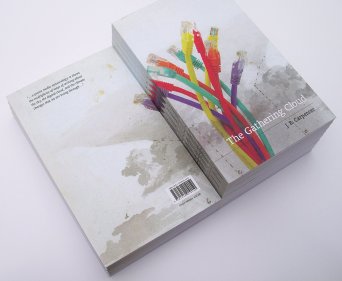
Below my short introductory-kind of a text, published with permission by the press.
On Media Meteorology
Every time it rains, media history soaks into our skin. Clouds and their seemingly light ephemeral nature are full of the chemical remnants of the on-going industrial age, what some call the Anthropocene . Human science and technology have penetrated the hard geological substrates of our culture and made the air part of our chemical cultural history. Many prefer too think of the current informational culture as one of light, marked by the weightlessness of fibre optics and the speed of digital transactions, and yet it is also one of weight – of minerals, metals, energy consumption, and entropy.
The weather comes and goes but our enthusiasm for it persists. To speak of weather is to articulate a continuum between humans and their environment. It’s what’s high above our heads and what sustains life beneath our feet that should concern us most. A breath of air. We inhale the weather. We exhale it. We measure it, we paint it, we verbalize it, we speak and write poetry about it.
J.R. Carpenter’s The Gathering Cloud is both a condensation of media history and a comment on the current environmental weight of clouds. This book reminds us that cloud computing is one of the backbones of contemporary culture. The particularly interesting thing about cloud computing is that it is so heavily about climate control: server farms are carefully managed environments that cater to the well-being of the machines that ignorantly and yet with high-speed accuracy convey the things we talk about online, from #lolcats to emails, from memes to alternative facts. Of course, clouds were technological long before cloud computing. As Carpenter writes, J.M.W. Turner’s painting “Rain, Steam and Speed” (1844) is about the meeting of a new technological world with the air of the planet: the exhaust of steam trains and of the massive factories that define the particular clouds of our climate change era mix with air to create vast fields of waste, both visible and invisible.
Clouds are painted, engraved, and increasingly now also computed in weather simulations and forecast models that both the holiday goers and the military are constantly keenly following. Clouds and the weather have been continuously remediated through a history of visual technologies and strategies of representation, and still, as Carpenter points out, they resist a stable ontology. They resist a lot of things: they are made of constant perturbations, micro-movements, dynamic turbulence. This struggle with representation is not just about showing what’s up there but also bringing it back down here as material for analysis: nowadays, clouds are simulated and again, and so return to digital cloud (computing) platforms.
Carpenter evokes the Greek history of the four elements (earth, air, fire and water) as part of media and visual history. As such, her project relates to recent work in both contemporary technological art and cultural theory interested in the environment. She draws upon John Durham Peters’ The Marvellous Clouds that starts investigations of media from their elemental existence as nature. As Peters argues, the sky has been for a long period considered as a place of media. Read as signs by Ancient Babylonians, as exhalations by Ancient Greek Philosophers, only in our age of technical media has the sky become the object of another sort of analysis. The sky is where visual media starts, as light filtered through the atmospheric levels. But light is not the only element of interest. The other chemical realities of clouds must also be included in this story.
The Gathering Cloud presents a series of material transformations that are made visible through a media history executed as digital collage and print publication, hendecasyllabic verse and critical essay. Carpenter’s methodology as a writer is closely linked to the field of media archaeology (a field interested in artistic, surprising, experimental, and sometimes imaginary ways of understanding contemporary media culture though the past). But it would be as fair to call her work a poetic media meteorology: it shows passionate ways of writing the sky, the digital cloud, and the climate changes that we live in, revealing gaps between our concepts and realities of the environment. And don’t be mistaken by airy the connotations of the word – the cloud is already well deep in our lungs as well as our minds.

A still from J. R. Carpenter’s The Gathering Cloud http://luckysoap.com/thegatheringcloud
1:1 and Cartographic Operations
Cartographic Operations-exhibition is on at the Level 4 gallery in Southampton (Hartley Library). Supported by AMT, it features work from Winchester School of Art practitioners addressing maps. Jane Birkin, Abelardo Gil-Fournier, Sunil Manghani and Ian Dawson’s pieces address the main theme: “In Bernhard Siegert’s ‘The map is the territory’, he refers to the idea of ‘cartographic operations’. The suggestion is that our way of seeing the world is not simply represented in maps, but that map-making is itself a play of competing signs and discourses producing our subjecthood. These are the coordinates we come to live by, which in turn influence the marks and signs at our disposal when we seek to make and share representations of the world.”
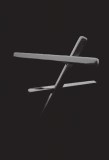
One of the pieces is Jane Birkin’s 1:1 which is described and show below. It opens up the exhibition space to the depth of the surface by making visible the electric current and metal inside the wall. While it can be read in relation to some earlier pieces of contemporary art it also speaks to the current work in critical practices of infrastructure.

From the catalogue text:
Jane Birkin’s 1:1 is a direct mapping of infrastructure behind the white space of display. It is a piece produced by performative procedure: a regulated operation where authorial control is established at the outset and rules are strictly followed. Electric current and metal are plotted using a DIY store metal/voltage detector and the information transferred simply to print.
There are literary precedents for mapping at this scale. In Jorge Luis Borges’ short story On Exactitude in Science cartography became exactingly precise, producing a map that has the same scale as its territory. And, in Lewis Carroll’s Sylvie and Bruno Concluded, a German professor tells how map-makers experimented with the use of ever larger maps, until they finally produced a map of the scale of 1:1. ‘It has never been spread out, yet’, said the professor. ‘The farmers objected: they said it would cover the whole country, and shut out the sunlight!’ In this case, the gallery wall is covered, shut off from light and eyes. Although 1:1 is an impassive engagement with the rule-based activity of cartography, it simultaneously performs an affective act of display.
The Steganographic Image
It’s the Conspiracy week at the Photographers’ Gallery in London and I was asked to write a short text on what lies inside the image (code). In other words, I wrote a short text on the Steganographic Image, and hiding messages in plain sight, although in this case, encoded “inside” a digital image. The image that tricks, the image that operates behind your back, or more likely, triggers processes front of your eyes, in plain sight, invisible. As I was reminded, this is also an idea that Akira Lippit has in a different context developed through Derrida. To quote Lippit (quoting at first Derrida): ‘”Visibility,” he says “is not visible.” Invisibility is folded into the condition of visibility from the beginning. There is no visibility that is not also invisible, no visibility that is not in some way always spectral.’One would be tempted to argue that this is where this consideration of the visual meets up with the history of cryptography, or ciphering and deciphering. Or as Francis Bacon put it in 1605 in ways part of the longer media archaeology of the steganographic image too: “The virtues of ciphers are three: that they be not laborious to write and read; that they be impossible to decipher; and, in some cases, that they be without suspicion.” It is especially this third virtue that remains of interest when looking at images without such suspicion: the most banal, tedius of pictures; a spectrality that conjurs up hidden passages, triggers and operations.
My short text can be found here online. It’s only scratching the steganographic surface.
A short preview of the text.
Hidden in Plain Sight: The Steganographic Image
Who knows what went into an image, what it includes and what it hides? This is not merely a question of the fine art historical importance of materials, nor even a media historical intrigue of chemistry, but one of steganography – hiding another meaningful pattern, perhaps a message, in data; inside text or an image. This image that is always more than. More than what? Isn’t it obvious from the amount of work gone into art-theoretical considerations of the inexhaustible meanings of the photographic image that it has always been a multiplicity: contexts, fluctuating meanings, readings and the insatiable desire to look at things in order to discover its depths.
As such, a steganographic inscription is neither a depth nor the plain surface but somewhere in between. In contemporary images made of data it refers to how the image can be coded as more than is seen, but also more than the image should do. The steganographic digital image can be executed; it includes instructions for the computer to perform. Photographs as part of a longer history of communication media are one particular way of saying more than meets the eye, but this image also connects to histories of secret communication from the early modern period, to more recent discussions in security culture, as well as fiction such as William Gibson’s novel Pattern Recognition (2003). Were J.G. Ballard’s 1950s billboard mysteries one sort of cryptographic puzzle that hid a message in plain visual sight?
After Arikan: Data Asymmetry
After our succesful exhibition of Burak Arikan’s work, Data Asymmetry, I am posting some of the interviews and material that came out of the exhibition.
Here’s a video interview we did with Arikan setting up the exhibition in the Winchester gallery in November 2016:
And then there’s the interview(s) in Furtherfield: Carleigh Morgan interviewed Burak in the part 1 of the interview about Data Asymmetry and myself in part 2 of the interview. The interview(s) address mapping as a collective experiment, networks as events, (art) methodologies of working with data and a lot of other topics related to internet culture.
What is AMT? A video and an interview
In this video, myself and Ryan Bishop talk a bit more about what the new research group (or office) Archaeologies of Media and Technology does and how it sits as part of the research and practice at Winchester School of Art.
In addition, a new interview with me (conducted by Thais Aragão) is now online and available in English and in Portuguese. The interview is focused on AMT as a platform for practice and theory and how it connects to themes in media archaeology and digital culture research.
You can find AMT online at: http://www.southampton.ac.uk/amt/
and on Twitter at @amt_office
Underground the White Mountain
I was invited to talk at the Serpentine Gallery’s Miracle Marathon this year. My take on the theme was to talk of the underground and the occult worlds of the long legacy of the Cold War. I performed with Emma Charles’ film White Mountain. Here’s the video of the talk.
More about Charles’ film in a short story in the new magazine issue of Postmatter.
The same magazine issue includes a new interview with me: Fossils of the Future.
A Media Archaeology of Ingenious Designs
The Istanbul Design Biennial launches this week and we are glad to announce to be one of the invited participants. Our project with Ayhan Ayteş on the Middle-East legacy of technology and design is exhibited in the Studio X space. Besides featuring objects from this particular historical period of approximately 800-1200, the idea is to make this heritage enter into a conversation with speculative design, an alternative geopolitics of technology and imaginaries of design and media. This is executed in the form of seminar with Laura Marks and Azadeh Emadi (19th of November) and a workshop (November 20) on the design fictions and media archaeological imaginations of past futures, and imaginary realities of Middle East and technology. A lot of our thinking behind this programme has been influenced by the Variantology-project (Siegfried Zielinski et al).

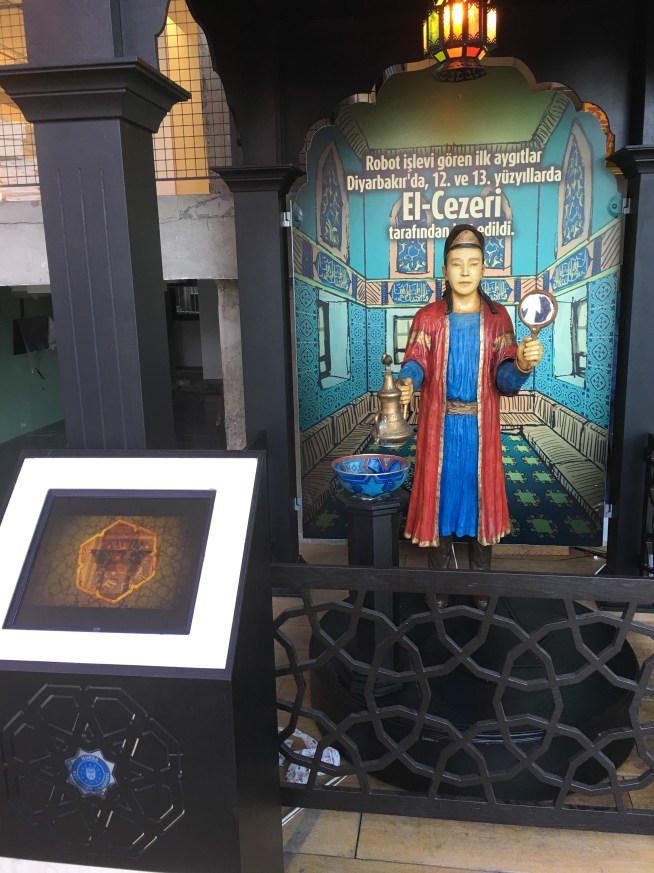
The Elephant Clock, from The Book of Knowledge of Ingenious Devices (1206), (Topkapi Sarayi Library, Ahmet III, Ms. 3472)
Below is the short text we wrote for the catalogue of the Istanbul Design Biennial.
Jussi Parikka and Ayhan Aytes
A Media Archaeology of Ingenious Designs
Modern European culture has positioned early mechanical clockworks as key contraptions and symbols of the machine age of industrialism, later computer culture, and of the old new media of visual technologies (microscopes, telescopes and more). European humanism prescribed a mastery over technological culture while building automata as luxury machines intended to amuse and awe. This technological culture also resulted in questions about what the human is. But answering the question are we human? necessitates the further questions of when are we human, and where are we human?
When instead then? What if you start this story in an alternative fashion, in a different time and at a different place? What if you start with a speculative mind-set relating to existing but often forgotten histories of the design of the human and its doubles: technologies of automata and of the measurement of the world, alternative cosmologies in which advanced media machines are born as part of Muslim culture?
An alternative modernity: Baghdad since the ninth century and the Bayt-al-Hikma (House of Wisdom) supported by caliphs and their viziers as a special place of scientific knowledge. Nowadays we would call this an interdisciplinary laboratory for science, design and technology. Translations of texts and an enthusiastic interest in mathematics, logic, medicine and other sciences mix with innovations in design. A world of musical automata that work instead of humans; design prototypes for various machines that reach a sort of apex in Al-Jazari’s celebrated Book of Knowledge of Ingenious Mechanical Devices (1206), which functions not only as a historical source on this rich culture of invention but also as a speculative design manual for an alternative technological culture.
In The Difference Engine, their 1990 science fiction novel, Bruce Sterling and William Gibson pitched a similar sort of idea relating to 19th century Victorian culture as part of a steampunk imaginary: what if the modern age of computation had already started then, a hundred years earlier than thought? Rewind further back in time: What if the age of programmable machines and advanced technologies could be said to have started in the “Arab-Islamic Renaissance” of 800-1200? We could then look at early devices like astrolabes as instruments of planetary design that mediate an understanding of the positions of the sun and the stars in relation to human practices such as prayer times. Besides technologies of time and location needed for the structure of everyday religion, programmable machines functioned as prototypes for computing by way not only of Muḥammad ibn Mūsā al-Khwārizmī’s “algorithm” but also the The Banū Mūsā brothers’ programmable musical machine.
Such examples beg us to alter our historical focus to a different age and a different region. Automata mirror and deflect, distort and circulate as machines of imaginary and real extensions of the supposedly human. They also question how human practices can be automated in the uncanny lives of technological artefacts. Automata are machines that situate questions of the human and its others as part of a deep-time media archaeology of robots and automata, and alternative geographies of design culture. Ask what the human is, and you also implicitly ask: what is not human, what is just about human, and what is barely human.
Sources:
Marks, Laura, Enfoldment and Infinity. An Islamic Genealogy of New Media Art (Cambridge, MA: The MIT Press, 2010).
Nadarajan, Gunalan “Islamic Automation: A Reading of Al-Jazari’s The Book of Knowledge of Ingenious Mechanical Devices (1206) “ in MediaArtHistories, ed. Oliver Grau (Cambridge, MA: The MIT Press, 2007), 163–78.
Zielinski, Siegfried and Peter Weibel (eds.), Allah’s Automata. Artifacts of the Arab-Islamic Renaissance (800-1200). (Berlin: Hatje Cantz, 2015).

Water Serving Automaton,The Book of Knowledge of Ingenious Devices (1206) (Topkapi Sarayi Libray, Ahmet III, Ms. 3472).
Data Asymmetry – a Burak Arikan exhibition in Winchester
 I am happy to announce that the Turkish artist, technologist Burak Arikan’s exhibition Data Asymmetry opens in November at the Winchester Gallery (at the Winchester School of Art).
The exhibition addresses critical mapping as a way to understand data culture. The pieces raise questions about the predictability of ordinary human behavior with MyPocket (2008); revealing insights into the infrastructure of megacities like Istanbul as a network of mosques, republican monuments and shopping malls (Islam, Republic, Neoliberalism, 2012) ; remapping and organising recurring patterns in the official tourism commercials of governments with Monovacation (2012); exploring the growth of networks via visual and kinetic abstraction with Tense Series (2007-2012); and showcasing collective production of network maps from the Graph Commons platform. As the works emphasise, the aim of the Graph Commons is to empower people and projects through using network mapping, and collectively experiment with mapping as an ongoing practice.
Previously Arikan has had his work shown at venues such as the Museum of Modern Art New York, Venice Architecture Biennale, São Paulo Biennial, Istanbul Biennial, Berlin Biennial, Ars Electronica and many others.
The exhibition opens November 10.
In addition to the exhibition in the Winchester gallery, Arikan is organising a workshop on critical mapping and network graphs at the Winchester School of Art.
Arikan’s visit also includes another workshop in London at the British Library and as part of the Internet of Cultural Things-project. The visit to Winchester is also supported by the AMT research group at WSA.
For more context on Arikan’s art practice, please find here an audio interview I did with Arikan on stage at transmediale 2016 in Berlin.
For information and queries, please contact me: Contact details.








 Machinology