Archive
The Turku School of Media Theory?
Under the term of “a New Media Archaeology”, the inaugural issue of NECsus – European Journal of Media Studies has a review of Insect Media, Media Archaeology as well as Pasi Väliaho’s Mapping the Moving Image. Picking up on these three books out of four is not out of selfishness or wanting to dismiss the fourth book (Cinema beyond film: Media epistemology in the modern era ) touched upon in the review/report but to point to a funny detail or a coincidence. In the same review, all of us from me to Erkki Huhtamo (co-editor of Media Archaeology) to Väliaho studied at the University of Turku, even if Huhtamo already in the 1980s, and by the time me and Pasi came to the university, Huhtamo was on his gradual way to media archaeological fame.
Hence, the title of this posting, “The Turku School of Media Theory”, is very much tongue in cheek and not to be taken completely seriously, although one has to say there was a minor buzz back then. I briefly asked Huhtamo about his 1980s Turku-times and influences; for him, early 1980s literature studies lectures by Hannu Riikonen were the ones to introduce Ernst Robert Curtius. This also meant picking up the notion of “topos”, so important for Huhtamo, and gradually by late 1980s, starting to think media culture too through it. Indeed, like mine also Huhtamo’s roots are in cultural history. Huhtamo was for instance in the 1980s using the idea of recurring topoi to investigate late 16th century Italian travel narratives.
Huhtamo had in the late 1980s picked up on various media theoretical strands for instance through the cultural semiotics of Eco as well as Barthes. Siegfried Zielinski visited Turku back then (probably early 1990s?) and Zielinski’s Audiovisionen was one of the books that was read in Turku by Huhtamo and for instance Jukka Sihvonen — currently professor of Media Studies. Sihvonen was the one who acted as the catalyzer for my and Väliaho’s (among other folks’) inaugural interest in such media theoretical oddities as Kittler and German media theory in general. In addition, Sihvonen’s seminar on Deleuze in the late 1990s was really one of the key elements which kick-started a lot of the interest in material media theory. (I will leave it to someone else to provide fullfledged and accurate histories of Finnish and Turku academia of the 1990s). One needs such minor exits, escape routes, and suddenly academic classes can shift into exciting eye-openers and turning points.
Similarly one could say that a lot of the stuff happening in Turku in media theory – not only in Film and TV studies (later Media Studies) but also Cultural History – was despite the seemingly internationally peripheral location great quality (lots of other things were happening then and still, including Women’s Studies, which for instance has produced lots of very interesting feminist art theory). Oh and it has not disappeared anywhere – Media Studies is doing excellent, Art Studies has taken a new materialist turn in Turku, and in addition, for years the University has had its own folks in Digital Culture (where I am affiliated Faculty member as an Adjunct Professor, Docent) too!
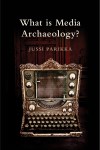
What is Media Archaeology? — out now
It’s out, and gradually in book stores — What is Media Archaeology? (Polity),
my new book about media archaeology (what a surprise)!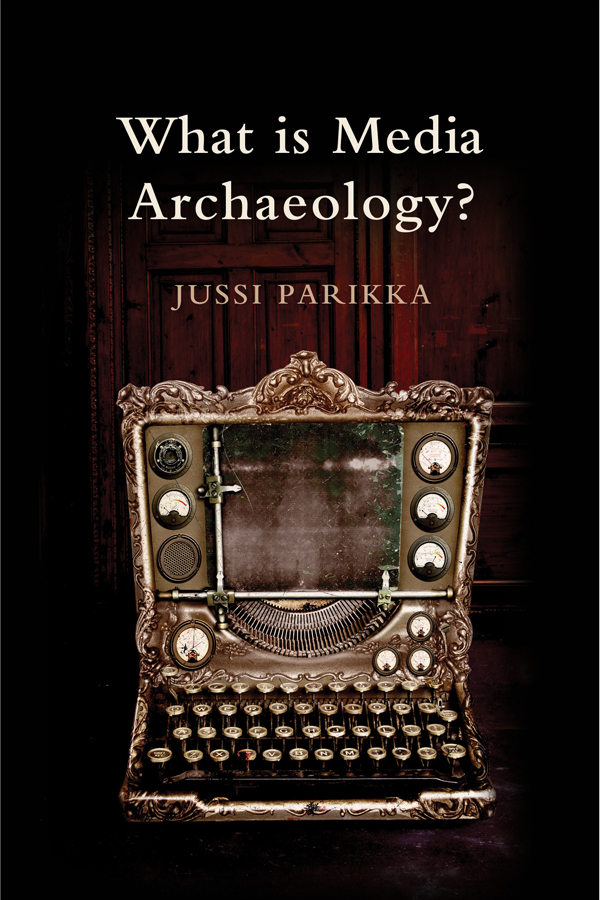
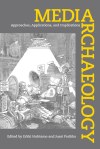
It picks up where the edited volume Media Archaeology: Approaches, Applications, and Implications (Huhtamo and Parikka) left off; this means the implications bit, and how media archaeology relates to other recent discussions in art, cultural and media theory: software studies, new materialism, archives, and more. In other words, it complements the earlier collection.
So in short,
1) What IS media archaeology?
– depends who you ask. If you ask Erkki Huhtamo or Siegfried Zielinski, you might get a different answer than from asking me. For Huhtamo, it is the recurring topoi/topics of media culture; for Zielinski, a poetic exploration of deep times and variantology; and so forth. For me, it is an exciting theoretical opening to think about material media cultures in a historical perspective. However, it expands into an experimental set of questioning about time, obsolescence, and alternative histories as well. In one way, it is about analyzing the conditions of existence of media cultural objects, processes and phenomena. It picks up on some strands of “German media theory”, but connects that to other debates in cultural theory too.I like what Bernhard Siegert has said about the early ethos of media archaeology being that of Nietzschean gay science — experimental, exploratory, radical. Perhaps in this vein, media archaeology is one answer to the need to think transdiscplinary questions of art, science, philosophy and technology.
2) Isn’t it just media history that tries to rebrand itself?
– No, not really. A lot of the media archaeological work expands to strong theoretical arguments as well as quite different sorts of historical inquiry than one recognizes in media historical work. Having said that, perhaps this is where the interesting connections are emerging; how media archaeology can contribute to media historical inquiry as well as to thinking about archives and cultural memory. There is one chapter on archives in this new book. A lot of media archaeology owes to earlier new cultural histories and new historicism, so the link is there.
3) Isn’t media archaeology only a footnote to Kittler’s work?
– That would be unfair towards a bunch of other theorists, German and non-German. Kittler himself denied being a media archaeologist, even if a lot of the stuff has taken much inspiration from him and the idea of looking at “conditions of existence” of cultural formations through (technical) media. Even Germany is filled with media archaeological work, since 1980s, and a lot of that expands to such new directions as Cultural Techniques (Siegert, Krajewski, Vissman, and others) as well as other media archaeologists — not least Wolfgang Ernst. In addition, the book offers an insight to other media archaeological theories, such as Huhtamo’s, Zielinski’s, new film history (Elsaesser et al) as well as the links to emerging media studies fields such as digital humanities (eg Kirschenbaum’s work).
4) Sounds like the book is all theory, huh?
There is more than just media theory — although I admit, that because of the nature of the book, was not able to work too much of new empirical material there. However, one key thing that pops up in the book is the use of media archaeology as an artistic method. There is a whole chapter dedicated to that. I think one of the most exciting directions is to see how these methodologies can be used in design, arts and other fields of creative practice that anyway are interested in themes of obsolescence, media and technological affordance, the environment and ecology, remix and for instance hardware (even analogue!).
5) What next?
– No more media archaeology for me. Well, I have jokingly promised that I won’t use the term anymore, even if I am interested in seeing where this term might take us. I will come up with a disguise, a theoretical disguise.
6) your chance to ask me a question!
– and I will answer, if I can.
Meanwhile, here is the info about the book:
(From the Publisher’s catalogue and website):
This cutting-edge text offers an introduction to the emerging field of media archaeology and analyses the innovative theoretical and artistic methodology used to excavate current media through its past.
Written with a steampunk attitude, What is Media Archaeology? examines the theoretical challenges of studying digital culture and memory and opens up the sedimented layers of contemporary media culture. The author contextualizes media archaeology in relation to other key media studies debates including software studies, German media theory, imaginary media research, new materialism and digital humanities.
What is Media Archaeology? advances an innovative theoretical position while also presenting an engaging and accessible overview for students of media, film and cultural studies. It will be essential reading for anyone interested in the interdisciplinary ties between art, technology and media.
And the blurbs:
‘Jussi Parikka offers a lucid, concise, and highly readable account of a new and exciting field – media archaeology. He demonstrates that contemporary media forms are rooted to the past by multiple threads – untangling them helps us understand the media frenzy that currently surrounds us.’
Erkki Huhtamo, University of California Los Angeles
‘A fabulous map of media archaeology that, as its subject compels, produces its territory anew.’
Matthew Fuller, Goldsmiths
‘The most comprehensive coverage to date of this fascinating area of study. Parikka’s book offers an excellent overview of connections between the material and social aspects of media technology. He provides a thorough review of the diverse and sometimes contrasting theoretical foundations and provides a host of concrete examples of media-archaeological practice that serve to bridge the gap between heady theoretical trajectories and the concerns of practicing artists, users and other readers who take their technology seriously.’
Paul DeMarinis, Stanford University
Table of Contents
Chapter 1
Introduction: Cartographies of the Old and the New
Chapter 2
Media Archaeology of the Senses: Audiovisual, Affective, Algorithmic
Chapter 3
Imaginary Media: Mapping Weird Objects
Chapter 4
Media Theory and New Materialism
Chapter 5
Mapping Noise and Accidents
Chapter 6
Archive Dynamics: Software Culture and Digital Heritage
Chapter 7
Practicing Media Archaeology: Creative Methodologies for Remediation
Conclusions: Media Archaeology in Digital Culture
Note: the book is hitting the bookstores now in the UK (May), and soon in North-America (June) and rest of the world.
The Anne Friedberg book award for Insect Media!
 Could not be any more excited to finally be able to publicize this:
Insect Media has won the Society for Cinema and Media Studies Anne Friedberg book award 2012 — awarded annually for Innovative Scholarship! Winning a book prize feels fantastic, but of the possible prizes, exactly the one that carries her name; remembering the inspiration her Window Shopping gave during my studies in the 1990s, and then later, The Virtual Window — all of her work pointing to the way we should be expanding media studies into new fields and investigations!
This sounds like an invented story but it is true: when I received the email about the happy news, I was indexing my forthcoming What is Media Archaeology?-book and only a couple of hours earlier had added the entry “Friedberg, Anne”…
The panel said this of my Insect Media:
“Combining philosophy, theory, history and archival research, Parikka presents, ‘forms of swarm culture in terms of new architectures to offer insights into networked media and the media environments we live in.’The book’s style and writing is energetic, cohesive and enlightening. Moving between early underwater films to cyber theory (biodigitality), the book is full of erudite reflections on Spinoza, algorithms, ticks, Umwelt, and contemporary culture.”
A huge thanks to all!
More about the Anne Friedberg Innovative Scholarship Award:
“The Anne Friedberg Innovative Scholarship Award recognizes the best new scholarly work that exemplifies rigorous, interdisciplinary and theoretical inquiry into issues of vision and visuality. Funded by a generous gift from her estate, the Anne Friedberg Award recognizes innovative work that expands the discipline of film and media studies, emphasizing its relationship to other visual fields, including architecture, art history, and digital media. Believing that “how the world is framed may be as important as what is contained within that frame,” Friedberg was known for her intellectually agile examination of the increasingly visual nature of contemporary culture and its representation on a gamut of screens: at movie theaters, on televisions and computers, on iPhones, BlackBerrys and other hand-held devices. The author of two books on these subjects, Window Shopping: Cinema and the Postmodern (1994) and The Virtual Window: From Alberti to Microsoft (2006), Anne Friedberg was President-Elect of the Society for Cinema and Media Studies before her untimely death in 2009.”
Inside Digital Life-interview
I was interviewed during my Barcelona visit by the nice people of CCCB.
So22
Media theory has a place – and last night it was very much about Sophienstrasse 22, Berlin. Friedrich Kittler was running his institute there, and developed it over years into a classic Berlin location, that was also internationally known not only as the place of Berlin media theory (material, historical, technically specific, and weird) but more specifically as Sophienstrasse 22. This is not to say it’s the only place, and dissemination has worked – in Germany, and internationally.
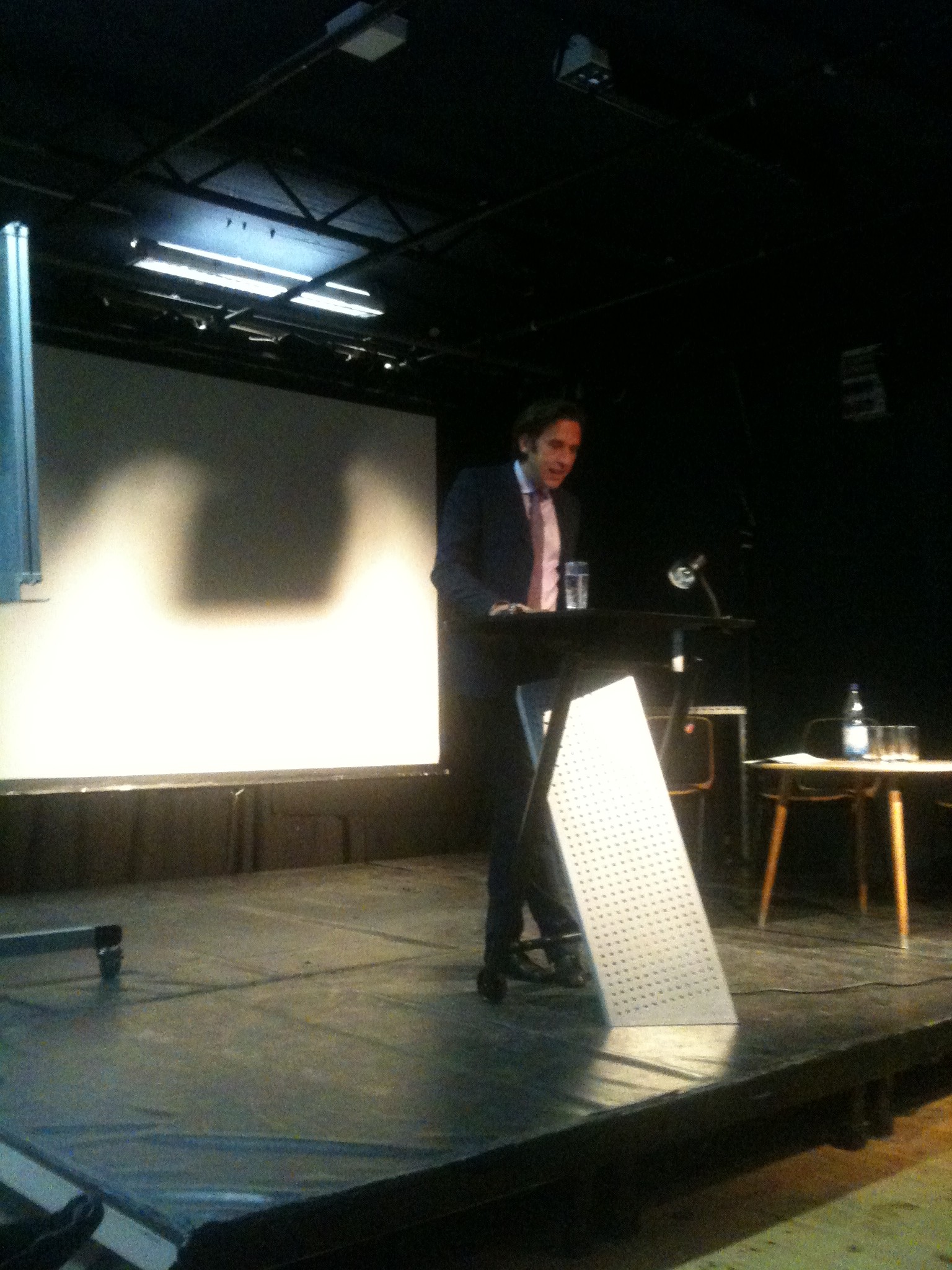
Yesterday was the final academic event at Sophienstrasse, and our cadre of speakers was spectacular: Ernst, Pias, Hagen, and of course, with his red wine, his cigarettes, his Greek – Kittler. After that, our book presentation on Media Archaeology with some of the same speakers as well as Anthony Enns – a Kittler translator.

Wolfgang Ernst
Claus Pias
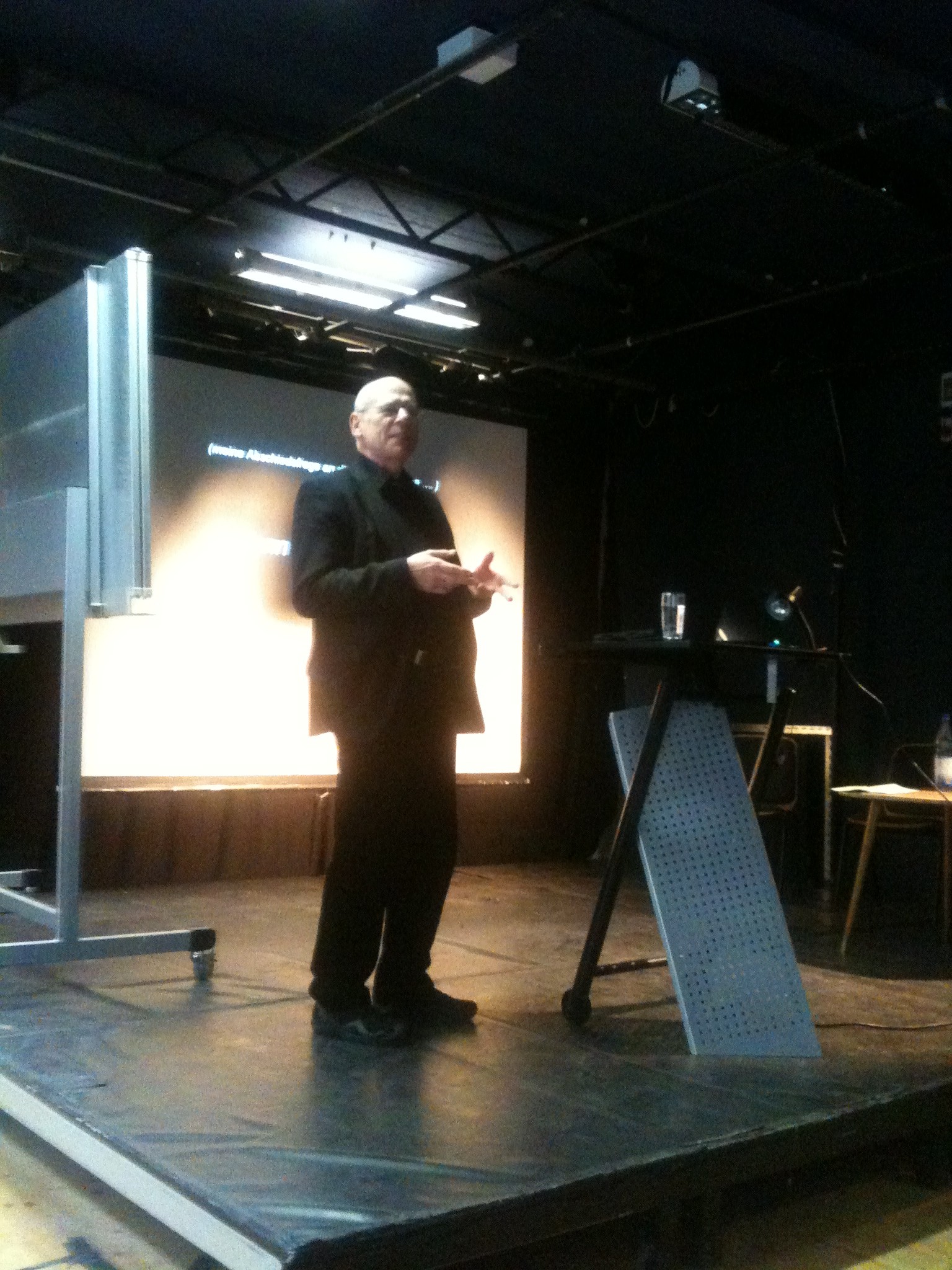
Wolfgang Hagen

Friedrich Kittler and the red wine.
Transmit, Process, Store: Launch of Media Archaeology and Goodbyes to Sophienstrasse
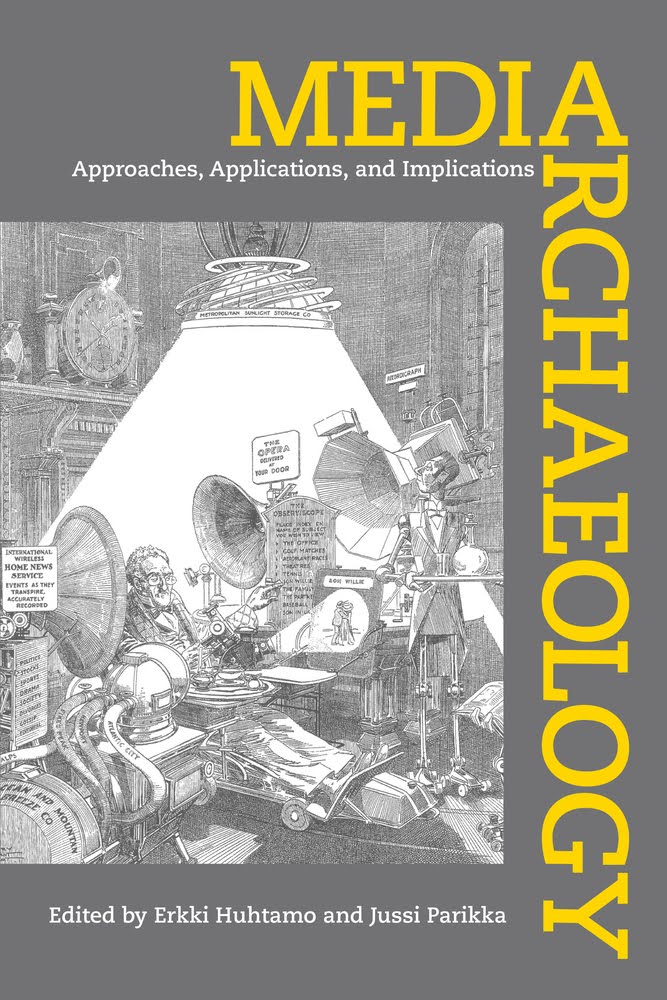 Welcome to our July 15 event at Institute of Media Studies, Humboldt University in Berlin – where we are both celebrating the launch of Media Archaeology and even more importantly, processing (excuse the pun) the closing of a certain era of German media theory. The by now legendary address of Sophienstrasse 22 is closing down and the institutes are moving premises. This is the address where Friedrich Kittler worked, and a whole generation of German media theorists can consider their alma mater…
TRANSMIT, PROCESS, STORE
Goodbye Sophienstrasse – Book presentation Media Archaeology
On the 15th of July 2011, the time of the Institute for Media Studies at Sophienstraße 22a is coming to an end and together with the other institutes, we will relocate to the Pergamon Palais on Kupfergraben, on the site of Hegel’s house. This transmission marks an occasion to bring together teachers, researchers, students and friends of Sophienstraße to process and store the times and ideas which emerged in this spot, in order to duly celebrate our farewell. Furthermore, we will present the new volume Media Archaeology, edited by our current research fellow Jussi Parikka together with Erkki Huhtamo.
We cordially invite you to join us in talks, discussion and celebration on Friday, July 15th 2011, starting 4 p.m. Berlin’s best book store Pro qm will be present with a book table.
Program:
Location: Medientheater (ground floor of Sophienstrasse 22a):
4 p.m.
Welcome: Prof. Dr. Wolfgang Ernst, Paul Feigelfeld und Dr. Jussi Parikka
4.15 – 5.45
Contributions by: Prof. Dr. Friedrich Kittler, Prof. Dr. Wolfgang Ernst, Prof. Dr. Claus Pias, Prof. Dr. Wolfgang Hagen
5.45
Book presentation “Media Archaeology” (University of California Press), edited by Jussi Parikka and Erkki Huhtamo. Talks and discussion with Jussi Parikka, Claus Pias, Wolfgang Ernst and Anthony Enns.
Followed by drinks and music, until security shuts us down.
Do Some Evil
It’s the opposite to “do no evil”, a call to think through the dirty materiality of media. Trick, deceive, bypass, exploit, short-circuit, and stay inattentive.
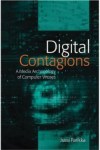
Hence, it is not only about “evil objects” as I perhaps myself have focused on (in Digital Contagions, and in other places), even if such objects can be vectors for and emblematic of stratagems of evil media. Evil media studies focuses on strategies that are mobilized as practices of theories. These strategies reach across institutions, and hence it is no wonder that Geert Lovink recently flags this as one approach through which to energize media studies.
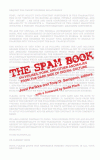
Or more formally – Evil Media Studies “is a manner of working with a set of informal practices and bodies of knowledge, characterized as stratagems, which pervade contemporary networked media and which straddle the distinction between the work of theory and of practice”, write Andrew Goffey and Matthew Fuller in the chapter by the same name in The Spam Book.
For me, the attraction in Goffey and Fuller’s call is that it is material – material that is dynamic, non-representational, machinating and filled with energies that flow across software, social and aesthetic.
- Bypass Representation
- Exploit Anachronisms
- Stimulate Malignancy
- Machine the Commonplace
- Make the Accidental the Essential
- Recurse Stratagems
- The Rapture of Capture
- Sophisticating Machinery
- What is Good for Natural Language is Good for Formal Language
- Know your Data
- Liberate Determinism
- Inattention Economy
- Brains Beyond Language
- Keep Your Stratagem Secret As Long as Possible
- Take Care of the Symbols, The Sense Will Follow
- The Creativity of Matter
(the list from “Evil Media Studies” by Goffey and Fuller, in The Spam Book: On Porn, Viruses and Other Anomalous Objects From the Dark Side of Digital Culture, eds. Parikka & Sampson, Hampton Press 2009).
Towards Winchester
June 1st, I am starting a new job at Winchester School of Art (University of Southampton) as Reader in Media & Design. I am excited to be joining such a vibrant community of lecturers, researchers and ambitious plans for the future. I am part of an initiative to build an extensive research concentration on Global Media and Art – where the interchanges between art, technology and science are a key part of the agenda. It was not easy to leave behind Anglia Ruskin, ECFM, ArcDigital and CoDE – but they will continue to prosper with the help of their body of wonderful researchers!
MediaNatures-talk in Berlin (June 8)
I am giving a talk in Berlin as part of the MediaSoup-colloquium convened by Paul Feigelfeld (Institut für Medienwissenschaft at Humboldt University where I am a visiting research fellow for this Spring and Summer). On June 8, 6 pm (starts 6.15) I will be talking on MediaNatures, abstract below.
Place: Medientheater. Institut für Medienwissenschaft, Humboldt Universität Berlin, Sophienstraße 22A, 10178 Berlin.
MediaNatures
This talk riffs off from Donna Haraway’s influential concept of naturecultures which established one framework to think about the topological continuity from nature to culture. As such, it was an important spark for the discourse on “new materialism” in cultural studies, a form of rethinking materiality in new ways outside a Marxist or a representational framework. Naturecultures – also resonating with a range of positions such as Latour’s – is a way to think through the multiple materialities we encounter in terms of contemporary technological society.
The talk extends naturecultures into a more medium-specific direction with the concept of medianatures. By discussing media materialism and its relation to “new materialist” debates as well as “medium-specificity”, the talk addresses ways to think through the technical and scientific specificity of contemporary media – beyond meaning, representation and the human body, the fact that technical media engage in such processes, speeds, and phenomena that escape the phenomenological human register per se.
Yet, the talk points towards a different kind of reading of media materiality than often found in accounts for instance in media theory. We can question the notion of specificity and argue that there are various specificities from which we can draw upon. While German media theory (acknowledging that the term is in itself not very apt) has been insisting on drawing on materialities that can be directly connected to the important scientific contexts of technical media, we can think through a milieu theory of media: how media establish but also draw on nature, animals and other non-human intensities, forces and potentialities. Instead of thinking nature here in terms of the metaphorics it has offered for a long time for media cultural phenomena, and avoiding proposing any form of purity of nature, I want to look at the continuums of not only naturecultures, but medianatures that is slightly different from the emphasis of media cultures as the “new” environment for us human beings. Instead we approach medianatures as affordances, as intensities, as regimes of affects and relations and as processes of mediatic nature that offer a non-human view to new materialist media theory. Hence, we end up talking about minerals, waste and nature.
Media studies – studies of relations, ecology, waste
The best way for media studies to really make sense is to think outside media – of where it expands, takes us, if we persistently follow its lead. So far, for a long time, it took us to think about humans, human relations, intentions, unconscious desires, economics as much as politics as power. Such paths need to take us to the other direction too; to things less intentional, but as important; to nature, bacteria, chemicals, forms of life outside our headspace but inside our gut; to milieus of living in which our conscious agency is only a minor part of what matters. To such time scales which take into account uses and practices, but as part of larger concert where some things last thousands, millions, billions of years.
Just like humanities more widely, media studies needs to be transversal – perhaps a concept we can tightly link to “transdisciplinary” as well.
To quote Félix Guattari:
“Now more than ever, nature cannot be separated from culture; in order to comprehend the interactions between ecosystems, the mechanosphere and the social and individual Universes of reference, we must learn to think ‘transversally.’” (Three Ecologies, 2000:43).
The biggest reason why we should be worried about death and finitude is less in the existential manner, or even what makes our Dasein authentic, but in the way that milieus of life are dying. This relates to fears about “the sixth mass extension” of species, this time caused by humans. The only death we need is that of the subjectivity that cements the economic, political and aesthetic practices that kill nature. This is as much a question for the sciences and engineering, as it is for media theory, arts and humanities.
As Guattari argues, talking about ecosophy, we need to reinvent a multitude of relations where economic struggles, political struggles and struggles of representation, as well as aesthetics, are those that expand the horizon to nature. Hence, media – both in terms of the technologies that return to nature as heavy metals and toxins and as mediators of the mental ecologies in which our destructive tendencies are sustained – is surprisingly close to this problem too.
The affective regimes of media are affective in terms of the relations they sustain – relations between humans, but also to ecosystems, mechanospheres and more. Media studies is thus in a good position to really develop itself into a study of relations, of mediations in that much wider sense.






 Machinology