>Art and Electronic Media

June 16, 2009 3 comments

>

I wrote a review of Edward Shanken’s huge Art and Electronic Media just recently for the Finnish journal of audiovisual culture, Lähikuva. Well, the review is not out yet, and even when it will be, it’s of course in Finnish, so just a short summary. Any book that due to its size could be a proper murder weapon merits a word or two.
Shanken’s book is part of Phaidon’s Themes and Movement-series, so it is less a study than an archive. Even though it fits into the wider field of “media art histories”, its less a history in the sense of offering a unified narrative than an archive. Perhaps this is actually not only a function of the book series, but the topic itself; the whole theme of “electronic media and art” is way too heterogeneous and open than something that could be tied to a narrative format, and hence is by its nature something that calls for an “archival” approach. And for Shanken, its not only a book on the art pieces or objects but also points towards the various practices and histories of engagement with technical media — and hence, interestingly, points towards histories of modernity, and the proximities of art-science-technology that brand the media archaeology of digital culture.
Shanken offers a good introduction to the topic in a fashion that opens up to non-experts. He reflects on categorisations offered as well as on some of the principles of what qualifies as electronic art. Indeed, his key point is to extend towards the media technological conditionings of such pieces introduced in the book, but to the continuity of genres and themes across media. I had my doubts about the approach, as I believe one of the crucial functions of media arts is exactly to carve out and probe for the singularities of the media in which they function. This is where the media archaeological approach becomes relevant as well; not only offering historical narratives, but being able to point towards the inscription surfaces on which media is carved. (Well, that did not sound too original after Foucault.)
Yet, Shanken’s approach is quite often good. The section on “Motion, Duration, Illum

ination” is an intuitive one that moves through Frank Malina’s Systeme Lumidyne
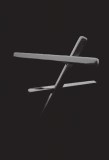
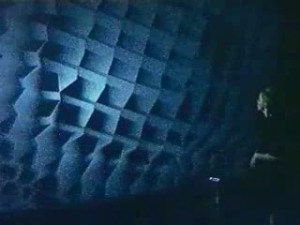
(1956) to for example Paul DeMarinis’ media archaeological Edison Effect (1989.) (Pictured).
In addition to visual culture, the sonic is strongly present also in such sections as Charged Environment (e.g. John Cage and Toshio Iwai) and in Networks, Surveillance, Culture Jamming (with Paul D. Miller’s Errata Erratum 2002). On the other hand, a section entitled Simulations and Simulacra is a bit too predictable.
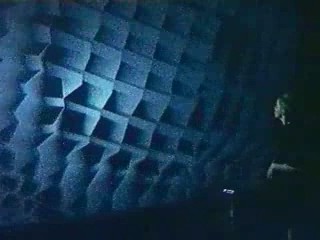
Talking nowadays about media arts, you are bound to encounter the theme of embodiment. This is present for example in the section Bodies, Surrogates, Emergent Systems. This and other sections show how much electronic media art has contributed in conceptualising new materialities and embodiments. Of course, in the midst of cyberculture enthusiasm various A-life and other simulation systems got a lot of attention, but Shanken is able to point towards other kinds of catalysations which produce the familiar bodies into anomalous, new, surprising. Here, the human body itself can become a medium. David Rokeby’s Very Nervous System (1986-2000) turns the human body in its movement into sounds. Antúnez Roca’s Epizoo (1994) opens up the human body susceptible to external control, even pain, in a similar fashion as Stelarc’s Ping Body from 1994. Breath (1994, pictured below) by Ulrike Gabriel is a mesmerizing piece that tunes breathing through a computer algorithm into a polygone representation. Breathing becomes visual, topological, inhabits space in a new way that’s not to my liking so much representation but environmental and hence rewires back into the neural system of the breather — this piece is much more interesting than any simple cybernetic idea, and points towards the crucial field of what is beyond control and non-cognitive in embodiment. (A theme that Nigel Thrift has written interesting things about.)
Electronic media art is able to articulate and summon forces invisible. Breath is a good example, but as much works articulating e.g. forces of capitalism are present in the work. My favorites here include Gary Hill’s Soundings that articulates the different materiality of perception of sound and Nancy Paterson’s Stock Market Skirt (1998) that does not neglect the gendered dimensions of the forces of capitalism.
A very good addition to the book is the extensive compilation of key texts of the field. This includes various texts by pioneers from Nam June Paik to Roy Ascott. Whereas the field of “mediaarthistories” has been actively organizing the past years, such works are excellent in opening up it to the wider academic and art field. Shanken does a good job; more in my Finnish review! In a more tone more directly aimed at the academic audience, I am now occupying myself with Sven Spieker’s The Big Archive that focuses not only on the appropriation of the “greyness of the archive” in European modernist avant-garde, but actually also in the whole “archivality” of modernity. A good read, so far.

>“Radical Temporality and New Materialist Cultural Analysis”

>

Inspired by some of the discussions in Utrecht, I thought to remind myself of an article I need to write. We did a piece on “neomaterialist cultural analysis” with Milla already in 2006 for the Finnish journal of Cultural Studies – Kulttuurintutkimus — but never found time after that to produce anything similar in English. We had the idea of writing a short book on the topic but that’s also on ice due to lack of time. However, I believe that we should revisit again our article idea that could be something like “Radical Temporality and New Materialist Cultural Analysis.” Here an extended abstract/idea of something we would need to write with Milla.

In the midst of various “strange materialities” that we encounter through such crucial contemporary issues as ecocrisis, financial crisis, and more generally high tech network culture, an interest in what could be called new materialist cultural analysis has emerged. The interest in new materialist notions for cultural analysis can be connected to this horizon of contemporary culture where, to use Karen Barad’s idea, we need less critique than more creative modes of engagement with such issues. Ideas of new materialism can be connected to various sources and thinkers that range from Manuel DeLanda to Bruno Latour, materialist feminisms in the mode of Karen Barad to German media theory (e.g. Friedrich Kittler and Wolfgang Ernst) and from such nomadic perspectives as Rosi Braidotti’s to the earlier “spatial materialism” of Lawrence Grossberg. And then there would be a number of other people writing in this field as well, whether acknowledging themselves as “neomaterialists” but still clearly adopting such positions; e.g. Luciana Parisi, Tiziana Terranova and for example Tony D. Sampson whose non-representational Virality-book is coming out next year from University of Minnesota Press. So the list is not exhaustive, but does already point to the complexity of the notion itself. Is there even such a thing as “one” new materialist mode of cultural analysis? How do the various thinkers contribute to the notion? How do they develop such notions of materiality that move beyond both Marxist notions of materiality as analysis rooted in the material practices of reproduction of culture and philosophical notions of the material as a substance, distanced from “mind” or meaning, and in itself passive? As a pragmatic vehicle, neomaterialism provides both a spring board from “old” cultural studies to “new” cultural studies where thinkers that range from Deleuze and Guattari to Agamben and others are integrated in an increasing pace to the curricula of media and cultural studies as well as an important crossing between humanities and sciences/technology.

What we want to argue, and focus on here, is the move from spatial notions of materialism to “radical temporality” as a theme that connects various otherwise quite heterogeneous thinkers of the differing materialisms that characterise for example biodigital culture. In terms of temporality, we can tap both into the by definition temporal processes of network culture and computers, but it lends itself as much to a thinking of time-critical arts, such as performance and sonic arts where the philosophical grounding of the messy temporality can find concrete assemblages through which to illuminate further the philosophies. This does not mean a simple “applicability” but a mode of diffraction and entanglement directly with the material (Cf. Barad) as exemplified through embodiment, relations between bodies, and temporality as the connecting concept.

In other words, the focus is going to be on Karen Barad’s quantum physics orientated feminist materialism that feeds both into new notions of temporality as a continuous reiterative reallocation; on the inhuman temporal perspectives that are crucial to take into account in a consideration of the non-human ecological contexts of subjectivity; the process ontological perspectives that offer a way to think such ecologies (whether of the psyche, the social, the natural or of medial kinds) as ones based in such milieus that are primarily time critical and hence dynamic.

However, despite the role such notions of new materialist brand have played in contexts of science and technology – and quite understandable so –we want to point towards its usefulness also in art contexts. Curiously the radical temporal new materialism finds here a common ground with Massumi and Manning’s own radical empiricist and Whitehead inspired accounts of how to approach art and movement as a continous transition and displacement – the primacy of movement. Hence, radical temporalities can be found through singing bodies, performing bodies, and other such assemblages of art.

The idea needs of course much work, but I think it should focus primarily on temporality as the defining theme, and thought through such time-critical arts as sonic and performance arts. Here the link to work, creativity and post-fordism could be explicated (and has been noted by Nigel Thrift) but that is outside this article; we actually touch on that theme on another text that should be coming out this or next year in a book on new materialism edited by Barbara Bolt and Estelle Barrett.

Categories: barad, new materialism

>Karen Barad and the entanglement of physics with feminism — Utrecht Feminist Research Conference

June 6, 2009 1 comment

>Karen Barad did just one of those lectures of which you are not sure which end to start. Conducted in an interview format with Rick Dolphijn and Iris van der Tuin, she was able to elaborate on a range of her key concepts, basics of quantum physics and some entry points to neo-materialism. As Iris pointed out at the beginning, Barad’s work bears strong resonances with Manuel Delanda and others — for example Bruno Latour’s name popped up every now and then, and indeed she used a lot of Latourian concepts. But its not only that — the neomaterialism that stems from a reading of certain feminists such as Haraway or philosophers such as Deleuze, but the dual-role, the two hats she is wearing; between physics and feminist theory. Naturally, this was one of the things she tried to articulate; how the two hats are not necessarily that separate after all, in a similar manner that all attempts to bring humanities and sciences “back” into contact have to take into account the way they have been entangled all along.

What was refreshing was Barad’s insistence on the mode of “critique” as harmful for contemporary cultural analysis. It does not provide the solutions we need, or is not useful as a tool to tackle the problems we face. I agree completely. We need accounts of the “weird materialities” that haunt technical media culture; biodigital lives; ecocatastrophy; etc. — accounts that do not rely on a) mode of reflection/representation as the key “method” or assumption, b) and hence do not rely on dualist ontologies but acknowledge how such issues as ethics are distributed on all levels of being, so to speak. Of course, these point resonate strongly with the points re. vitalism that Colebrook and Braidotti talked about yesterday.
Key notions that hence emerged were: entanglement (of matter and meaning); agential realism (that I would see as a relevant partner for ecological ontologies in the manner of e.g. Matthew Fuller’s media ecologies etc); scientific literacy that should not only be a literacy of the scientists and engineers; complex notions of temporality that do not rely on the past presence of pastness, and the coming arrival of future but in a continuous relocation and reiterative reconfiguration of temporalities (sounds very Serresian). Barad’s brilliant quantum physics example demonstrated this well. (I won’t even dare to try to explicate that). Also the notion of diffraction was continous on the table, so to speak. Diffraction is an alternative concept to that of reflection, and hence a good vehicle for a post-representational cultural analysis. Barad produced this useful division:
Reflection/mirrors:
– geometric optics
– knowledge based on distancing the knower from the object
– and hence the division of subject vs. object
– objectivity based on such notions
Diffraction
– physical optics (based on a different distribution of differences)
– quantum physics
– knowing is about direct material engagement
– subjects and objects are intertwined, entangled
– objectivity is about accountability to the marks on the body; responsibility to the entanglements of which we are a part.
What is remarkable to my eyes is that these ideas can be made resonate very strongly with research that deals with actual cultural practices. Even without direct references to Barad, for example Katve-Kaisa Kontturi is doing work with visual arts that takes into account such modes of knowing that the “model” (excuse me for calling it a model) is suggesting; Milla Tiainen is doing similar stuff with performance and vocality; both of them involving ethnographic methods in their neomaterialist works. As well I could imagine Barad’s ideas’ usefulness for considerations of network culture, with its heterogeneous assemblages that cannot be reduced neither to any human agencies nor to the various layered technicalities of protocols, hardware, software, networks, etc. (And I guess the fact that her talk was a video lecture, streamed live from California testifies to the modes of transition, connectivity, etc she talked about ). Instead, we are dealing with such ecological agencies that involve the various parts in a mutual becoming that I have so far tried to open up with notions such as “assemblage”, or ethologies, but increasingly aware that for example Whitehead or Barad might give as interesting clues.
As my computer battery is dying the death, I need to finish early. Through some of the discussions, its still clear that some of the feminist thinkers are way ahead of their time (if such an idea of “ahead of time” can be said to exist after Barad’s talk!) in rethinking the practices and discourses that are crucial not only for particular politics of gender but also for the wider ecological contexts (whether ecologies of nature, or of the subject/psyche). Another thing is the question whether such huge conferences are necessary, or good for the psyche. Or whether anyone should be booked to stay at Ibis Hotel Utrecht. But then again, perhaps that’s just my personal bitterness.
Categories: barad, new materialism, utrecht

>Of Sheep and Women — from the Utrecht Feminist Research Conference

June 5, 2009 2 comments

>

My attendance at the 7th Feminist Research conference in Utrecht will remain brief, but today’s two early keynotes were already enough to keep me happy. Instead of hazy “ideas in progress”, remediation of what the person did 20 years ago (and still doing) or unprepared ramble through of bullet points, we actually had two really nice presentations with good commentators after that.


What surprised me was that I actually liked Sara Ahmed’s paper, as she comes from a bit different direction to cultural analysis as I do. Her talk on “Killing Joy” focused on the notion of happiness — and feminism as a force of producing unhappiness, disruptions to expectations whether in dinner conversations or as a social cultural critical force. Despite the assumed natural goodness of happiness, we know little about what it is – this ontological question has always eluded philosophers as well with Kant already voicing critique of this notion: everybody wants happiness, but still we really don’t know much about what we want or will. Ahmed also pointed towards Betty Friedan’s early critique of the figure of “happy housewife”, and proceeded through a cartography of not only “archives of unhappiness” but contemporary field of knowledge production and feminism’s role in that.

So if the feminist is the kill joy at a coffee table, what does it mean more concretely as a horizon for production of knowledge? Ahmed was able to open up the concept’s etymology through its stem word “hap” – as in accidental, which pointed towards its role as something that happens to us, without control. Yet, it seems, especially in the midst of contemporary cultures of

 standardized happiness production, there is much more to the notion than the early stems. In an interesting manner, Ahmed went through Nietzsche’s critique of habit and pointed out how its often more of a feeling of a feeling that an encounter of an object/event that causes happiness — or unhappiness. Such things are often so loaded that we feel them before they happen in a manner of anticipatory causality – and odd futurity of sorts, that as a notion sounds very Deleuzian and points towards some of the themes Brian Massumi is known of. Again, outside her presentation, I was left thinking of happiness as an order-word of sorts that organizes emotions and feelings, as well as affects outside the linguistic sphere into such patterns of expectation that can be packaged also for the consumer industry.


The critical point of her presentation followed from the fact that things are not always causing what they should. The pattern of dissonance amidst things/events/discourses that should be consumed as expected is what can trigger points of critique – affect aliens/alien affects. Ahmed’s notion of affect differs quite a lot I think from that of e.g. Massumi, but the point here is clear, and Ahmed did use quite a lot of examples that pointed towards the pre-linguistic and even the pre-individual. This is why I was a bit disappointed with her conclusions that were framed through the discourse of false consciousness: breaking out of habits and modes of discourse as a tactic of feminism/feminists is something known from everyday life to academic articles, but Ahmed’s examples could have pointed towards the spheres of non-conscious cognition as well – its role in the cultures of happiness and expectation, the strange futurities that guide the present.


The second speaker Claire Colebrook delivered quite well what I expected; solid Deleuzian viewpoints, although not really hammering home her own point. This is something I at times have noted with Milla of her articles too; excellent positioning of questions and agendas, but a stronger development of her own solution to the positions would be needed. Today Colebrook talked about the notion of vitalism, and started by dividing them into three:


1)    Cartesian: vitalism of mind, that contrasts with matter (CC pointed well, how Descartes is almost a straw-man for much of later criticism, which neglect the fact that Descartes also was quite radical in his time, and raised a huge row among the Christians).

2)   The vitalism we find in theories of emergence, a more contemporary notion. This is what recent theories of cognition among others have embraced from Damasio to Dennett and others. A new appreciation of dynamics and “being-in-the world” which has led to the discovery of e.g. Heidegger by brain scientists. Interestingly, a lot of them talk about the world as “meaningful”. Organism emerges from complex dynamics, and hence no duality of mind and matter. Yet, organism-centred.

3)   A perverse nomadic vitalism of Braidottian sorts which is not a vitalism of the organism/organic, but a much more distributed way of questioning what even counts as “a body”, “a life”.


To put it shortly, Colebrook pointed out how feminism has always been ecofeminism of sorts (which, I may add as a footnote, is a point elaborated by Verena Andermatt Conley in her study Ecopolitics). It has always attended to notions of relationality, milieu and crossing of the boundary between self and others, but still we need to make a clear case how it does not mean a simple “care for the environment” – in her critique of the notion of environment, Colebrook claims that it still relies too much on the idea of the Human Agent as separated, only surrounded by nature, instead of the idea of milieu that is something that transversally cuts through the human and her outside (an idea stemming e.g. from Simondon that Colebrook did not mention.)


Whereas the ideas on environing “caring” notions of being in the world have spread in the sciences as well as management studies (as Colebrook dryly noted, it’s the middle-managers who are now anti-Cartesian), we need to develop much more radical and less organism centred notions of vitalism. The organic model, even if reliant on dynamics and emergence, still thinks too much of the human being as the key agent for example in terms of the crises circulating around (eco and financial), instead of a more radical opening by nomadic vitalism that starts with the questions: what counts as a life, what counts as a body, what is even worth saving, and preserving? We need to keep an eye on the inhuman temporalities in which such notions of vitalism, the body etc. are to be interrogated also because of the practical consequences in the midst of ecocrisis and the financial crisis. I like Colebrook points a lot, but a key question/comment rose to mind: I think the division between the good nomadic vitalism and the still bad emergent vitalisms is not that clear-cut even if she has a point re. organisms. This still needs more work, and was implicitly raised by Rosi Braidotti in her comment to Colebrook’s talk: how the sciences can feed into and destabilize notions within cultural analysis.


Braidotti was again her usual vital self, with an amazing charisma and charm in the way she both offered a lucid philosophical point but also political empowerment that was gender-specific but as much tending the crucial points about geopolitics.


Braidotti pointed towards the key axiomatics of the modern world (and philosophy!) and hence cultural studies in terms of “otherness” – and the relays through which otherness has been negotiated: sex, race, nature; also axes of theory as we know after some decades of

 representational analysis and intersectionality. Yet, the point about vitalism is made concrete as a challenge when we realize how such Master Codes have been reshuffled and scrambled by developments in the biosciences, -technologies, cognitive sciences, etc. which very concretely force us to rethink what are the differences that articulate otherness. In her powerful and funny punch line, Braidotti said that if her generation was focused on Dolly Parton, for the younger one its Dolly the Sheep. In her sweep from the demand for a “philosophy with an accent”, or in the diasporic mode (a point that I as a non-native English speaker loved!) to the implications of sexual perversions and sexuality as a force to create novelties, Braidotti was unbeatable, again. Both Braidotti and Colebrook agreed of course of the need to develop such thought that does not stem from the organism, but develops new forms of imagining; polymorphic sexualities, novelties of the mind and the body, new accents that destabilize the master codes.


Categories: Uncategorized

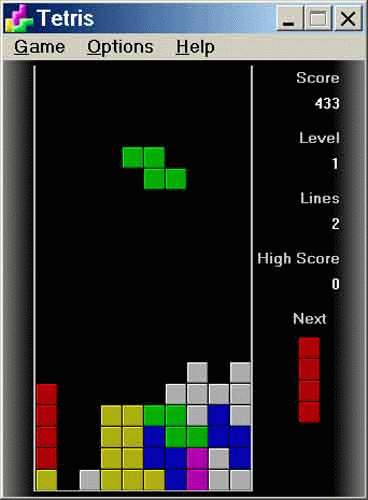
Tetris: The Training Ground

June 2, 2009 4 comments

>
I am for sure not the only one wishing Tetris a happy 25 year old birthday, but still, the game has deserved it. Its addicting, fun, and indeed: with no purpose in itself. Sounds familiar? Almost like everyday life, except the fun bit.

It’s also a wonderful piece of living media archaeology, especially now in the midst of the boom concerning “casual games”. That’s of course what mobile entertainment was/is supposed to be, but also all those small, simple games that you can just pick up / log into, and end as casually as you started them. Like mobile games, they are meant to kill the couple of minutes between chores, the tube trip to work place, or back, or the time while waiting for your date who is late.
Casual. Does not demand much attention, but enough to keep the game going. Addictive, but to a degree that it can be indeed left alone for a while. Part of the fragmented everyday routine, so that it can add an extra scale of fragmentation and hence act as a “training ground” for the crucial skills of contemporary work sphere: flexibity, readyness for changes, quickly shifting temporalities, etc.
I would be actually tempted to exaggerate that Tetris was an early crucial phase of this training — not only the senso-motorial skills that it and a bunch of other early games imposed on the user; but also in terms of its place as part of the everyday media sphere. I think Friedrich Kittler referred somewhere to discos as the training ground for future wars (the ability to react to impulses, maneuver in spaces defined by quick paced sonic and visual rhythms, etc.), but perhaps Tetris and other early games were the crucial training for our computerized post-Fordist sphere.

That’s actually what I quite often find lacking in some of the even brilliant Italian and Italian inspired writers of post-Fordism: a meticulous and accurate analysis of the network and computer society that contributes and frames those themes that Virno, Lazzarato, Negri, Hardt, etc. are offering. I know Bifo gets closer to this topic, but I feel that on this front, there is a huge amount to be done.

As a bonus, click here for 5 classic Tetris adverts! Hilarious stuff.
See also the Guardian story on the topic.

>Cultures of Creativity With No Talent: Cola-Olli

>As usual, I missed something that most of the country is following, this time Britain’s Got Talent. I was not too bothered about who Susan Boyle is, or the various “talented” Brits featured on the show such as the Stavros Flatley, even if, only too late, I started thinking about this in the context of the banality of talent shows more generally. How do such talent shows relate to the hype on “creative cultures”?

The origin of my interest was through a Finnish “talent” or actually a world record attempt TV-show, a low-budget show with completely average Finns trying to break records that probably never even existed. In terms of Youtube-

popularity, one of them broke the record all right: the so-called “Cola-Olli.” For the first time, he was featured in the programme in November 2006 when he tried to drink 1,5 litres of Coca Cola in approx. 45 seconds. Well, most of Finland knows by now that the guy never made it, and he had to interrupt the “test” after some two glasses with the almost by now legendary words: “ei pysty, liian hapokasta” — “can’t do this, too acid.” Cola-Olli became an instant ridiculed hit on Youtube (poor guy), which did not stop him from becoming a celebrity. Apparently, he was asked to perform on festivals and reappeared in the same TV-show later on only to lose a Cola-drinking duel with another talented young man.
In any case, we ended up talking with my friend Pasi Väliaho about Cola-Olli as an indexical character of the post-Fordist culture of “creativity.” The quotation marks around the word creativity are much needed. What such events of TV-shows are incidental of, is a culture of paradoxical loops of failure and insignificance, and we never reached a conclusion whether Cola-Olli was to be remembered for his complete failure or because that his attempt had no significance anyway. (Of course, as Milla reminded me, one of the contexts for Cola-Olli are the various eating competitions etc. especially in the US, that work as a certain kind of a potlach-culture, or turning the act of consumption into a celebrated talent when you stuff your mouth with a ridiculous amount of eggs, butter and whatever food-like substance!).
As a mock up of any celebration of cultures of creativity, or creative industries, or in a tongue in cheek fashion of Paolo Virno’s idea of the generic capacities of the human being (such as communication, language, creativity etc.) as the defining biopolitical engine for current culture, Cola-Olli was phenomenal. How about such TV-shows and acts that carry no kind of talent — more of an incapacity for anything, an acclaimed talent for something that is in any way easily negligible. Why should we care if someone can drink 1,5 litres of coke in 45 seconds, or if someone has a good attempt of being a good unicycling act (Britain’s Got Talent) or if someone thinks they can dance like Michael Jackson (BGT again) is worthwhile paying attention to. With such examples, and the whole concept, it becomes much more interesting to start thinking about the framing modes of attention, the attention economy, of such acts, than any potential skill, lack of skill, or interest in peculiar talents. If Musil wrote about the The Man Without Qualities as an emblematic figure of modernity, surely The Man Without Talent in this supposed culture of creativity is an updated version of the central character which is the engine for the discourse of “everyday talent.” I am not in any way agreeing with the silly elitism of people such as Andrew Keen (“The Cult of the Amateur”), but just proposing how such examples are voicing another kind of a viewpoint to the creative industries.
Quite often we find the reference to the logic of publicity and visibility as the defining force behind such programmes – the Warholian idea of every person having his or her 5 minutes of fame. However, perhaps it has to do as much with a rethinking of the whole notion of creativity and actually revealing something about the post-avantgarde sphere of Creative Cultures that we are dealing with. I am here reminded of Maurizio Lazzarato’s talk at Art and Immaterial Labour Symposium in London, January 2008. To really briefly summarize, Lazzarato pointed towards the key paradigmatic “values” of modernity: freedom, heterogeneity, difference and deviance, all capacities or “talent” of the artist. However, to put it shortly, such skills or values are not restricted to the artist anymore but are distributed across the whole of the social body which in Lazzarato’s discourse can be connected to societies of security (in the manner suggested by Foucault). Anyhow, Lazzarato tracks the genealogy of this idea through Duchamp and Kafka. For example Duchamp’s readymade is emblematic of concerns that could be relevant for all the “talent shows” of people with little traditional talent in the manner of how already “the readymade does not involve any virtuosity, technique or particular know-how, so it ‘desacralizes’ and deprofessionalizes the artist’s function…”. (Lazzarato, in Radical Philosophy 149, p. 27). Instead of the idea of the active, creative genius, we have the act of doing pretty much nothing; “Acting at the minimum”, as Lazzarato calls it; “doing nothing”, he writes, as the “refusal to accomplish what is asked of you, whether it be the passivity of the worker or the activity of the artist…”.
Lazzarato’s larger point relates to demonstrating how the act of the artist is not anymore set against work. The wider field of work and creativity have been renegotiated in a new regime of proximity. Indeed, such aesthetic practices and discourses should be also seen as productions of subjectivity, which is the generalization of some of the banality in avant-garde techniques to the general culture of creativity. (As a footnote: in his recent book Le gouvernement des inégalites Lazzarato talks about the regime of neoliberalism acting through the wider field of the social; intervening through a promotion of creativity and multiplicity in order to create the aspiration for entrepreneurship, the personalized “human capital” of each and every one’s powers of differentiation.)
The truth about Creative Industries is the grey banality of the everyday life at an ad-agency, or a games house where an increasing amount of the jobs has to do with administration and for example answering maintenance calls. (In some games houses apparently the figure is something like 25 % of people hired for creative design, 75 % for admin such as support lines.) Naturally this applies to universities as well, where the amount of admin is increasing in terms of personnel but also in terms of duties of the supposedly creative classes such as lecturers and researchers.
In this context, Cola-Olli is not so much a loser than only an emblematic figure of the middle-classes trying to find that last spark of uniqueness within admin cultures of creativity. Beyond talent, performing the banality of the everyday life in creative industries. He is the “readymade” performer of current culture obsessed with finding talent in every corner of life. And to be fair, if pressed with the question of what would be my creative talent, I would remain speechless. I could not perform any better than Cola-Olli in drinking Coke, or the Stavros Flatley family doing their mock Greek/Irish step dancing, nor could I sing. To put it in lyrics by Morrissey and the Smiths: ” She said: I know you and you cannot sing / I said: that’s nothing, you should hear me play the piano.” Hence, I have to remain academic swamped with loads of admin on my desk.

>Genitals in the Field of Vision

>If you happened to see an unusual amount of genitals a couple of days ago, you might have stumbled across Youtube’s “Porn Day” — a prankster or a media activist coup that was meant to raise awareness of the new music video policies on Youtube. So if you were looking for Hannah Montana or Jonas Brothers, you might have found something totally different, to put it bluntly. Responsibility was claimed by a Japanese message board community, but we could extend the logic a bit further.

It reminds first of all of the trick (real or folk lore) of inserting just a random image of a penis-in-action between film frames in the manner mentioned in the film Fight Club. The mind might not immediately notice what happened, but the brain and the nervous system registers that something was not right. It’s tempting to put your Zizek-hat on and start talking about ruptures in the fabric of the real world by an intrusion of something-that-does-not-fit-in. An unmotivated penis in the field of vision surely does that.
In such a manner, the thousands of porn clips posted on Youtube can be seen as such ruptures of expectations, of the narrative of the world to but it a bit metaphorically. Yet, we could as much claim that such a rupture is actually what holds together the logic of the Internet, and its the libidinal desires, the dirty side of us/our networks that maintains the libidinal economy and circulation. Its the anomalous that keeps the supposedly normal intact.
It took me three paragraphs to get to the point of flagging the new review (Mute magazine) by Luciana Parisi of Matteo Pasquinelli’s Animal Spirits. Parisi’s review is highly recommended. It picks up on the key strengths and weaknesses of Pasquinelli’s book, and resonates with some of the points I made in my review of the same book for Leonardo Digital reviews. Pasquinelli is able to complexify many of the dualisms haunting the supposedly liberating discourses of network culture and point towards the much more intriguing evil energies circulating through bodies, through networks. In the midst of the assumed free software and commons movements lies an assumption of the natural goodness of the human being (also targeting Chomsky) which neglects the at times implicit structurations of power that define any act of creation and cooperation. In other words, as also Parisi summarizes, the idea of freedom and non-rivalry of digital information hides the facts of “immaterial conflict” of living labour. To quote Parisi: “This conflict includes the economy of references, the race to meet deadlines, the competition for festival selection and between festivals and ‘the envious and suspicious attitudes among activists’ (p.49).”
Parisi also picks the point of critique that I did in my review. Pasquinelli’s critique against the code-theorists, and what seems to extend towards the whole of software studies, is way too broad and remains vague. Reading “code” and theorists of code only through an interest in codification that neglects the living materialities of the flesh, so to speak, neglects the more nuanced work done in software studies. Many of the theorists there, and who have paid attention to the concrete assemblages and practices of software as the key relay of network culture, have developed much more thoughtful ways of taking into account why code and software are not to be seen only as symbolic material but as Parisi writes, such modes of abstraction that involve energetic relations. I have recently tried to write about “ethologies of code” and point to the way how code should not be seen as representational and it should not be reduced to its function of codification of the intensities of any real of fleshy bodies. Instead, also code and software can be seen working through notions of relationality, affect and intensities of such relations. In the context of Pasquinelli, and Parisi’s review, she writes: “Codes are not simply binary systems of simulations that hide living conditions of existence. Codes are real abstractions that have an energetics equivalent to flesh and blood despite remaining utterly irreducible to any physical system. Pasquinelli’s insistence on the meta-structure of coding and the under-structure of living labour ultimately overlooks the materiality of code. Furthermore, by taking code culture at its face value, he ignores the weird and prolific underworld of esoteric software cultures.”
I find Parisi’s point excellent, and as said, something I have been developing is strongly in tune with this. Of course, the earlier projects on viralities and parasites tried already to take into account of such “animal energies” in network cultures, but the more recent paper is even more closely targeted on “ethologies of software.” Indeed, such points flag the need to be more aware of the dirty energies inside software cultures as well — the genitals and all in the field of not only vision but code.

>Butler in Cambridge

>Just back from Judith Butler’s talk that was part of a symposium in honor of Juliet Mitchell’s retirement. First of all, I am not sure whether to be amused or angry of the “theme music” to the session which was Vivaldi’s music softly escorting the audience into what you would not expect to be one focusing on socialist feminism…but then again, that was Cambridge University, and indeed that is one way to just innocently remind the audience of the Prestige and Tradition of the place. I somehow wonder how any seminar so conscious of the roles of cultural practices in creating solidified and stratified notions of culture and relationships can tolerate such an “intro.”?

Well, in the midst of ambivalent feelings, a quick look at Butler’s talk. Focusing on Mitchell’s 1974 classic Psychoanalysis and Feminism, Butler was able to carve out something interesting in terms of psychoanalysis — something that I would label “against the grain” as a Darwinization of psychoanalysis and some notions apparent in some classical interpretations of the structures of the psyche. This Darwinisation refers here mostly to the way Butler insisted on the radical temporality of the notions that are at the centre of psychoanalysis, and that as the key way to keep it lively as a mode of social diagnostics and critique. I agree, wholeheartedly.
The consolidation of sexual difference and other notions that have functioned mostly to stabilize the plethora of practices that are in a way “hidden” under such generalizing notions as “heterosexual” or “homosexual” has happened through a suggestion of the universality of the structures — a critique that Deleuze and Guattari among others raised in the 1970s already. They demanded a careful look at concrete practices and relations through which desire finds its ways — a focus that was later referred to as “assemblages” in Mille Plateaux. And funnily enough, there was much of that spirit of “assembling” present when Butler referred to the actual mess of identifications and misidentifications, placements and misplacements of desire in the variety of kinship relations that are ever more present. Being a heterosexual does not really say much about the ways we desire, Butler argued, and indeed, the modes and objects of desire are much more fluctuating. Hence, the sociological fact of increase of for example gay couples does not automatically give us concrete information about the modes and practices of desire and they relate to the heteronormative.
What Lacanian system missed was the possibility of change and which was still present with Freud through the notion of superego: the level of transmission, passing on. It is through the double-nature of the social that we should understood both through the function of transmission of cultural relations and the forward facing nature of potentialisation (not a word I believe she used though). In terms of law, this means that law is an event; it takes place only through its instances instead of the dual ontology of “law AND its transmission”. If law is only through its instances, it also allows the realization that those actualities can be there to change law. Same goes then for drives; drives are not a stable “archive” of possible reactions, but immanent to the instances in which they take place. This idea has some good ontological and methodological implications.
In such a context, Butler seems to catch quite well a key Marxist idea now transposed into the crucial task of rethinking sexual difference not only as the mode of stabilization of desire into a binary system but a radicalisation of the notion of difference; I am here probably reading this way too much in the direction e.g. Rosi Braidotti sees the issue but nonetheless, its a matter of temporalisation; how we need to keep abreast of the various temporalities storming in the psyche. Some of the references to fluidity and the sea that Butler used should hence be continued to take into account the layering of temporal currents (in the manner that Michel Serres loves to talk about time). So even if we are born into such relations that seem determining our position, there is the potentiality of change especially if we understood those relations not as stemming from an Archive of Law that is itself unchanging but a mode of creation immanent to the cultural expressions. This again is a further transposition of what Butler said but I am wanting to read this stuff in terms of what I have been thinking.
So, instead of Vivaldi, a bit of 1960s “times they are a-changing” would have been more apt theme music as Milla suggested.

Office-Divaesque


In order to keep sane in the midst of marking, I want to write a post that I have been thinking for a while. Now that I have been banned of going on about Lily Allen as the softcore consumerist critique on the footsteps of Ballard (don’t ask), I have focused my energy on another new personal discovery: Client. Well, again, I noticed I am somewhat several years late, so that something new to me has been around for a long time.

Client mixes through its music and visuals a touch of Kraftwerk with Depeche Mode, but in a manner that I would describe as creating a mesmerizing feel of detached, cold, minimalist erotics. Hence, the adoption of themes that all refer to the key modern institutional language of corporations, admin and offices is an ingenious one and amounts to creating an image of the lead singer, Client B, as the Office Diva.

The repetitious catchy music is emblematic of such urban spaces in a similar manner as Kraftwerk tapped into the technological fantasies of modernity on the brink of post-fordist culture. The influences are clear as well. A certain flirtation with Germany; with songs such as Köln; and Drive (ref. Autobahn). The highly rationalized urban spaces and organizational grids of driving culture are opened up to afford also lines of flight as when Client B sings “White lines on a motorway/I’m alive/I’m alive”.

Direct references to erotics are continuously present but again on the fine border between passionate and cool, detached, as their uniforms promise. Its the style of erotics that stems from Xerox Machines:

“Let’s get together before it’s too late/ Collect up the ideas and duplicate/ Filling in the forms/ send ‘em off tonight/ And you’ll be the owner/ of the copyright/ Of the copyright, of the copyright.”

Desire is machinic, and machines can be the object and relay of desire; this is a key modern theme that actually is the cultural historical background for the fetishistic desire for technology. Cool, detached, uniform; the fetish par excellence. Yet, the gender aspect is not neglected, and the male fantasy where machines/women are conflated is exposed: “You said you want to set my soul free/but I’m just an object of your fantasy.” (“Lights go out”). The banal cultural theoretical observation gains its true strength from the ritornello, the returning rhythmic elements of urban alienation.The true gem from a media theorists position is of course Radio.

The post-punk alienation is strengthened by the banality of “radio” as the thematic tie between the bored-oh-so-bored singing voice and the externalized world glassed out through the television screen and voiced out through radio “news”. (“They call it news/its not to me/The world’s a mess/ on my TV”). Again, the banality of the lines is only understood through the middle-classed-office-divaesque mannerism and voice of Client B. The broadcast media of the modern age is also the relay for the private (but hence so easily approachable in the age of mass reproduction) angst of Client. Customizing Adorno?

I have been thinking — mostly as a joke — a new research project on “Admin Culture”; if that would ever actualize in any way, I would definitely include Client there, and offer a much more insightful approach to their sonic art.

Categories: admin culture, client, office

>New Materialism, a-signification

>As the publisher is slow — metaphysically slow, of cosmic proportions — getting out our Spam Book, I spend time reading others book. As if I would not otherwise. Well, after finishing Shaviro’s excellent book of Whitehead that convinced me that I need to rethink my ideas re. ethologies of software from a Whiteheadian perspective, I reserved a bit of time for Gary Genosko’s Félix Guattari – A Critical Introduction. Not able here to give a full-fledged review of the book, I just want to point towards the themes that I found really useful.

I am not sure whether it will work as an introduction per se; it does offer good contextualisation to certain key concepts through an eye on the concrete contexts where the concepts emerged. That’s why the chapter on La Borde was useful, and the explanation of Guattari’s involvement in the youth hostel movement etc. The concept of transversality becomes clear at least, and its usefulness underline: I love the concrete, situated edge the concept has.
Then the individual, “like a transit station for changes, crossings, and switches.” Genosko well points towards the usability of the machinic ontology/ecology.
Most importantly, Genosko’s book offers tool for “new materialist cultural analysis”, an ongoing project of mine (and Milla’s), especially in terms of a-signifying semiotics and the notion of part-signs. I love the examples that point towards the multilayered ecological ontology of contemporary culture of software — from the concrete relays of software connected to the abstract relations of capitalism, exemplified through the plastic cards/magnetic stripes. Indeed, in such a situation, hermeneutic tools for cultural analysis fail short, as “there isn’t any room for interpretation in the strings of numbers and characters on a typical magnetic stripe”. Genosko continues who the magnetic stripes and a-signifying signs are not to be understood through any meanings they might have (they don’t) but they “operationalize local powers” (95).
In terms of aesthetics and new materialism, Genosko refers to part-signs and a-signifying fragments; colours, non-phonic sounds, rhythms, faciality traits — something that in Deleuzian circles has gone under the umbrella of intensities. What is interesting them in terms of new materialism is that the notion allows a certain autonomy of the intense materiality; they are much “more” than the traditional notions of ideology would assume and represent the beyond-norm, or beyond-code which still causes a lot of grey hair to old-school cultural studies approaches (representation analysis, etc.).