TOC for Media Archaeology
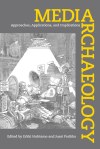
Some information on our forthcoming Media Archaeology: Approaches, Applications, Implications-book that we edited together with Erkki Huhtamo, forthcoming Spring 2011 from University of California Press… no cover image yet, and no table of contents online, hence I am posting at least the contents here! For clarity’s sake, this is the one that is ready, and I am writing at the moment another book, a single authored one on the same topic.
1. Introduction: An Archaeology of Media Archaeology –Erkki Huhtamo and Jussi Parikka
Part I: Engines of/in the Imaginary
2. Dismantling the Fairy Engine: Media Archaeology as Topos Study –Erkki Huhtamo
3. On the Archaeology of Imaginary Media –Eric Kluitenberg
4. On the Origins of the Origins of the Influencing Machine –Jeffrey Sconce
5. Freud and the Technical Media: The Enduring Magic of the Wunderblock –Thomas Elsaesser
Part II: (Inter)facing Media
6. The “Baby Talkie,” Domestic Media, and the Japanese Modern –Machiko Kusahara
7. The Observer’s Dilemma: To Touch or Not to Touch –Wanda Strauven
8. The Game Player’s Duty: The User as the Gestalt of the Ports –Claus Pias
9. The Enduring Ephemeral, or The Future Is a Memory –Wendy Hui Kyong Chun
Part III: Between Analogue and Digital
10. Erased Dots and Rotten Dashes or How to Wire Your Head for a Preservation –Paul DeMarinis
11. Media Archaeography: Method and Machine versus History and Narrative of Media –Wolfgang Ernst
12. Mapping Noise: Techniques and Tactics of Irregularities, Interception, and Disturbance
–Jussi Parikka
13. Objects of Our Affection: How Object Orientation Made Computers a Medium –Casey Alt
14. Digital Media Archaeology: Interpreting Computational Processes –Noah Wardrip-Fruin
15. Afterword: Media Archaeology and Re-presencing the Past –Vivian Sobchack
[edit 21/12/10]: Endorsement by Sean Cubitt:
“Huhtamo and Parikka, from the first and second generations of media archaeology, have brought together the best writings from almost all of the best authors in the field. Whether we speak of cultural materialism, media art history, new historicism or software studies, the essays compiled here provide not only an anthology of innovative historical case studies, but also a methodology for the future of media studies as material and historical analysis. Media Archaeology is destined to be a key handbook for a new generation of media scholars.”
– Sean Cubitt, author of The Cinema Effect
Nauman-cum-Lynch
>My perspective to Bruce Nauman television art piece (at the Hamburger Bahnhof, Berlin, September 2010) becoming a David Lynchian experience.
RIP: A Remix Manifesto – film screening and panel discussion

A screening of the fantastic RIP: A Remix Manifesto and followed up by a panel discussion with some leading technology and culture writers, presented by CoDE (as part of the Festival of Ideas):
Arts Picturehouse, Cambridge
October 30, Saturday, 15.00-17.30
Tickets from the Picturehouse ticket counter
“In RIP: A Remix Manifesto, Web activist and filmmaker Brett Gaylor explores issues of copyright in the information age, mashing up the media landscape of the 20th century and shattering the wall between users and producers.
The film’s central protagonist is Girl Talk, a mash-up musician topping the charts with his sample-based songs. But is Girl Talk a paragon of people power or the Pied Piper of piracy? Crea…tive Commons founder, Lawrence Lessig, Brazil’s Minister of Culture Gilberto Gil and pop culture critic Cory Doctorow are also along for the ride.”
The screening is followed up by a panel discussion with
– Bill Thompson (technology writer and columnist for the BBC Online, as well as head of partnership development for Archive Development projects at the BBC)
– John Naughton (academic at Cambridge University, writer and columnist for the Observer),
– Becky Hogge (technology writer, columnist for the New Statesman and former executive director of the Open Rights Group),
– Jussi Parikka (media theorist and director of the CoDE-institute at Anglia Ruskin University)
and
– Geoff Gamlen (a founding member of the remix-music/video group Eclectic Method have been called upon by artists like Fatboy Slim & U2 and by film, video, and television companies such as New Line Cinema and Palm Pictures to create custom a/v remixes.)
The panelists address the themes raised by RIP: Remix Manifesto and a range of interesting and provocative approaches to cultural production in the digital age, copyright and its alternatives, and free culture.
>Recent books by friends
Some recent books by friends:
Michael G oddard: Gombrowicz, Polish Modernism, and the Subversion of Form (Purdue University Press, 2010)
Gombrowicz, Polish Modernism, and the Subversion of Form provides a new and comprehensive account of the writing and thought of the Polish writer Witold Gombrowicz. While Gombrowicz is probably the key Polish modernist writer, with a stature in his native Poland equivalent to that of Joyce or Beckett in the English language, he remains little known in English. As well as providing a commentary on his novels, plays, and short stories, this book sets Gombrowicz’s writing in the context of contemporary cultural theory. The author performs a detailed examination of Gombrowicz’s major literary and theatrical work, showing how his conception of form is highly resonant with contemporary, postmodern theories of identity. This book is the essential companion to one of Eastern Europe’s most important literary figures whose work, banned by the Nazis and suppressed by Poland’s Communist government, has only recently become well known in the West.
About the Author(s): Michael Goddard After completing his Ph.D. at the University of Sydney, Michael Goddard was employed as Visiting Professor of Cultural and Media Studies at the University of Lodz in Poland, and as Professor of Cultural Studies at Mikolai Kopernikus University, Torun. Since September 2007, he has been lecturer in media studies at the University of Salford in the United Kingdom. He is an active member of the European Network for Film and Media Studies (NECS) and participates actively in a range of international conferences and other academic and cultural events.

Pasi Väliaho: Mapping the Moving Image. Gesture, Thought and Cinema circa 1900
(Amsterdam University Press 2010)
In Mapping the Moving Image, Pasi Väliaho offers a compelling study of how the medium of film came to shape our experience and thinking of the world and ourselves. By locating the moving image in new ways of seeing and saying as manifest in the arts, science and philosophy at the turn of the twentieth century, the book redefines the cinema as one of the most important anthropological processes of modernity. Moving beyond the typical understanding of cinema based on optical and linguistic models, Mapping the Moving Image takes the notion of rhythm as its cue in conceptualizing the medium’s morphogenetic potentialities to generate affectivity, behaviour, and logics of sense. It provides a clear picture of how the forms of early film, while mobilizing bodily gestures and demanding intimate, affective engagement from the viewer, emerged in relation to bio-political investments in the body. The book also charts from a fresh perspective how the new gestural dynamics and visuality of the moving image fed into our thinking of time, memory and the unconscious.
Pasi Väliaho is lecturer in film and screen studies at Goldsmiths College, University of London.
Reviews
A commanding and consummate study of art, philosophy, the human sciences, physics and biology in the matrix of cinema at the turn of the twentieth century. Blending contemporary theory with close readings of the foundational writings of modernity—Freud, Bergson, Nietzsche—Väliaho shows how the autonomy of the movie-machine shapes the ways we believe we think and live today. A broad and compassionate study, Mapping the Moving Image stands high and strong in an impressive body of scholarship on early cinema. It will be a point of reference for every student of cinema, consciousness and perception.
– Professor Tom Conley, Harvard University
Read like a cow
Oh we supposedly moderns, we actually think like insects and should read like cows: “…the requisite art of reading, a thing which today people have been so good at forgetting–and so it will be some time before my writings are readable–you almost need to be a cow for this one thing and certainly not a ‘modern man’: it is rumination…” (Nietzche, On the Genealogy of Modernity, Cambridge UP, 1994, 10).
We don’t only dream of animals, but we are caught in a delirium in which we are only part of them. Flying like insects, reading like cows, thinking like bacteria, we do not really have capacities of our own. Human is a fiction invented by the animals, by the soil, by the non-organic as well.
>Learning from Network Dysfunctionality: Accidents, Enterprise and Small Worlds of Infection (ISEA 2010 Version)
>
Before leaving finally for ISEA 2010 in Germany I shall post this — a short intro, or summary, or the extended abstract of what we are going to talk about there with Tony Sampson. It continues the Spam Book themes, and addresses more concretely the link between such processes as contagion (and in relation to heterogeneous bodies from social relations to software) and capitalism — more specifically marketing techniques, and various ways of harnessing the pull of connectedness.
Learning from Network Dysfunctionality: Accidents, Enterprise and Small Worlds of Infection
Tony D. Sampson (University of East London, UK)
Jussi Parikka (Anglia Ruskin University, UK)
In February 2010 an outbreak of media panic spread through the British tabloid press concerning a marketing campaign called DubitInsider. The DubitInsider website recruits 13-24 year olds who consider themselves to be “peer leader[s] with strong communication skills” to act as “Brand Ambassadors”. This requires the clandestine passing-on of product suggestions to peers via posting on message boards and social networks, emails and instant messenger conversations, organizing small events and parties. DubitInsider ignited the moral indignation of the tabloids not because of its covert nature, but since Brand Ambassadors were apparently paid to market “unhealthy” junk foods to minors. Tapping into the social influence of the consumer is nothing new. Seeking out so-called influentials is the basis of seasoned word-of-mouth campaigns and persists in “word-of-mouse” variations. For example, in4merz.com exploits the anticipated contagiousness of relations established between friends “on and offline” to promote music acts. “In4merz is about matching our artists to your friends who may like them.”
Young In4merz create posters, banners and videos about acts, Twitter about them, leave comments on Facebook etc. For each level of promotion, In4merz earn points that convert into CDs, DVDs, concert tickets and potential backstage access.
What interests us, as analysts of network dysfunctionality, is how the logic of these marketing strategies overlaps with the same anomalous abstract diagrams that distribute spam and viruses. In a different context, hiding unsolicited brand messages in social media and the potential for the bulk sending of veiled product promotions for financial reward could arguably be called spamming.
Furthermore, designed as they are to spread Trojan-like suggestions through imitative social networks, whether or not the strategies actually become contagious, their aim is to go viral. When removed from the context of the anomalous Nigerian cybercafe or computer virus writing scene, and played out in the marketplaces of food and pop culture, the emergent spam logic and virality of network capitalism becomes part of a broader indexical change concerning the way contagious communication networks, vulnerable bodies and unconscious behaviours can be harnessed.
The logic adopted becomes a normalized online marketing activity, not only performed by corporations, but embedded in social relations of individuals as part of the strategies of business enterprise and brand design.
Spamming and virality are no longer anomalies then, but are fast becoming the standard, acceptable way of doing business in the digital world. If the peer-to-peer recommendations and thumbs-up-buttons of “word-of-mouth 2.0” characterize the current paradigm of social media, these campaigns are indicative of a more aggressive and targeted Web 3.0 marketing of suggestion already on the horizon. This is a Web 3.0 that appeals directly to a user’s emotional landscape and desire for intimacy (Ludovico 2005), and exploits the ready made expediency of contagiousness networks that pass on suggestion.
Following a similar neo-monadological approach set out by Lazzarato (2004) we articulate the dynamics of spam, viruses, and other related “anomalies”, as constituent parts of new infectious worlds “created” by the business enterprise. We focus on the specific creative capacities of dysfunctionality in the production of network environments, and how “learning” from the irregularities of normalized communication adds new flesh to this world. We discuss how new knowledge concerning the productive powers of the anomalous is filtered through what Thrift (2005) calls the cultural circuit of capitalism: “… a feedback loop which is intended to keep capitalism surfing along the edge of its own contradictions”.
This new knowledge, acquired from the accidental events of the network, is seized upon by the business enterprise, leading to new consumer modeling intended to make ready environments so that the capricious spreading of social influence can be all the more effectively triggered and responded to.
Zittrain (2009) argues that viruses, spam and worms are threats to the generative principle of the Internet. Similarly, we contend that such software-driven social actions are exploitative of the open principles of the Internet, but further acknowledge the extent to which these practices have enthused and inspired the business enterprise. As we see it, “bad” software is not necessarily “malicious”. It becomes integral to an alternative generative logic of capture implicated in the production of new worlds of infection. We will discuss how these epidemiological worlds were mapped by computer scientists in the 1980s before they pervaded the burgeoning offshoots of the billion dollar network security industry. We further chart how they were modeled by network science as early as the 1960s and are currently being exported, via the circuitry of capitalism, to the business enterprise.
To be published in full as a chapter in The Blackwell Companion to New Media Dynamics, Hartley, Burgess and Bruns (eds.), Wiley-Blackwell, (forthcoming).
The Creative Technologies Review-podcasts
One of the highlights of my pre-academia career as a freelance journalist when during a phone interview the interviewee, a female at a telecommunications company marketing department or something of approx. 35 years of age, interrupted me: “Oh I am sorry to interrupt the interview but I just have to say you have an amazing telephone voice.”
I blush, stutter, and for a second wonder if my future career is somewhere where I could put my voice into better use, such as in some of those dubious 0800-numbers that offer services of very wide variety.
Instead, I end up as an academic.
Despite the shortness of the flirtation with the idea of using my voice to make money, I have been drawn into something again where I need to talk – publicly. The shock horror at first, but then realizing its actually enjoyable despite the fact that there is always a tiny region in your brain that is probably trying to say something very inappropriate.
Anyhow, CoDE-institute and me with Julio D’Escrivan (whose original idea this was) present: the Creative Technologies Review-podcasting series that commenced in August 2010.
We label it as
“A podcast on technology and creativity, technology mostly misused, unintentionally artistic technology and music technology with the odd splattering of digital economies” and hope it to be usually a 30 min aberration into the interminglings of technology, net culture, a slight dash of political economy, academic stuff and lots of media arts.
It features interviews of creatives, techs and academics, and aims to throw a spotlight both on the work done at CoDE institute in Cambridge but also more widely (as in globally) on creative technology and arts. I am suspecting it turns out to be quite focused on sound, knowing Julio’s interests and expertise in sound art, sonicity, but it will definitely splash into other fields of expression too and I am sure to throw in a nice dose of media theoretical meditation.
Its hopefully soon available on Itunes, but meanwhile episodes can be downloaded here.
Please get in touch if you have feedback, or suggestions for themes, sites, projects, etc. to be featured!
Screen memories to be forgotten

“The brain is the screen”, announced Gilles Deleuze some decades ago and summed up – beforehand – a range of things to come. The enthusiasm for the brain whether in terms of screen cultures (a range of films that play with mind, brain, and memory, and what Thomas Elsaesser has called the mind-game genre) or in new kinds of media interfaces e.g. for gaming is paralleled by a range of cultural and media theory looking into the notion of brain as a key metaphor, or node, for understanding contemporary media culture. Far from an earlier enthusiasm for the mind as separated from the body, and as an emblematic figure for the oh-so-much-hated-by-cultural-studies Cartesian worldview, the more recent enthusiasms is as much oriented towards brain as the fleshy epicentre of nerves, and sensation. The brain, too, is fleshy, vitalistic, and full of mattering matter, intensity, and in the world.
This is paradoxically why Christopher Nolan’s Inception is such a disappointment. Despite fitting in perfectly with a range of screen culture examples from past years such as his own Memento to Eternal Sunshine of the Spotless Mind, or Doll House ,
The Matrix, etc., it does not bring anything new to the genre, or an elaborated, innovative, or even exciting take on the centrality of the cognitive for current media culture. To be honest, with a topic like this, can you fail? Memory and the cognitive can be so interestingly be connected to key contemporary processes of cultural production and capitalism, even to an extent that has been branded as cognitive capitalism. Not only knowledge, affects, and such as an endproduct that can be packaged (thanks Edison, thanks copyright laws) and sold as a discrete unit of cultural industries, but the whole process of production that is more akin to an ecology of seemingly immaterial, cognitive, or emotional values that can be harnessed into value-creation and raise important issues concerning the current “creative precariat” is where these themes concerning feelings, memory and the self are debated and become crucial for the political economy.
Without going into too much detail (as I recognize my shortcomings as a film critic…) I would summarize Nolan’s attempt as itself a bit pale, a bit short of exciting. Despite the references to Kubrick, which I personally do not understand at all, Nolan’s film is exactly not daring sci-fi when it comes to dealing with the brain or the self. The cliched guiding idea of getting caught in a dream at the expense of reality does not become transported into a more powerful and political “don’t get stuck in someone else’s dream” but only a bit sentimental storyline. The parallels between political/financial power and power over the mind remain very vague, and the attempt to multiply dimensions of reality (or dream) itself a bit boring. Whereas some critics have at least hailed the visuals as stunning (I beg to differ), what is bothering that it seems to be acceptable to recycle such outdated notions of the mind and the brain in supposedly futuristic settings. Metaphors of depth, architecture, and the subconscious remain mostly vague perhaps Freudian allusions, but on a level that is as insightful as I would expect The Sun’s summary of psychoanalysis to be.
Indeed, I admit after reading some more positive writings and after discussions that there would have been potential for much more. The theme of “contagious ideas”, or more interestingly “emotion contagion” (that is of key scientific interest for social media cultures). The labyrinthine architectural formations in which urban structures, the psyche and various realities intertwine in a Borgesian or Dickian (as in Philip K. Dick) manner are a strong cinematic trope of contemporary digital culture. Writers such as Peter Krapp have pointed out how film itself has acted as “a medium of aberrations of memory” from such avantgarde works as Chris Marker’s La Jetée to more recent science-fictions of The Terminator series and even Men in Black, and indeed its interesting to map how hallucinated, and often psychoid realities are being framed increasingly in such settings which do not take multiple realities only as delusional but at the core of power and control.
However, despite for a second trying to be optimistic and positive I have to return to my original feeling about the film; if such supposedly informed publications as the Wired are even asking if Inception is the scifi heavy-weight of the year, I must myself be in the wrong reality now.
What is New Materialism-Opening words from the event
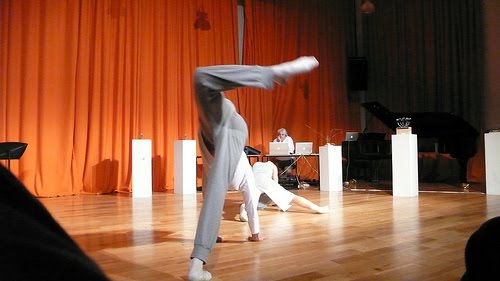
As promised, please find below the opening words to the recent New Materialisms and Digital Culture-event by Milla Tiainen and me. The event was filled with great talks by a range of scholars with differing disciplinary backgrounds, and ended up with the dance/technology-performance Triggered (composed by Cheryl Frances-Hoad, Tom Hall and Richard Hoadley, choreography by Jane Turner). In the midst of the text, images (taken by Tim Regan) from the performance and the conference. A warm thank you to all speakers, performers and our great audience in both parts of the day!
 NEW MATERIALISMS AND DIGITAL CULTURE
Anglia Ruskin University
CoDE: Cultures of the Digital Economy –research institute and Dept. of ECFM, convened by Milla Tiainen and Jussi Parikka
21-22 of June, 2010
Milla Tiainen and Jussi Parikka
Opening words: What is New Materialism?
I
As stated in the programme we’d like to begin by just briefly engaging with one of the key components, or actants, of the symposium’s setup: the concept of “new materialism.” The purpose of this is definitely not to identify a stable referent for that term so much as to point towards some of the problems it arguably connects with. Whereas I will in few words consider the concept’s broader resonances across current cultural, social and feminist theory, Jussi will subsequently comment on ‘new materialist’ modes of questioning in conjunction with digital media culture.
Aptly, there are three books forthcoming soon whose respective titles include the concept “new materialism”—while it in each case links with varying further concepts and associated planes. “New Materialisms: Ontology, Agency, and Politics”, to be published by Duke, features such writers as Rosi Braidotti, Sara Ahmed and Jane Bennett; the essay collection “Carnal Knowledge: Towards a New Materialism through the Arts” is edited by Barbara Bolt and Estelle Barrett and involves contributions by Australian and European scholars including a chapter by Jussi and myself; and two of the speakers of this symposium, Iris van der Tuin and Rick Dolphijn, are currently working on a book on philosophy of science that is entitled “New Materialism” and will come out later this year. Thus, as these particular ‘capturings’ of ongoing research for their part evidence, the concept of new materialism is increasingly partaking in the flows of language and thought of specific areas of cultural and critical thought; its “rhythms of arrival and departure”, to borrow Brian Massumi’s expression (Parables for the Virtual 2002, 20), as well as connections with various other concepts are becoming growingly regular and rich in intensity within these flows. A momentum of at least some intensive magnitude is gathering round “new materialism.” Or, perhaps better put, the concept is being utilized so as to try and couch such a momentum which is unravelling transversally across fields of inquiry whilst at the same time displaying a notable degree of consistency in terms of the implicated topics of concern.
What, then, are the problems that would lend “new materialism” its meaning or usefulness? Evidently, the precise configurations of sense and effect that the concept invokes are singular to its every usage along with being more generally in the making within the debates involving it. At its broadest, nonetheless, new materialism can be said to concern a series of questions and potentialities that revolve round the idea of active, agential and morphogenetic; self-differing and affective-affected matter. Indeed, this summary would probably be endorsed by most proponents and sceptics of new materialisms alike. To be sure, this ideational assemblage or its part-problems have also already inspired incisive critique from prolific scholars. These critics remain unconvinced about both ‘new materialism’s attempts to reconfigure the persistent dichotomies of nature/culture, body/thought, concrete/abstract etc. and the allegedly dubious politics of the category of the ‘new’ in the concept of new materialism. To paraphrase one prominent critic, Sarah Ahmed (it will be interesting to see what her contribution to the New Materialisms essay collection looks like!), the new materialist conceptions of dynamic human and non-human materialities that acquire shapes, operate and differentiate also beyond human perception and discursive representational systems are, at least within feminist new materialisms, in danger of positing matter as an it-like fetish object precisely because of their insistence on its ontological distinctiveness (Ahmed, “Imaginary Prohibitions: Some Preliminary Remarks on the Founding Gestures of the ‘New Materialism’” 2008, 35). This fetishizing is moreover enabled, according to Ahmed, by strategic amnesia regarding the previous rich engagements with biology, the body and matter that were carried out within science and technology studies and other areas of human and social sciences (again her focus lies mainly in feminist genealogies). Ahmed therefore concludes that despite intentions to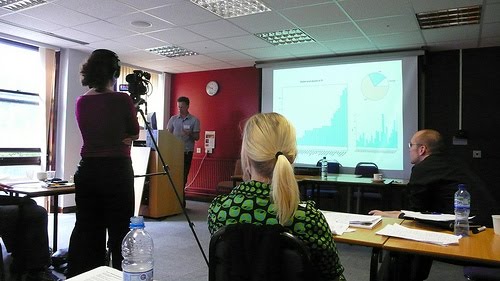 the contrary many new materialist gestures actually solidify rather than ‘fluidify’ the boundaries between nature/culture and matter/signification. At the same time these projects’ declarations of the newness of their endeavours conveniently conjure up an image of theorists who embark “on a heroic and lonely struggle” (32) against the collective non- or anti-materialism of former cultural and social-theoretical stances.
Now unhinging and confounding habitual dual oppositions remains undoubtedly a challenge for any ‘new materialist’ (as well as a theoretically differently oriented) project. Yet in order to end my part of these opening words I would like to point out three aspects that go some way in responding to the criticisms Ahmed presents—along with hopefully resonating with the talks of today.
Hence:
1) First of all, one of the signalling features that cuts across the heterogeneous projects we would like to propose as new materialist is their sustained commitment to developing models of immanent and continuously emergent relationality. Through insisting on the felt reality of relations for instance in the wake of William James, on the irreducibility of the in-betweens to the connecting terms, and on the intensive topological spaces of co-affectivity these models, we would argue, provide some of the most effective means on offer at the moment for thinking past the traditional rigid dualisms of nature/culture, subject/object and so on and for articulating the intuited processual co-substantiality of these facets.
2) Secondly and connectedly, the notion of the outside or virtual, which within new materialist undertakings relates or overlaps with such more specific concepts as affect, potential and variation, certainly diminishes the risk of ending up with a re-essentialized and reified conception of matter.
3) Thirdly and finally, we would like to think that the newness in the ‘new materialism’ refers less to a discrete stage let alone a point of culmination on a teleological line of theoretical understanding than to a multiplicity of attempts to live with newly composed problems whilst refreshing the vocabularies of cultural, artistic and feminist theory with “conceptual infusions” (Massumi 2002, 4) from hitherto overlooked or presently rediscovered sources.

II
In the context of digital media culture, the notion of “materiality” occupies a curious position in itself. As observed by Bill Brown in his entry for the recent Critical Terms for Media Studies (Chicago UP, 2010), our understanding of the media historical modernity has been infiltrated early on with the idea of “abstraction” — abstraction as a driving force (as with standardization of techniques, processes, and messaging) and an effect (represented in forms of power, subjectivities, cultural practices) of modernity. Recognized by a range of different writers from Karl Marx to Debord and Baudrillard, such a process has been influential in forcing us to rethink not materiality but dematerialisation as crucial to understanding the birth of technical media culture. Regimes of value, and regimes of technical media share the same impact on “things” – homogenisation, standardisation, and ease of communication/commodification in a joint tune with each other are in this perspective, and a perspective that branded critical theory for a long time, crucial aspects in any analysis of media culture’s relation to materiality.
Hence, the move from the critical evaluation of emergence of capitalist media culture seemed to flow surprisingly seamlessly as part of the more technology-oriented discourse concerning “immateriality” of the digital in the 1980s and 1990s. Here, in a new context, materiality was deemed as an obsolescent index of media development overcome by effective modes of coding, manipulating and transferring information across networks that become par excellence the object of desire of policies as much cultural discourses.
Yet, the recent years of media theory introduced an increasingly differing elaboration of how we should understand the notion of “medium” in this context. Instead of being only something that in a Kantian manner prevents access to the world of the real or material, or things (Brown, p.51) the medium itself becomes a material assemblage in the hands of a wave of German media theorists, who have develop a unique approach to media materialism, and hence new materialist notions of the world. Here the world is not reduced to symbolic, signifying structures, or representations, but is seen for such writers as Friedrich Kittler (and more recent theorists such as Wolfgang Ernst in a bit differing tone under media archaeology) as a network of concrete, material, physical and physiological apparatuses and their interconnections, that in a Foucauldian manner govern whatever can be uttered and signified. This brand of German media theory came out as an alternative exactly to the Marxist as well as hermeneutic contexts of theory dominating German discussions in the 1960s-1980s, and carved out a specific interest to the coupling of the human sensorium with the non-human worlds of modern technical media. In this insight, and ones shared by writers such as Jonathan Crary, on the one hand, the birth of modern media culture owed to the meticulous measuring of the human sensorium in various physiological settings and extending to experimental psychology labs in the late 19th and early 20th century. On the other hand, modern technical media showed such wavelengths, speeds, vibrations and other physical characteristics in itself that it escaped any phenomenological analysis, and hence tapped into a material world unknown per se to humans.
Without wanting to sound too reductionistic, I believe this is one of the key directions where media theory more recently has developed its own enthusiasm concerning a new more material understanding of media. Naturally filtered into new contexts, and transforming the way it works, such directions have however inspired also in the Anglo-American world new directions, new interests in material constellations of “platforms, interfaces, data standards, file formats, operating systems, versions and distributions of code, patches, ports and so forth”, to paraphrase Matthew Kirschenbaum. Naturally, post-representational approaches are present in a wide range of work and other thinkers, from the Deleuze-inspired cinematic philosophies of Steven Shaviro to sociological ideas of Nigel Thrift, the new materialist mappings of subhuman bodies such as blobs by Luciana Parisi to the politically tuned analyses of network culture of Tiziana Terranova — and the range of theories and theorists we are able to enjoy today.
Indeed, if I would be forced to summarize the intimate link between the analytical perspectives that go under the general umbrella term New Materialism and media theory and digital culture, it would have to do with at least three directions
1) The seemingly immaterial is embedded in wide material networks; information is informed by the existence of material networks, practices, and various entanglements, that expand both to the materiality of political economy of ownership, access and use, but also to the material assemblages which govern the way we are in media milieus.
2) Yet, technical media is also defined by non-object based materialities, which makes it slightly more difficult to conceptualise. As a regime of electromagnetic fields, of pulsations, electricity, and such fields as software, technical media and digital culture escape the language of solids.
3) The intimate connection between the dynamic human/animal body and media tech, which since the 19th century and for example experimental psychology labs has now extended to the various design practices in HCI and such that tap into the physiological thresholds of the human being in novel ways – hence the interest in affect, emotion, non-conscious and s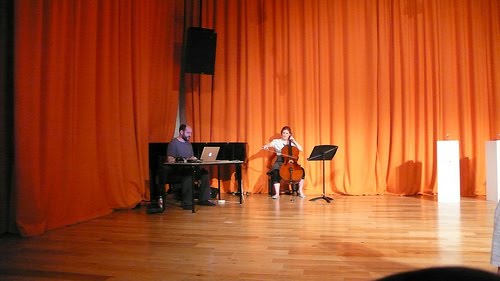 omatic levels of the human body, and emergence of various forms of interfacing, whether from the consumer tech of Kinect-gaming body-in-movement-meets-Xbox interface to still very aspirational Brain-2-Brain, B-2-B, networking and such. Its here that the knowledge about the kinetic, dynamic, and relational body feeds into understanding the moving-situatedness of us in mobile network cultures.
>New Materialism abstracts
>
David M. Berry: Software Avidities: Latour and the Materialities of Code
The first difficultly in understanding software is located within the notion of software/code itself and its perceived immateriality. Here it is useful to draw an analytical distinction between ‘code’ and ‘software’. Throughout this paper I shall be using code to refer to the textual and social practices of source code writing, testing and distribution. In contrast, I would like to use ‘software’ to include products, such as operating systems, applications or fixed products of code such as Photoshop, Word and Excel and the cultural practices that surround the use of it. This further allows us to think about the hacking as the transformation of software back into code for the purposes of changing its normal execution or subverting its intended (prescribed) functions. However, this difficulty should not mean that we stay at the level of the screen, so-called screen essentialism, nor at the level of information theory, where the analysis focuses on the way information is moved between different points disembedded from its material carrier, nor indeed at the level of a mere literary reading of the textual form of code. Rather code needs to be approached in its multiplicity, that is as a literature, a mechanism, a spatial form (organisation), and as a repository of social norms, values, patterns and processes. In order to focus on the element of materiality I want to use Latour’s notion of the ‘test of strength’ to see how the materiality of code, its obduracy and its concreteness are tested within computer programming contests. To do this I want to look at two case studies: (1) the Underhanded C Contest, which is a contest which asks the programmer to write code that is as readable, clear, innocent and straightforward as possible, and yet it must fail to perform at its apparent function. To be more specific, it should do something subtly evil; and (2) The International Obfuscated C Code Contest, which is a contest to write the most Obscure/Obfuscated C program possible that is as difficult to understand and follow (through the source code) as possible. By following the rules of the contest, and by pitting each program, which must be made available to compile and execute by the judges (as well as the other competitors and the wider public by open sourcing the code), the code is then shown to be material providing it passes these tests of strength.
Rick Dolphijn: The Intense Exterior of Another Geometry
Eleni Ikoniadou: Transversal digitality and the relational dynamics of a new materialism
The relationship between digital technology and matter has preoccupied media and cultural theorists for the last two decades. During the 90s it was articulated through a celebration of the disembodied, immaterial and probabilistic properties of information (cybercultural theory). More recently, it has been asserted through a reliance on sensory perception for the construction of a predominantly observable, otherwise void, digital space (digital philosophy). However, alternative materialist accounts may be able to offer more dynamic ways of understanding the heterogeneity, materiality and novelty of digital culture (Kittler, 1999; Mackenzie, 2002; Fuller, 2005; Munster, 2006). Following on their footsteps, this presentation will aim to rethink the ontological status of the digital as immanent to the flows of a ‘new materialism’. The latter is understood as a transversal process that cuts across seemingly distinguished fields and disciplines, such as the arts and sciences, establishing new connections between them. New materialism, then, becomes a concept and a method proper for investigating digital media and their tendency to bring together different aspects of the world in new ways. The paper discusses how an abstract materialist new media theory can enable transversal relations between science studies, philosophy and media art, as well as between the actual and the virtual dimensions of reality; allowing the emergence of heterogeneous digital assemblages of material, aesthetic and scientific combination.
Adrian Mackenzie: Believing in and desiring data: ‘R’ as the next ‘big thing’
How could materialist analysis come to grips with the seeming immateriality of data network media? This paper attempts to think through some of the many flows of desire and belief concerning data. In the so-called ‘data deluges’ generated by the searches, queries, captures, links and aggregates of network media, key points of friction occur around sharing and pattern perception. I focus on how sharing and pattern perception fare in the case of the scripting language R, an open source statistical ‘data-intensive’ programming language heavily used across the sciences (including social sciences), in public and private settings, from CERN to Wall Street and the Googleplex. R, it is said, is a ‘next big thing’ in the world of analytics and data mining, with thousands of packages and visualizations, hundreds of books and publications (including its own journal, /R Journal/) appearing in the last few years. In this activity, we can discern vectors of belief and desire concerning data. The tools and techniques developed in R can be seen both intensifying data, and at times, making the contingencies of data more palpable.
Stamatia Portanova: The materiality of the abstract (or how movement-objects ‘thrill’ the world)
Anna Powell: Affections in their pure state? The digital event as immersive encounter
Iris Van der Tuin: A Different Starting Point, A Different Metaphysics: Reading Bergson and Barad Diffractively









 Machinology