Archive
Launch events for Insect Media – Berlin and Cambridge
Now that Insect Media is out, I am organizing a couple of events sort of as book launches—with a little help from my friends!
One takes place in Berlin, at the Generalpublic.de cultural venue on Schönhauser Allee 167c ( 10435 Berlin) on March 4, Friday, 7 pm – Shintaro Miyazaki will be interviewing me , and hopefully with drinks and nibbles (there has been talk of some Japanese finger food!). Also the book is on sale there, with a small launch discount.
Even before that, in Cambridge, we are organizing a joint event with Joss Hands whose own book @ is for Activism came out in December as well! This takes place February 22, Tuesday, 5 pm at Anglia Ruskin University at 5 pm. The room will be Helmore 251.
Below, a short blurb about that event which we use to discuss more widely some interesting current and future directions of media studies as well:
‘New Directions in Media Studies: Questioning The Digital Turn’.
In their new books Anglia Ruskin lecturers Joss Hands (@ is for activism) and Jussi Parikka (Insect Media) address some of the pressing new issues in Media Studies emerging from the digital revolution in communication technology. This event will act as a book launch, but also offers the chance to address the relevancy of innovative cross disciplinary themes in contemporary Media Studies.
Both books are characterized by distinct theoretical and political perspectives on issues such as the impact of digital networks on collective action, the ontology of politics, economic production, the ‘post-human’ subject and science-arts interdisciplinarity.
Hands and Parikka will offer short introductions to key themes in their books and welcome questions and discussion over wine and nibbles.
The event is sponsored by CoDE – Cultures of the Digital Economy research institute at Anglia Ruskin, and the campus bookshop John Smith’s is offering both books to be purchased during the event.
TOC for Media Archaeology
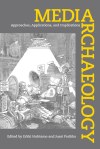
Some information on our forthcoming Media Archaeology: Approaches, Applications, Implications-book that we edited together with Erkki Huhtamo, forthcoming Spring 2011 from University of California Press… no cover image yet, and no table of contents online, hence I am posting at least the contents here! For clarity’s sake, this is the one that is ready, and I am writing at the moment another book, a single authored one on the same topic.
1. Introduction: An Archaeology of Media Archaeology –Erkki Huhtamo and Jussi Parikka
Part I: Engines of/in the Imaginary
2. Dismantling the Fairy Engine: Media Archaeology as Topos Study –Erkki Huhtamo
3. On the Archaeology of Imaginary Media –Eric Kluitenberg
4. On the Origins of the Origins of the Influencing Machine –Jeffrey Sconce
5. Freud and the Technical Media: The Enduring Magic of the Wunderblock –Thomas Elsaesser
Part II: (Inter)facing Media
6. The “Baby Talkie,” Domestic Media, and the Japanese Modern –Machiko Kusahara
7. The Observer’s Dilemma: To Touch or Not to Touch –Wanda Strauven
8. The Game Player’s Duty: The User as the Gestalt of the Ports –Claus Pias
9. The Enduring Ephemeral, or The Future Is a Memory –Wendy Hui Kyong Chun
Part III: Between Analogue and Digital
10. Erased Dots and Rotten Dashes or How to Wire Your Head for a Preservation –Paul DeMarinis
11. Media Archaeography: Method and Machine versus History and Narrative of Media –Wolfgang Ernst
12. Mapping Noise: Techniques and Tactics of Irregularities, Interception, and Disturbance
–Jussi Parikka
13. Objects of Our Affection: How Object Orientation Made Computers a Medium –Casey Alt
14. Digital Media Archaeology: Interpreting Computational Processes –Noah Wardrip-Fruin
15. Afterword: Media Archaeology and Re-presencing the Past –Vivian Sobchack
[edit 21/12/10]: Endorsement by Sean Cubitt:
“Huhtamo and Parikka, from the first and second generations of media archaeology, have brought together the best writings from almost all of the best authors in the field. Whether we speak of cultural materialism, media art history, new historicism or software studies, the essays compiled here provide not only an anthology of innovative historical case studies, but also a methodology for the future of media studies as material and historical analysis. Media Archaeology is destined to be a key handbook for a new generation of media scholars.”
– Sean Cubitt, author of The Cinema Effect
>Hey Mr. Tory, why do you hate media studies so much?
>Oh Mr. Tory, why do you hate media studies so much? It’s amazing that you claim the education system of dumbing down, as if it was somehow connected to the popularity of what you claim to be “soft subjects”, as media studies. Of course, I am sure that English is not on that list — it does after all represent the finest in British culture, right? Languages in general are seen as “tough topics.” And what they teach there in English lit., or languages? — literature, books, practices of reading and interpreting — does not have anything to do with media? Well, Mr. Tory, if you would study media studies, you might see things differently. Literature too is a medium, it just happened to be the key medium for production, consumption, governance and distribution of information before the internet came along. Perhaps you should study media studies to get a bit of perspective.
Why do you Mr. Tory hate media studies so much? I wonder whether you would be yourself able to pass the courses? Do you know what media studies is about? No, its not what BBC suggested through its Media Studies test. It’s not about learning to what social class/audience category teachers belong (as suggested in the BBC test), or what font BBC website uses (another question in that test). I wonder how you might survive reading Adorno, tackling Marx, engaging with Hall, writing an essay about Guattari, or coping with the centrality of software for contemporary culture. Badly, based on the statements you give.
Why do you Mr. Tory hate media studies so much? Because it might actually produce critical knowledge that is not only aware of the centrality of maths and sciences for the contemporary media culture of “creative industries” (e.g. through software studies), but also because it is able to create such connections that reveal their relations with other fields, including economics, politics and like. Its for this reason, Mr. Tory, that actually I would claim the centrality of media studies to understand contemporary culture. It is in an ideal position to understand the links between arts, sciences and technology, with yet another source of inspiration coming from philosophy. Too much for you? I am sure it is — after all, it might make you question so many of your own defining beliefs. To freely quote the Finnish poet Pentti Saarikoski: the conservatives, the right wing, they don’t need philosophy — their world view is ready and sealed. To update it: the tories don’t need media studies, it might question too much and critically their world. Better damp it down, before it gets too far.








 Machinology