Archive
Signals, not signs
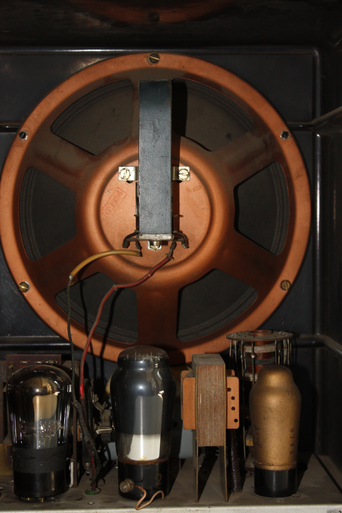 Most of my text-slaughter (i.e. cutting down the word count of my new book ms Media Archaeology and Digital Culture, and posting some blurbs online) happens here, but wanted to add this note, extracted from a chapter on”archives, in this blog space. It deals, very briefly, with some aspects of Wolfgang Ernst’s media theory:
Signals instead of signs, physics instead of semiotics – such a turn is at the core of how Wolfgang Ernst wants to define media theory. How do you do that methodologically? Theoretical work, analysis of diagrams, epistemologies, scientific frameworks for technical media are completemented in the case of Ernst by the existence of the media archaeological fundus – a certain kind of an archive of media archive – but an operational one. This is what he describes as based on the idea of epistemological “toy” – epistemisches Spielzeug (where the “Zeug” includes a Heideggerian connotation). Whereas I deal with Ernst, the fundus and their contexts in more detail in a range of forthcoming publications (in Theory, Culture &Society, in a book on Digital Humanities edited by David Berry and in my introduction to the forthcoming volume of Wolfgang Ernst writings from University of Minnesota Press) here is a short blurb into the direction of signs:
One of the aims of the fundus is to show that our perceptions are dependent on the signal processing capacities of our devices. This is evident with the example of online streaming, especially with a slightly slower internet connection that halts at times to load the content. But you can find this reliance on the signal as a time based process in earlier mass media as well. Perceptions become a function of the signal processes and the signal-to-noise ratio that is governed by complex diagrams usually more familiar to engineers and mathematicians whether we are talking about the statistics inherent in transmission, or the specific colour worlds this has related to:
“However, the broadcast of any football game illustrates the signal-to-noise ratio between plays on the field and amorphous shots of the spectators in the stadium only statistically. The archeology of media searches the depths of hardware for the laws of what can become a program. Has not the character of television shows after the introduction of color sets been determined decisively—indeed down to the clothes of the hosts—by the new standard and what it can do in terms of color and motion? Even today, the color blue has a mediatic veto in chroma key resolution; the same goes for the blue screen, and for manipulations of resolution and color filters. […] For media archeology, the only message of television is this signal: no semantics.” (Ernst: “Between Real Time and Memory on Demand: Reflections on/of Television” The South Atlantic Quarterly 101:3, Summer 2002: 627-628)
In such perspective, media artists such as Nam June Paik have been at the forefront of illuminating these technical aspects of transmission of signals by investigating the noise and non-meaning inherent in the medium. In one way, this is a reforumation of a McLuhan idea of medium as the message – the materiality of the mediation as the importance, but here turned into a more concrete physical detail: we would not see or hear anything were it not for the work of signals to transport, to transmit such phenomenological details to us.
A requiem for the slaughtered words
I guess this is dead media (archaeology).
I am doing farewells, and ritual slaughters of pieces of text that I need to cut from my new Media Archaeology and Digital Culture-manuscript (book forthcoming 2012 from Polity Press). I ended up realizing I am 15,000 words over the word limit so I need to become ruthless. This means picking up the academic chainsaw, the butcher’s knife, the well-sharpened axe that I keep under my bed anyway, and putting on my best Jack Nicholson (in The Shining) impression before the slaughter begins. Some of the remains (consider them sliced out organs, even if minor ones, of the text) are buried at Cartographies of Media Archaeology as part of the “Kill the Darling”-series (and part 1 here).
Train/Cinema
I was lucky to visit Malmö (and the Medea Lab too) to talk about media archaeology just a couple of days ago and on the way back saw this attractive public art projection of remediative proportions. At the Malmö train station platform a projection that imitates the windows of a screen is a nod towards the train passenger’s view as cinematic glimpse into landscapes, people, things passing by, as well as a form of cinematic spectatorship where the projection wall could be seen as stabilized frames – a frozen film, or actually where the frames are frozen but the image magically carries on. As such, the train platform was a great location for this as a small but somehow silently beautiful nod to this historical conjunction between technologies of transport and technologies of vision. How we move (and are moved) is mediatic as well.

And thought just to mention that I am writing this post on the train.
Unnatural (Media) Ecologies
 After a long wait, it’s out like nature itself! The Fibreculture-journal Media Ecology-special issue, titled “Unnatural Ecologies”, and edited by me and Michael Goddard.
The idea for a journal issue was picked up and continued from a panel organized for the MeCCSA conference in Bradford (2009) where I spoke with Matt Fuller and Michael Goddard on the media ecological approach in media and cultural studies. With Michael, we picked up on the idea of rethinking media ecology “after Matt Fuller’s work”, i.e. how we can transport the concept and practices into new directions that differ from those of the more classical media ecology work by (post-)McLuhan scholars. Hence, we ended up thinking more about Guattari’s three ecologies, Simondon, political and art practices, as well as nature itself as media. One of the leading ideas that Michael emphasized was how to think media ecology as a practice itself – how to understand it as a set of theories in practice.
Hope you enjoy the issue!
(My own text addresses “ecomedia”, nature as a communication framework [Harwood-Wright-Yokokoji and Mediashed art project] and extending that towards imaginary media as a reimagining how far back in time and as practices we can extend “media”.)
Ghostly reincarnations: an interview with Katy Price
This one-question mini-interview with Dr Katy Price (Anglia Ruskin University) is a follow-up on the interview I did with Aleks Kolkowski. Katy has collaborated with Kolkowski on the old sound machine remediations, and has herself done various projects on sound and word art – as well as being a researcher interested in the interchanges between science and literature. I find her take on materialities, appropriation of science and tech, and experimental, playful and inventive take on these themes fascinating. I asked Katy to elaborate a bit how she sees working with obsolete technologies, and how does her word art intertwine with media archaeological themes and Kolkowski’s work with old recording tech:
Katy, you have recently collaborated with Aleks Kolkowski on a project that involves working with old media, appropriating old recording technologies such as Edison wax cylinder discs for creative practice, creative writing. Already before you have been interested in your word art (see for instance here) in working with sound, and creative music technologies, but what specifically makes working with these kinds of “obsolete” technologies interesting? Could you elaborate a bit on your artistic methodologies and interest in these themes (old media, co-curation with audiences as the project now with Science Museum, etc)?
Dr Katy Price: Thanks for asking about this Jussi. For me it is all about the relationship between our use of the latest consumer items and our making through history. A heightened awareness of this relationship – and ways to share this as entertainment.
The past informs how we use and think about our bodies and their companions or additions or substitutes. One way to experience this is through reading about the past and receiving inspiration from historians. Somebody like Paul Fussell points out that memory of the First World War – mud, wire, slaughter and filling in surreal forms – shapes everyone’s identities, even if we weren’t born yet. Or Paul Théberge traces how we assumed the identity and practices of consumers: not just of music but consumers in the act of music-making. All the way from the pianola to MIDI and sampling.
Those are both stories that begin around the start of the twentieth century and there is a great appeal for me in this period because you can almost see, taste, hear the past and the future washing up against each other on the street and in people’s homes: bowler hats and horse-drawn carriages collide with illuminated advertising, cinema, ‘noiseless’ typewriters. I think we would laugh so hard if we suddenly found ourselves on Piccadilly in 1925. And instantly want one of everything. People had a lot of hopes and vision – you could dream about inventing anything, from a new type of escalator to a new society. At the same time there was a lot holding people back – no such thing as maternity leave; lots of brothers, fathers, lovers, left behind in the mud in France or falling apart at home. Under those circumstances, dreaming about the future is both necessary and tough, even impossible. I think we could do with knowing how to be a bit like that now.
The audience for academic books is quite restricted and also the mode of experiencing messages from / about the past is limited to reading the book and perhaps making images in your mind or writing some notes. I found a different angle from the experience of musical artefacts on display and in performance. At the Science Museum in London there is a brilliant case in the Making the Modern World gallery. It is a jumble of items (actually organised by inspiration from a curious thinker called Patrick Geddes) and in one corner you have a Stroh violin next to an ammoniaphone – for use by opera singers and the clergy, to improve their voice before performance with a gust of ammonia – phew! Nearby there is a prosthetic arm. Because the case isn’t directly telling me how to relate these items or how to think of their place in history, I feel almost the privilege of having come across them in a curiosity shop.
But you can’t play with the items in the museum case, or see them in use.
Aleks Kolkowski has collected and restored the only working Stroh quartet: two violins, viola and cello. Instead of wooden bodies they have a metal horn (enormous on the cello). Completely mechanical: no electricity! The horn is attached to a diaphragm which picks up the sound – you play it with the bow as normal, but it sounds almost reedy, and much louder in the direction of the horn. It was used until the 1920s to make the strings audible on early gramophone recordings, before microphones. The group Apartment House played a concert on the Strohs in Cambridge a few years ago, including a piece by Aleks which incorporated two cylinder phonographs. They were all attached together with plastic tubes, which struck me as a mechanical parody of electronic connectivity. It got me thinking about how artefacts in performance can give the audience a chance to think about today’s technology in our lives by seeing an amusing or strange performance with obsolete items.
The next thing I saw was a concerto for Pianola and iPhone composed by Julio d’Escriván, which he performed with Rex Lawson. Rex is a great showman and he is happy to show the audience how the pianola works. Julio is interested in how audiences perceive the minimal gestures of laptop musicans, and he works with the iPhone in ways that make us aware of our own need for a correlation between gesture and output sound. The combination made me think that performances like this can invite us to see the new gadgets as artefacts for a moment.
I am now working a little bit with the Science Museum on how to use creative writing as part of the process of co-curation / co-creation. This means that audience groups are invited to select objects and tell stories about or through them, for display in an exhibition. So far we spent 2 days with a group of young people. Aleks showed them his phonographs and gramophones, and talked about these mechanical objects. I got them to write monologues and poems. For example: what the gramophone said to the ipod and the other way round. Then we recorded these works onto wax cylinders and gramophone discs. They were captivated by the items from Aleks’ collection: the look and feel, the sound of themselves coming back in this ghostly form. They found the mechanical process mysterious and intriguing – which it is. How can sound be captured and played back without electricity?They learned a bit about the history of sound recording and we had a lot of fun. Their writing was amazing and I think there is a lot more we could do with speaking through these artefacts: unlike other forms of object writing, you have the opportunity for double voicing when it is recorded and played back using this item.
Aleks is building up a phonograph archive of wax cylinder recordings of contemporary artists and musicians. I won’t say too much about this for now but prepare to be amazed when it is launched… I have heard some of the cylinders and the effects are stunning. They will be digitised and online soon. For the archive I wrote a poem in two voices: Thomas Edison and Charles Cros, who had the idea for the phonograph at the same time but Edison got it on the market first. We recorded one voice on the cylinder and the other one over the top, so that they weave in and out of each other. When Aleks told me about Cros, his interest in language and plans for communication with extra-terrestrials, I recognised him as one of those hopeful impossible figures of his time. He clearly deserved to be reincarnated on a wax cylinder, interfering with Edison’s confidence.
“Sonic Alchemy”: an interview with Aleks Kolkowski
“Sonic Alchemy” – an interview with Aleks Kolkowski on his media archaeologically tuned sonic art methods
London-based musician and composer Aleksander Kolkowski occupies himself with the sound of the obsolete. This means working both with techniques and technologies of sound recording from past times, as well as investigating the nature of sound cultures through creative clashes between the old and the new. He has a long and extensive career as musician and performer, and has recently in his performances engaged with such technologies as Stroh instruments, wind-up Gramophones, shellac discs and wax-cylinder Phonographs. Aleksander Kolkowski also ran workshops at the Science Museum as part of the Museum’s Oramics-project.
The interview (March 2011) w as conducted to elaborate Kolkowski’s artistic methods and interests, especially in relation to “media archaeology” as a creative form of crossbreeding and producing hybrids from old and new media innovations and artistic experiments. Juss i Parikka was affiliated with the Science Museum early this year as a short term research fellow, working on his new book on media archaeological theory and methods.
Jussi Parikka: Aleks, a big thank you for having the time to this interview. I am fascinated in how your work is very much embedded in old media – an inventive engagement with old recording technologies from wax-cylinders to gramophones and with instruments such as the Stroh violin. Why engage with old media? Can you tell a bit more about your “artistic methodology”?
Aleksander Kolkowski: Thank you for asking. I’m reminded of a quote by David Tudor, the New York avant-garde musician and John Cage’s muse, who in response to being asked about the then late ’80s electronic music scene said ” if you look at the background of the analog technology, there are marvellous things from two centuries ago that are worthy of being investigated.” For creative musicians, old recording technologies and related instruments are rich veins from which to draw from, but this has as much to do with current artistic practices and handling of modern technology as it has to do with an interest in the past.
In today’s culture, computers, turntables, electronic devises and smartphones can all be considered as ‘instruments’ for music-making, that’s to say they are being played with or manipulated, rather than passively emitting or processing sounds. Additionally, the noises produced by altered or malfunctioning media, be it hacked electronics, feedback, scratched records or skipping CDs, have been used as material by artists for sometime now. It’s in this same spirit of actively engaging and interfering with media technology and re-purposing it, rather than merely consuming it, that we can re-examine the media technology from the distant past and use it creatively. I’ll add that this has nothing to do with nostalgia, but with a belief that we can use these bygone technologies to offer an alternative perspective in our digital media-fixated society – to listen to the present through the pioneering audio technologies from well over a hundred years ago.
While there is a delight in playing with old machines and instruments, bringing them ‘back to life’ and engaging with the past through a mixture of research and practical experience, there is a feeling that this somehow challenges the very notion of their obsolescence. It has something to do with a reaction to consumerism and to the disposable nature of current media technology, its intangibility and limited shelf-life.
I began this work twelve years ago and I suppose it started as a personal response to the techno-fetishism that was prevalent in much of the experimental music-making at the time. Instead of electronic interfaces, I performed with wind-up gramophones, phonographs, and a mechanically amplified violin in unusual ways to make what sounded like contemporary electronic music, but using no electricity whatsoever. Since then I’ve been incorporating modern digital as well vintage analogue electronics in my work. Software programs have become important tools in my recent compositions and installation work where the historic and the modern are combined.
In a way, you work as a creative researcher, a historian, or an archaeologist, then?

Research played a part from the very beginning, investigating the origins of the Stroh violin is what really got me started on this journey. So histories to do with sound recording and its reproduction and early recordings became integrated in the fabric of the work I’ve produced at every level, from the concept stage, as narratives to provide structure right to the actual content itself, be it treating the first ever recordings of music as the basis for acoustic and electronic explorations or using the first morse code telegraph message to create rhythmic structures in a composition.
These creatively inspired explorations have actually led, in recent years, to more conventional, academic research (at Brunel University) into little known forms of mechanical amplification and an involvement with artefacts from museum collections in the UK and abroad.
You do not only tinker with old technologies but perform music with them live as well. How do people react to your work and instruments?
The reaction of audiences has had quite an important effect on my work. I found that people would marvel not only at the sight of these splendid old instruments and machines, but where captivated by the sound in interesting ways. Playing back a newly recorded wax cylinder on a phonograph to a modern audience is taken by many as a kind of sonic alchemy, and it requires a very different kind of listening than what we’ve all become used to. Rather than hearing a virtual copy, it’s closer to a memory of something. So it seemed possible to work with the relationship of sound and temporality by ‘ageing’ sounds using old technology, to be transported back in time, then forward to the present through the sound recording media of the past.
Do you think there is currently a wider artistic and sonic interest in going back to the pre-electronic age?
Probably not to the same extent as in literature, film or fashion, that’s to say the Steam Punk movement which has more to do with fantasy and science fiction. There are musicians releasing limited edition cylinder records, artists building machines, and composers utilising the pianola, but I’d mention the sound art of Paul DeMarinis to do with ‘orphaned technologies’ from the pre- and early electronic era as being the most significant example I can think of in this field. He is a true scientist of sound who has delved into seemingly obscure forms of communications technology and created some highly interesting and accessible works.
Certainly a lot has been published over the past few years concerning 19th century science, histories and theories of technology and communication, especially with regard to sound and the history of recording, which must be indicative of something, so yes, there is a wider interest, but then artists have always foraged the past. What’s special at this point in time, is the speed and severity at which digital media is replacing the analogue and which is conversely breathing new life into all forms older physical media, be it film, chemical photography, the cassette tape and even the wax cylinder.
I saw you recently (February 2011) do a workshop with the Science Museum together with Katy Price (Anglia Ruskin University). The workshop was part of a Science Museum Youth and Public Engagement to support their Oramics (Daphne Oram) project. Could you tell a bit more about this and the workshop where you recorded short pieces of creative fiction written by the students onto Edison cylinders and other old media?
In this case it was to show that the origins of Daphne Oram’s sound painting can be traced back to 19th century advances in capturing, visualising and reproducing sound through the phonoautograph and subsequently the phonograph and gramophone. We were also treating groove-based sound recording as a form of inscription, as sound-writing. It seemed fitting that the creative writing resulting from Katy’s sessions around the Oramics Machine and related artefacts in the Science Museum collection should be rendered onto physical storage media in this way. They could then be played back on the same cylinder phonographs and gramophones the participants had written about and even become objects that furnish an exhibition.
The fundamentals and science of sound recording are vividly demonstrated through mechanical devices, through objects you can touch and sound inscriptions you can see and hear played back via styli, vibrating diaphragms and horns. As well as showing how our forefathers experienced recorded music, it also offers us a different kind of listening experience as I’ve mentioned before. It helps us to examine our relationship to recorded sound, the antiquated sound-engraving processes add distance to the newly recorded voices, allowing us to reflect more profoundly on what we hear.
OOO, OOP and OOMT (?)
Levi Bryant at Larval Subjects gives a good heads up on the link between Object-Oriented-Philosophy and John Johnston’s fabulous The Allure of Machinic Life — and that way hints of the still quite implicit links between such modes of philosophizing and contemporary media theory. For me, Johnston’s work became familiar through his editorial work with Kittler’s writings, and as such, The Allure is for me a work that is branded by that way of thinking the material media culture. Kittler and others for instance in “German media theory” rarely talk about objects – but of networks, inscription systems, materials of communication – but I can see where some of the arguments might resonate. In terms of links between the various theory scenes, some people such as Paul Caplan at The Internationale are picking up related themes, combining media archaeology with OOP/OOO (never sure which one to call it), and discussing the logic of technical media objects (in this case, the JPEG protocol) through Harman and others.
For me, the so-called material media theory lends itself to “new materialism”, and the material assemblages, networks, dynamic embodiments and intensive becomings investigated there. Whereas the relations between new materialisms and the speculative realism as well as object oriented philosophy are still to be investigated I guess, so are the possibilities that media theory offers too.
Related to such discussions, I learned from somewhere that Speculations – Journal of Speculative Realism is reviewing my Insect Media in its issue no 2, which also scares me – while of course finding it intriguing how it is going to be received on that side. I share a lot of the same references from Deleuze to Delanda to Latour, but never explicitly link up to any of the speculative realist discussions, nor object oriented philosophy.
(My short review of Johnston’s The Allure-book is found here.)
Oh and the title of the post? Clarification of terms:
OOO= Object Oriented Ontology
OOP = Object Oriented Philosophy
OOMT= Object Oriented Media Theory
Transmediale 2011 theory award nomination for Zombie Media
Slightly perhaps shadowed by the Nobel prize announcements, the nominees for the Transmediale 2011 theory award – the Vilem Flusser award – were revealed this week.
I happy and excited being one of them, for the piece we wrote together with Garnet Hertz: “Zombie Media: Circuit Bending Media Archaeology into an Art Method”. The text is a theoretical excavation into thinking such art methods as circuit bending as media archaeological, and hence, expanding the notion of media archaeology from a textual method into something more strongly connected to the political economy of clipped shut information technology and material digital culture art practices: tinkering with technology that is not meant to be opened, changed, modified. Hence we mobilize such key themes as “black boxes” which have of course been well thematized in Science and Technology Studies (STS), but now in a media archaeological and hacktivist setting. Hence, the name zombie media: not dead media, even if old, passed away even; we write in the conclusions: “media never dies. Media may disappear in a popular sense, but it never dies: it decays, rots, reforms, remixes, and gets historicized, reinterpreted and collected. It either stays as a residue in the soil and in the air as concrete dead media, or is reappropriated through artistic, tinkering methodologies.”
Here the info from the Transmediale 2011-website:
Vilém Flusser Theory Award
Congratulations to the following four nominees of Vilém Flusser Theory Award 2011!
The Vilém Flusser Theory Award (VFTA) promotes innovative media theory and practice-oriented research exploring current and pending positions in digital art, media culture and networked society. The call was open to publications, positions, and projects from a broad range of theoretical, artistic, critical or design-based research that seeks to establish and define new forms of exchange, vocabularies and cultural dialogue.
Zombie Media: Circuit Bending Media Archaeology into an Art Method
Garnet Hertz & Jussi Parikka
GATHERINGS 1: EVENT, AGENCY, AND PROGRAM
Jordan Crandall
_Social Tesseracting_: Parts 1 – 3
Mez Breeze
Digital Anthropophagy and the Anthropophagic Re-Manifesto for the Digital Age
Vanessa Ramos-Velasquez
TOC for Media Archaeology
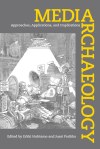
Some information on our forthcoming Media Archaeology: Approaches, Applications, Implications-book that we edited together with Erkki Huhtamo, forthcoming Spring 2011 from University of California Press… no cover image yet, and no table of contents online, hence I am posting at least the contents here! For clarity’s sake, this is the one that is ready, and I am writing at the moment another book, a single authored one on the same topic.
1. Introduction: An Archaeology of Media Archaeology –Erkki Huhtamo and Jussi Parikka
Part I: Engines of/in the Imaginary
2. Dismantling the Fairy Engine: Media Archaeology as Topos Study –Erkki Huhtamo
3. On the Archaeology of Imaginary Media –Eric Kluitenberg
4. On the Origins of the Origins of the Influencing Machine –Jeffrey Sconce
5. Freud and the Technical Media: The Enduring Magic of the Wunderblock –Thomas Elsaesser
Part II: (Inter)facing Media
6. The “Baby Talkie,” Domestic Media, and the Japanese Modern –Machiko Kusahara
7. The Observer’s Dilemma: To Touch or Not to Touch –Wanda Strauven
8. The Game Player’s Duty: The User as the Gestalt of the Ports –Claus Pias
9. The Enduring Ephemeral, or The Future Is a Memory –Wendy Hui Kyong Chun
Part III: Between Analogue and Digital
10. Erased Dots and Rotten Dashes or How to Wire Your Head for a Preservation –Paul DeMarinis
11. Media Archaeography: Method and Machine versus History and Narrative of Media –Wolfgang Ernst
12. Mapping Noise: Techniques and Tactics of Irregularities, Interception, and Disturbance
–Jussi Parikka
13. Objects of Our Affection: How Object Orientation Made Computers a Medium –Casey Alt
14. Digital Media Archaeology: Interpreting Computational Processes –Noah Wardrip-Fruin
15. Afterword: Media Archaeology and Re-presencing the Past –Vivian Sobchack
[edit 21/12/10]: Endorsement by Sean Cubitt:
“Huhtamo and Parikka, from the first and second generations of media archaeology, have brought together the best writings from almost all of the best authors in the field. Whether we speak of cultural materialism, media art history, new historicism or software studies, the essays compiled here provide not only an anthology of innovative historical case studies, but also a methodology for the future of media studies as material and historical analysis. Media Archaeology is destined to be a key handbook for a new generation of media scholars.”
– Sean Cubitt, author of The Cinema Effect
Polyverses
The easiest target to ease your pain in the midst of funding cuts and the crisis of British universities is to blame the post 1992 universities – the ex-polytechnics. It seems that in the still very rigidly divided British class society, its the ex-polytechnics that are responsible for all the bad in the academic cultures of the Empire. It seems that the good old values in hard sciences and English (which still quite recently, less than 100 years ago was seen as a Mickey Mouse subject as well, but now celebrated as a corner stone of UK universities) are being threatened by such transdisciplinary newcomers as media studies. Indeed, I would be afraid too, as what the future of universities will need are new mixed perspectives, hybrid disciplines that are able to smoothly maneuver between critical theory, technology and culture and develop an understanding of the nature-culture (i.e. science-humanities) continuum.
Hence, it is joyful to read in the midst of polytechnic-bashing about 19th-century — and British 19th-century specifically, when such institutions as the Royal Polytechnic Institution were not only celebrated back here but also envied across Europe. Such Polytechnics were indeed leading in various fields so crucial for the whole birth of technological, scientifically driven media culture that was emerging back then. Scientific progress, new forms of visualisation and spectacle, curiosities of useful and ephemeral kinds, were recognized to co-exist in a manner that indeed was a mix of popular attractions and scientific interest. As said, such polyverses were envied across Europe: “‘When will Paris have its own Polytechnic Institution?’ Abbé Moigno asked impatiently in his magazine Le Cosmos in August 1854″ (Mannoni, The Art of Light and Shadow, p 268). (Moigno was btw. anyway a big fan of Anglo-American sciences, and did translations and introductions to developments at the other side of the Channel). The French had been at the forefront of developing inventions concerning light and its manipulation in terms of various projection and other apparatuses, but it seems that around mid 19th-century, Britain was able to provide a strong institutional support for development of such inventions on a wider scale too.
What to me is curious about such institutions that engaged with not so much in high abstract science but in experimental, hands-on and engineering approaches to new ideas and innovations is how they are, actually, different from Royal Science. Indeed, in this case I am using Royal a bit differently and more in the fashion that the philosophers Deleuze and Guattari used the concept. For the two French philosophers, Royal Science is one connected to the State as a power formation, and aims at stabilized formations, predictabilities, abstracted forms of ideal and imperial kinds. Naturally such classic institutions as Royal Polytechnics and such were created closely with State interests (science and technology was seen already then as the flagship for the Empire, not only know in the midst of the Digital Economy hype), but perhaps there is a potential to see a nomadic undercurrent in some of the interests of knowledge/creation in them as well, that is relevant for a consideration of contemporary institutions. This is indeed where the other concept, an alternative from Deleuze and Guattari kicks in; nomadic science that is an intellectual/pragmatic war machine for them. It is less interested in discovering organic, ideal and fixed essences than mapping out matter in its intensity, full of singularities that can take that active matter into surprising directions.
Nomadic science experiments with matter on hand; it teases out potentials, and directions for becoming/use/applicability to use a bit different terms in a manner that does stay close to the dirtyness of the world. This is where practical, experimental sciences, engineering and “applied perspectives” can actually carve out more about the world in its intensive materiality, than the royal sciences. It is for me an artistic perspective to science/technology; the much talked about field of sci-arts that can work taking aboard “the best of both worlds”, so to speak. The cutting edge ideas in science and technology, but recontextualised in artistic methodologies and critical agendas. (And yes, not being only naive: I am completely aware how well embedded certain science-art collaborations are in economic wealth creation and even in military related developments and institutions).
Perhaps such perspectives have importance on various levels; to perspectives of media archaeology that are interested in nomadic ideas, practices and such assemblages of experimentation where invention happens in pragmatics. Not the inventions of for example media technologies in terms of their mathematics or logical implications, but in terms of experiments with materials, machines and such. A media archaeology of dirty machines, and trying out.
But it has importance also to ideas concerning contemporary institutions of knowledge/creation. Ex-polytechnics should perhaps more explicitly celebrate the engineering, arts, and applied sciences background, but not forgetting that theory is a practice too. This includes it as work of trying out, aberration, and dirty experimentation that works best in close proximity with the materiality of the world. Naturally its clear that there is a strong pull towards such Polyverses as the flagship of Royal interests; i.e. in various cases for example part of the new Digital Britain and the future of the Digital Economy. Yet, we should dig out minor passages, imperceptible places of research-creation and such where also new ideas, tinkering and experimentation without respect to theory-practice division can take place.







 Machinology