Archive
Oh its not all visual is it?

Jasia Reichardt gave a talk of media archaeological proportions; of machines and art where machines infiltrate not only the imagination of artists as objects, but the sexual desires of consumer societies, machines are as much imagined as they are real — they inhabit border zones of the modernist imagination. Whereas I enjoyed a lot her picture arsenal — for example the ones from Grandville’s L´Autre monde (1844) — the talk was not as consistent as I hoped. In addition, to the very good question of how would she reconsider her 1971 Computer in Art her answer was quite disappointing. She seemed to get lured into modernist themes concerning profound vs. superficial by pointing out how easy making art with computers nowadays is — everyone can do an image now with them; where suddenly, to my surprise, computer art seemed to be all about image/visual based arts. What happened to code art, sounds, complex understandings of uses and reuses of software and hardware?


>A guest talk by professor Richard Grusin, the co-author of Remediation, and the author of Premediation
>Thursday 14 January, at Anglia Ruskin University, Cambridge (East Road)
Organized by ArcDigital and sponsored by CoDE — the Cultures of the Digital Economy-institute
4 pm, room: Hel 251
Premediation, Affect and the Anticipation of Security
In this talk professor Grusin will explore how in our current biopolitical regime of securitization, socially networked media transactions are fostered and encouraged by mobilizing or intensifying pleasurable affects in the production of multiple, overlapping feedback loops among people (individually and collectively) and their media. Grusin outlines how, at the end of the first decade of the 21st century, social media, like cell phones, instant messaging, Facebook, or YouTube, encourage different historical formations of mediated affect. This distribution of affectivity across heterogeneous social networks or assemblages is coupled to the framework of securitization, which helps to explain why these particular socially networked media formations have emerged at this particular historical moment. The talk concludes with a discussion of the political implications of this security regime—what it means for the explosive growth of socially networked media after 9/11 to have as one of its many consequences the proliferation of media transactions or interactions, which help to “vitalize” the political formation of securitization. If mediality today employs the strategies of premediation to mobilize individual and collective affect in a society of security and control, then we need to look at the ways in which premediation deploys an affectivity of anticipation that functions to vitalize the regime of securitization that has replaced surveillance as the predominant disciplinary formation of our control society. Our everyday transactions of mediation, transportation, and communication are encouraged for security purposes not only by making them easy and readily available but also by making them affectively pleasurable—or at least not unpleasurable, by maintaining low levels of affective intensity that provide a kind of buffer or safe space, a form of security, in relation to an increasingly threatening global media environment.
Richard Grusin is Professor of English at Wayne State University. His more recent work concerns historical, cultural, and aesthetic aspects of technologies of visual representation. With Jay David Bolter he is the author of Remediation: Understanding New Media (MIT, 1999), which sketches out a genealogy of new media, beginning with the contradictory visual logics underlying contemporary digital media. Grusin’s Culture, Technology, and the Creation of America’s National Parks (Cambridge, 2004), focuses on the problematics of visual representation involved in the founding of America’s national parks. He has just completed his new book Premediation: Affect and Mediality after 9/11. (forthcoming 2010)
Wolfgang Ernst in Cambridge talk — Media archaeology
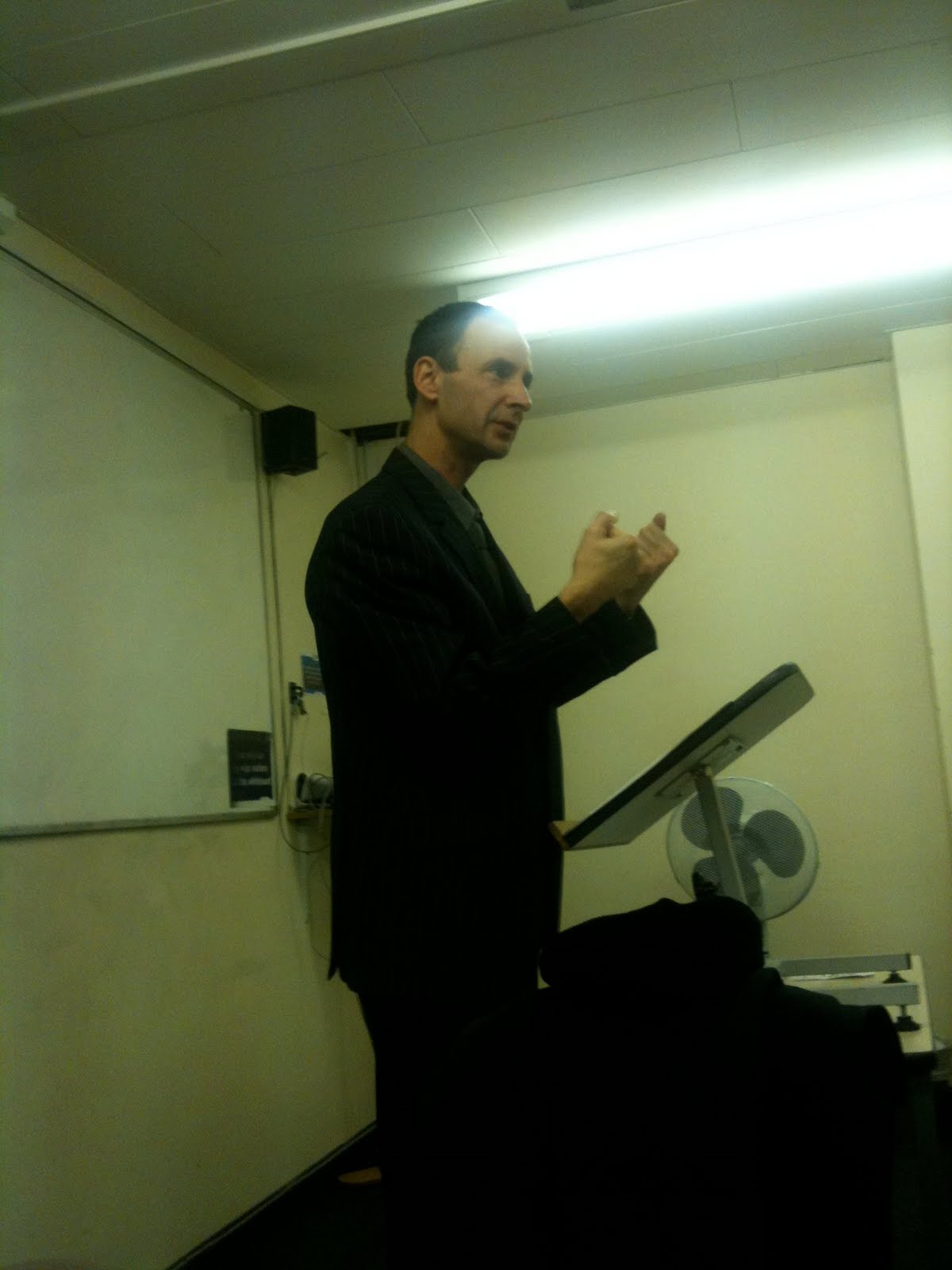
We had the pleasure of hosting a talk (November 18, 2009) by professor Wolfgang Ernst from Humboldt University Berlin, who is not only someone who is continuing the spirit of the almost legendary Sophienstrasse 23 address (where Kittler worked as well) but is as much a representative of the new wave of German media theory that still remains to a large extent to be translated. It is rare to hear these German scholars in Anglo-American contexts so our ArcDigital talk was even more significant in this sense of really tapping into what is new and fresh in international media studies.
Ernst’s talk on media archaeology as a method and a theory really introduced the various radical implications that his brand of doing media archaeology has. I have already before pointed towards the points about “operative diagrammatics” or media history that his take on the past and present media encompasses, and the talk outlined well the positions — even provocative – where he wants to place media studies. What the audience was left with was a number of positions and claims/challenges to tackle. To me, these include:
1) media studies is not only cultural studies, or even cultural technics, but something Ernst wants to brand as cultural engineering. Media studies should be an exact science, not (only?) about semantics and semiotics as he provoked but leaning towards the mathematical conditions of our techno-condition. I.e. media studies curricula should include mathematics. The only way to understand digital media, or technical media more generally, is to understand how it puts mathematics into operation, makes formulas into commands, and how engineering routes and automates so many functions that we mistake as human.
2) Media archaeology is processual, it focuses on the time-critical processes which engineer our lives. This means that media archaeology does not tap only to the past but can dedicate itself to opening up technologies in an artistic vein. Ernst’s examples of media archaeological arts were actually less about artists working with historical material than about hardware hacking, open software and circuit bending. Media archaeology is hence also about microtemporal processes. For an example on such media artistic practices, see the Microresearch lab in Berlin.
3) Arche is not only the beginning but in the Derridean sense a command as well. Archaeology as the beginning of our techno-condition is an active command, perhaps execution in the software sense, of orders, procedures and patterns/routines. Ritualistic but not in the human-religious sense, perhaps?
4) Media archaeology does not narrate, it counts. Because machines do not narrate, they count. Counting, algorithmics etc. precede narration.
5) So why not just relegate media archaeology as part of sciences faculties? Because it is still interested in the epistemological conditions in which the commands, executions and operations take place. This seems to point towards the political contexts of media archaeology, but gets rarely articulated in this brand of German media theory. Still, I would argue, it is radically political and taps into the political economic condition of closed systems, opening them up, and teaching that institutionalised conditioning as contingent. Universities then have according to Ernst a special situation, and a responsibility, to open up systems.
6) Media archaeology is a-historical, even unhistorical perhaps. It is not necessarily about contextual information about past media, but creating such situations where you get into contact with media in its radical operability and temporality. Archives in this sense are time-machines; Ernst told us about going to King’s college library to see Turing’s unpublished papers earlier that day, and that situation was branded not by a historian’s interpretative touch but by sharing the mathematical situation in its non-historical presentness. This applies again to machines as well; their functioning operations are the media archaeological moment that is at its core un-historical.
7) Machines are agents of history as well. They record, transmit, and do not always ask for a permission from the human being.
8) Media archaeology has some connection with software studies. Ernst pointed the connections to Manovich’s point about the double-nature of software studies between the cultural interface and the computational heart. I would add, both share an appreciation of processuality.
9) Provocation is almost methodological to Ernst and certain brands of German media theory.
Questions that I did not have the chance to ask:
What are the implications of this approach to the cultural heritage, display and archiving of culture in the age of technical machines – or culture of technical machines? I am guessing it has to do with processuality, with such methods of curating and archiving that are able to articulate the lived (machine-lived) temporality of such technological assemblages. How do you curate or archive software is a related question, but it also touches on earlier technical media such as radios and televisions. Furthermore, it has to do with the generalisation of the notion of the archive with new modes of distributed archiving, digital objects, and such.
What is time-criticality? I still cannot get my head around it completely, i.e. the question of how it differs from time-based processes? Video artists etc. are doing a splendid job as articulators of temporality and materiality, but where does the dividing line between time-based and time-criticality lie?
Wouldn’t it be possible to develop more positive and affirmative relations with some emerging cultural analytical approaches that come from e.g. the Anglo-American world? This point I flagged already in my short post on the Zeitkritische medien-book, and I keep on insisting that perhaps we can find the common areas of interest and shared agendas with such approaches as media ecology (á la Fuller), radical empiricism and Whitehead (Massumi) and e.g. feminist studies of science and technology (for example Barad).
Time-Critical Media – a short reminder of a book that deserves attention
I have flagged in many contexts my interest for new materialist cultural analysis, and how it should be articulated together with a new sense of temporality. When I say “a new sense” it’s a bit misleading, but I mean the rigorous rethinking of temporality that we find across the board from Delanda to Whitehead-inspired accounts and so forth. Whereas Grossberg already pointed towards a non-signifying accounts as a mode of spatial materialism, we need to develop similar approaches that stem from radical temporality; that the world outside the human being is too dynamic, unfolding, temporal; that temporality is itself folded together with the various material assemblages of the world; that temporality is a crucial non-human force we need to articulate to understand the molecular, as well as the long durations of nature (not least in the midst of our eco crisis).
One key context for my interests comes again from Germany, and has been recently been “summed up” as a book. Axel Volmar as the editor of Zeitkritische Medien (Time-Critical Media, Kadmos Verlag, Berlin, 2009 ) has done a good job in collating together recent trends in German media theory, and approaches to the very peculiar, but even more so exciting version of media archaeology that they have been developing in the Media Studies department at Humboldt University, Berlin. Under the guidance of Professor Wolfgang Ernst, the notion of “time-criticality” and an eye towards temporal processes as a key to understand modern technic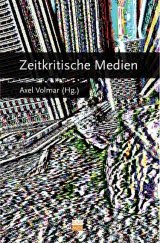 al media we find a brand of media archaeology that extends not so much historically into past media but towards the microscopic workings of media machines; and how they modulate time, and the structuring temporal processes of societies.
By digging into the “microtemporalities” of media machines the introduction and the chapters try to excavate how such micro-layers are articulating the perception of reality. This means extending the media studies agenda (not surprisingly as we are in the territory of German, Kittlerian inspired media theory after all) to non-human agents and processes that however structure the phenomenological worlds of our perception and reality-effects as well. This leads furthermore to the realisation of the new realms of relations between machines themselves — no link to the human is always needed in the age of automated processes and machines communicating between themselves before they talk to the human (Guattari — who however is missing as theorist from this volume).
Paul Virilio who is well used in this book has argued for the importance of time and speed for war (and hence a link to media as well), but this book extends this to a very meticulous technical excavation into the dispositifs of how actually time gets articulated and articulates media. Technophobes beware! This brand of German media theory is not afraid of getting its hands greasy, whether we are talking of analogue media or digital algorithms (or algorythmics as Shintaro Miyazaki extends the concept in his chapter). This is where Virilio’s ideas gain real strength, or a new context when by systematic and rigorous steps machines and technologies are opened up from the logic of bitmapping (Peter Berz) to the problems of noise and signal-transmission (Hirt and Volmar).
It would be crucial to see more work of this kind in English in order to really start rethinking fundamentals of media studies. This is happening already, partly due to a Kittlerian influence, and other new waves coming e.g. from Italy (post-Fordist thought), France (e.g. Latour, Guattari, Deleuze of course) and onwards to e.g. games (Pias) with an amount of chapters that with ease move between visual media, the sonic and computational platforms. But definitely new German media studies and archaeology has a lot to say to the problems of materiality of technical media. It would benefit itself from a more elaborated discussion and joining of forces of some other similar approaches that come from different directions. Ideas of temporality have been developed e.g. in materialist feminism (Barad) and e.g. Whitehead inspired radical empiricism (Massumi, Mackenzie,etc.) and through creations of new circuits for circulation of ideas, we could have soon something really exciting on our hands. Well, the previous sentence was not to mean that all this stuff is not already that — exciting. Just that developing such creative clashes might be seen as a good method for movement of thought. Of course, its not the Germans who are the only ones doing this work; recently I have been following the stuff coming out from Utrecht direction as well whether in terms of some of the feminist work in the wake of Braidotti but also the great ideas from the New Media and Digital culture programme who also address materiality with historical, temporal methods.
Anyhow, media studies is developing into a great articulation of the interlinks between science, art and cultural analysis/philosophy, and we need to keep this movement alive with more translations and engagements. Such are the directions where UK media studies field should turn its attention to.
>Dead Media/Live Nature
>I am going to give a talk in a couple of weeks in Amsterdam as part of the matinees of the Imaginary Futures research group. I was kindly invited there by Wanda Strauven. Its on Friday the 30th of October, I think starting around 10.30 or 11, and located at Bungehuis, Spuistraat 210, room 101.
Here is the abstract:
The talk Dead Media/Live Nature focuses on the transpositions of media and nature through recent art projects such as Harwood-Wright-Yokokoji’s Eco Media (Cross Talk) and Garnet Hertz’s Dead Media. The Eco Media project developed new modes of thinking and doing media (ecology) through a tracking of the intensities of nature. However, in this case the medium was understood in a very broad sense to cover the ecosystem as a communication network of atmospheric flows, tides, reproductive hormones, scent markers, migrations or geological distributions. The project does not focus solely on the ecological crisis that has been a topic of media representations for years, but also engages with a more immanent level of media ecology in a manner that resembles Matthew Fuller’s call for Art for Animals. Media is approached from the viewpoint of animal perceptions, motilities and energies (such as wind) that escape the frameworks of “human media.” In this context the rhetorical question of the Eco Media project concerning non-human media is intriguing: “Can ‘natural media’ with its different agencies and sensorium help to rethink human media, revealing opportunities for action or areas of mutual interest?” In addition the talk will expand the notion of “dead media” as articulated recently by Garnet Hertz, and discuss its relevance for establishing a connection between media ecology and media archaeology.
>A media archaeological day at the cellar
>

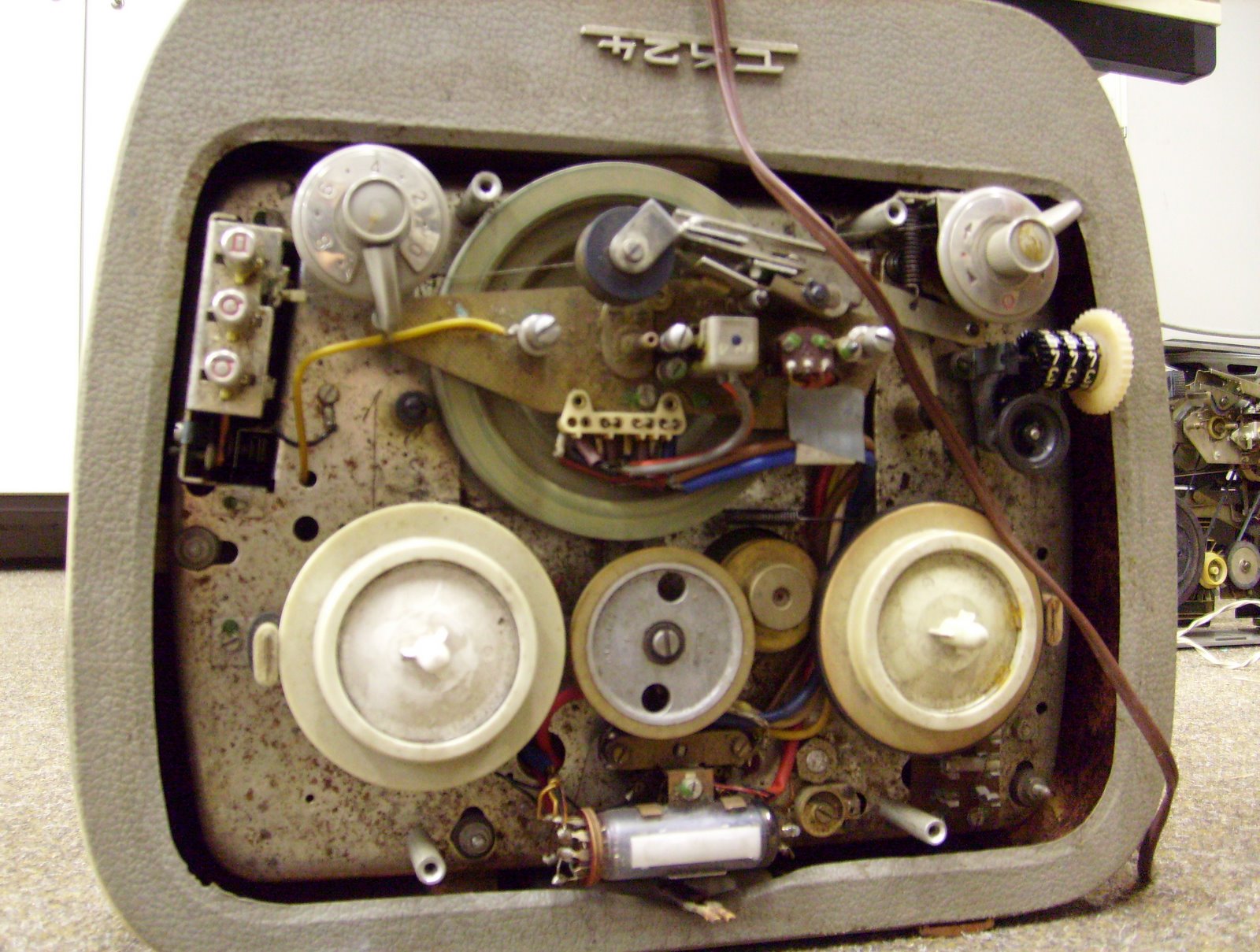
In short, Wolfgang’s way of doing media archaeology distances itself from more Anglo-American approaches. Media archaeology is about the actual “live” or “operating” technologies of the past that still work and hence are far from dead media. Or perhaps we could call them “zombie media” in these of technologies that perhaps have lost their mass media function, but still are functional in the technological sense – like an old military radio that still receives transmissions, or old analogue computers that can be wired up and made to work. The media archaeology archive/lab they have then consists of equipment primarily collected by Wolfgang and then fixed to work. This collection ranges from computational media to oscilloscopes, radios, visual media based in the Nipkow principles etc. One of the intriguing footnotes was a radio that was exactly the same model that Heidegger had in his remote place in the 1960s – at the time of the Cuban missile crisis, apparently one of the rare times he wanted to be reliant on mass media. (Wolfgang had interviewed Heidegger’s sons about this radio and then found exactly a similar copy for the collections.)
The key things that Wolfgang keeps on emphasizing and I find characteristic of his theoretical work are then:
– media archaeology looks not (only) at the macrotemporalities of media history. It is more interested in the microtemporal functionalities of technical media, and hence “opening up” media technologies to track down how they work.
– Media archaeology is then much more about the internal operating principles than about e.g. design – the cover, so to speak. Hence, this archive differs from museums in the sense that the technologies are not “closed” behind glass vitrines, but they depend on their “use-value”; how they exist in time, and remodulate, recirculate time-critical processes.
– Media technologies can then be seen as “”synthesizers” of various temporalities in their own right. Media consists of various technologies that are able to function as a coherent assemblage (well, when it works) and also across time – like an old educational computer from the GDR era that Wolfgang had sitting on his desk, with instructions how to “program” it for specific tasks.
– Media archaeology does then focus on such frequencies and layers that are not reducible to the human cultural semantics. There is much more to media – as physical, material instruments, apparata, mediators. Media archaeology is in this mode as much about wiring and programming as it is about writing.
– Media archaeology is then less about textual/discursive as it is about investigating the very concrete signalling work at the heart of technical modernity. I find this bit the fascinating one – and in my reading, I try to see it only entangled with the discursive/historical themes (an assemblage approach of sorts).
Now for me, one of the questions of future is to map how this fits – how it converges and diverges – with “new materialist cultural analysis”. Meanwhile, it made me really think about getting down and dirty and tinkering with such technologies; would be amazing to get research projects like that going…
For anyone wanting to read more about “time critical media studies/archaeology”, see Axel Volmar’s (ed.) Zeitkritische Medien-book.
Below, a sample of the zombie media sitting at the cellar of Humboldt’s media studies; photos used with permission from Lina Franke (also the photographer) and Wolfgang Ernst. Unfortunately no image of “Heidegger’s radio” yet, but that will follow.


Media Ecologies: Extending Media Studies
I have been occupied trying to think through the notion of media ecologies in the wake of Matthew Fuller’s great work of the same name. I am trying to work through ex-Mongrel members’ Eco Media project and also referencing Garnet Hertz’s Dead Media project where both projects extend media ecologies to media archaeological ideas. The idea is to say how especially Eco Media project’s methodologies are practical transversal tools to bring media natural and media technological into proximity — or well, actually saying that they were never apart. Working through the art projects and via Simondon, Guattari and others, at the moment these three themes sum up what I am trying to say (this is from the article’s “conclusions” as it stands in the current draft version):
Needs work, but I love this opportunity to continue some of the Insect Media themes but without actually talking about insects per se. That was kind of the idea in that book, ; that insects acted as good vehicles towards thinking “relationality” and ethology of technological objects. The Eco Media project in itself is a wonderful, quirky project that also included the Eco Media open day; natural media olympics and the Pigeon vs. Internet race were among highlights! And of course, the fact that the pigeon won the race due to technical problems with the internet system…

>Art and Electronic Media
>
I wrote a review of Edward Shanken’s huge Art and Electronic Media just recently for the Finnish journal of audiovisual culture, Lähikuva. Well, the review is not out yet, and even when it will be, it’s of course in Finnish, so just a short summary. Any book that due to its size could be a proper murder weapon merits a word or two.








 Machinology