Archive
>"Uncovering the insect logic that informs contemporary media technologies and the network society"
>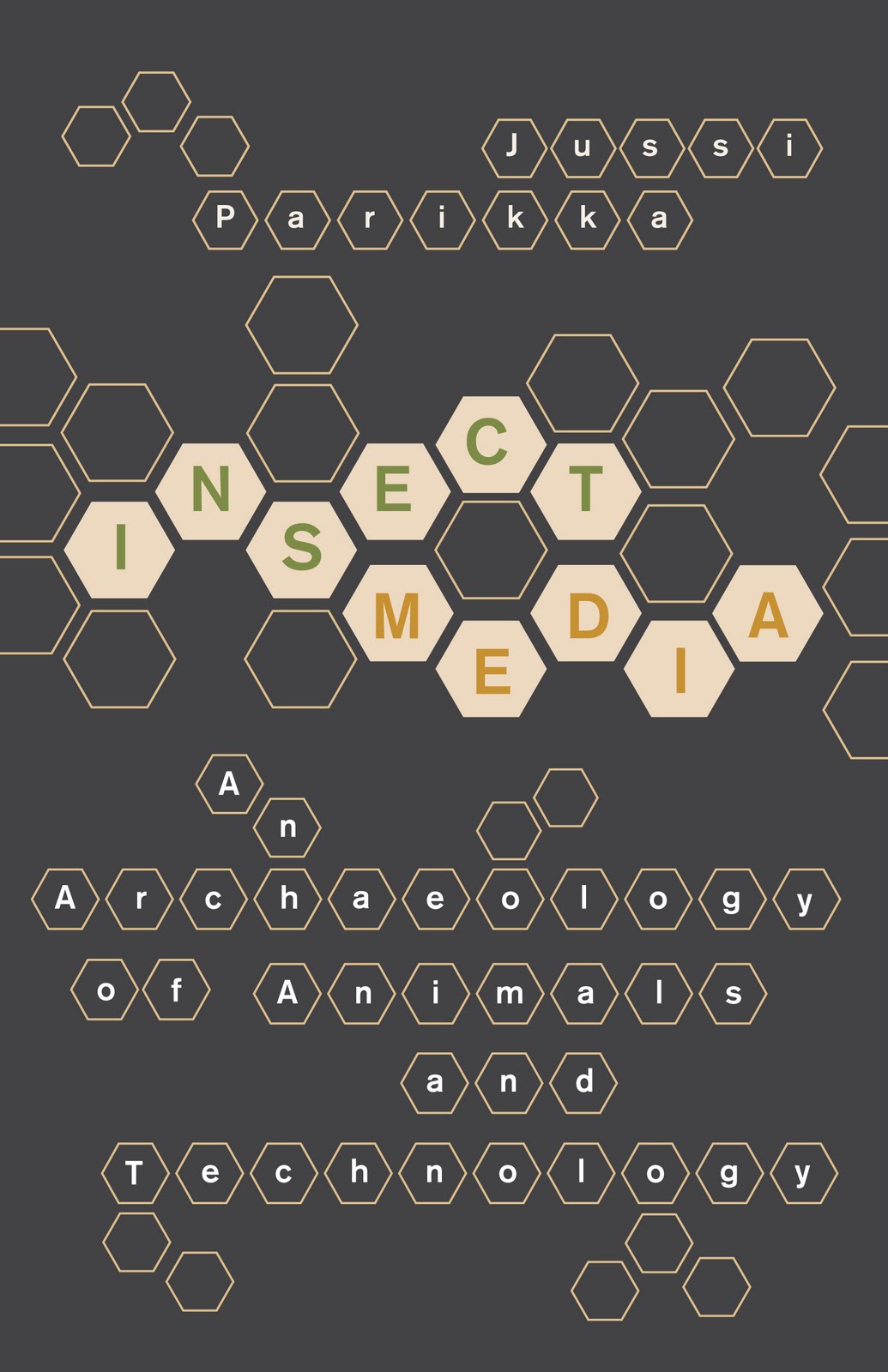
Here is the blurb that University of Minnesota Press are going to use for the catalog for their Fall 2010 books…mine is coming out in the Posthumanities-series edited by Cary Wolfe.
Insect Media
An Archaeology of Animals and Technology
Jussi Parikka
Uncovering the insect logic that informs contemporary media technologies and the network society
Since the early nineteenth-century, when entomologists first popularized the unique biological and behavioral characteristics of insects, technological innovators and theorists have proposed the use of insects as templates for a wide range of technologies. In Insect Media, Jussi Parikka analyzes how insect forms of social organization—swarms, hives, webs, and distr ibuted intelligence—have been used to structure modern media technologies and the network society, providing a radical new perspective on the interconnection of biology and technology.
Through close engagement with the pioneering work of insect ethologists, including Jakob von Uexküll and Karl von Frisch, posthumanist philosophers, media theorists, and contemporary filmmakers and artists, Parikka develops an “insect theory of media,” one that conceptualizes modern media as more than the products of individual human actors, social interests, or technological determinants. They are, rather, profoundly nonhuman phenomena that both draw on and mimic the alien life-worlds of insects.
Deftly moving from the life sciences to digital technology, from popular culture to avant-garde art and architecture, and from philosophy to cybernetics and game theory, Parikka provides innovative conceptual tools for understanding the phenomena of network society and culture. Challenging anthropocentric approaches to contemporary science and culture, Insect Media reveals the possibilities that insects and other nonhuman animals offer for rethinking media, the conflation of biology and technology, and our understanding of, and interaction with, contemporary digital culture.
“Jussi Parikka challenges our traditional views of the natural and the artificial. Parikka not only understands insects through the lens of of media and mediation, he also unearths an insect logic at the heart of our contemporary fascination with networks, swarming, and intelligent agents. Insect Media is a book that is sure to create a buzz.” – Eugene Thacker, author of After Life
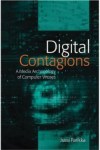
Jussi Parikka is Reader in Media Theory and History at Anglia Ruskin University and the Director of CoDE: the Cultures of the Digital Economy research institute. He is the author of Digital Contagions: A Media Archaeology of Computer Viruses.
Theory/Media
(image from: James Rennie’s Insect Architecture, 1869)
Media Ecologies: Extending Media Studies
I have been occupied trying to think through the notion of media ecologies in the wake of Matthew Fuller’s great work of the same name. I am trying to work through ex-Mongrel members’ Eco Media project and also referencing Garnet Hertz’s Dead Media project where both projects extend media ecologies to media archaeological ideas. The idea is to say how especially Eco Media project’s methodologies are practical transversal tools to bring media natural and media technological into proximity — or well, actually saying that they were never apart. Working through the art projects and via Simondon, Guattari and others, at the moment these three themes sum up what I am trying to say (this is from the article’s “conclusions” as it stands in the current draft version):
Needs work, but I love this opportunity to continue some of the Insect Media themes but without actually talking about insects per se. That was kind of the idea in that book, ; that insects acted as good vehicles towards thinking “relationality” and ethology of technological objects. The Eco Media project in itself is a wonderful, quirky project that also included the Eco Media open day; natural media olympics and the Pigeon vs. Internet race were among highlights! And of course, the fact that the pigeon won the race due to technical problems with the internet system…









 Machinology