Archive
Geology of Media reviews and more
The first reviews of A Geology of Media are out! Some links here if you are interested in the first reception of the book:
Sean Cubitt reviews it in Theory, Culture & Society;
J.R.Carpenter wrote the review Massive Media for Furtherfield.
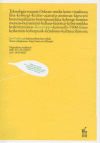
ArtReview did a short review in their May 2015 issue:

In addition, Kunstkritikk published an interview with me on the themes and topics of the book!
Geology of Media Launch Events
 There will be some launch events/book talks for A Geology of Media especially in the latter part of May. Here’s a brief schedule of different locations, often in connection with an event, sometimes as stand-alone book launch! Below you will find also a Press Release that our University Media Team put together.
13/5, Wednesday, at Winchester School of Art, in the gallery starting at 17.00. Wine will be served, and Professor Sean Cubitt (Goldsmiths, London) will open the event.
15/5, Friday, at Central St. Martins, at 17.30. The book launch is moderated by Dr Betti Marenko and it follows a day-seminar on Technology as Magic. After the short conversation in the Lecture Theater, we will continue to the Platform Bar at CSM. Some drinks are sponsored by University of Minnesota Press!
20/5, Vienna, Austria, at the Natural History Museum at 18.30 in connection with the Rare Earth-exhibition at Thyssen-Bornemisza-gallery. The day is in combination with a tour of the museum and the gallery on the theme of minerals.
21/5, Utrecht, Netherlands at BAK (around 17.30).The book launch follows the day seminar on Anthropocene/Capitalocene (Posthuman Glossary) at BAK.
30/5, Stockholm, Sweden, at the Index-gallery 16.00, an evening of talks with Lori Emerson and the launch of the book.
Other events later this year in Brazil, the US, Canada and possibly some other countries. Details tba and I will update the list.
Press Release
Media history – more geology than technology?
The geological history of media comes under close scrutiny in a new book by Professor Jussi Parikka who contends that media history may be millions, even billions, of years old – especially when you revisit the full story of the raw materials that are used to make the countless media devices we’ve ‘consumed’ for centuries and increasingly rely upon in the 21st century.
In his new book ‘A Geology of Media’ (University of Minnesota Press, ISBN 978-0-8166-9552-2) Parikka, Professor in Technological Culture and Aesthetics at Winchester School of Art, University of Southampton, argues that to adequately understand contemporary media culture by thinking about media and its past in geological terms, focusing on Earth’s history, geological formations, minerals, and energy. The book is the third part in the media ecology-trilogy following Digital Contagions (2007) and Insect Media (2010), which won the Anne Friedberg Award for Innovative Scholarship in 2012.
Exploring the resource depletion and material resourcing required for us to use our devices to live networked lives in today’s society, Professor Parikka grounds his analysis in Siegfried Zielinski’s widely discussed notion of deep time—but takes it back millennia. He argues that these raw materials are the physical origins of media technology and by understanding their transformation, eventually from useful tool to e-waste, can aid us all in having a better understanding of the implications that media has for society.
Not only are rare earth minerals and many other materials needed to make our digital media machines work, he observes, but used and obsolete media technologies return to the earth as residue of digital culture, contributing to growing layers of toxic waste for future archaeologists to ponder. Professor Parikka shows that these materials must be considered alongside the often dangerous and exploitative labor processes that refine them into the devices underlying our seemingly virtual or immaterial practices.
“One could call this approach a media history of matter: the different components, minerals, metals, chemicals and other things involved in media are considered essential to media history and archaeology,” says Professor Parikka. “Geology and various related disciplines and fields of knowledge such as chemistry and, indeed, ecology, frame the modern world and give it one possible scientific structure.
“Such disciplines are strongly implied in the emergence of the technological and scientific culture which feeds to our media cultural practice,” he continues. “It is in this sense that I am interested in finding strains of media materialism outside the usual definition of media; instead of radio, I prefer to think what components and materials enable such technologies; instead of networking, we need to remember the importance of copper or optical fiber for such forms of communication; instead of a blunt discussion of ‘the digital’, we need to pick it apart and remember that also mineral durations are essential to it being such a crucial feature that penetrates our academic, social and economic interests.”
“A Geology of Media demonstrates that the environment does not just surround our media cultural world—it runs through it, enables it, and hosts it in an era of unprecedented climate change,” Professor Parikka concludes. “While looking backward to Earth’s distant past, it also looks forward to a more expansive media theory—and, implicitly, media activism.”
A Geology of Media – out and available
So this is a sort of an announcement: I was happy to receive my first copy of A Geology of Media during my visit to UNSW in Sydney. In other words, the book is now more or less out – a bit ahead of schedule and gradually available in online and offline bookshops, and of course in different e-formats (Kindle, epub, etc) already!
The earlier published little e-booklet The Anthrobscene was a short preview single of this main book that is also now out!

My talk in Sydney was the first “book talk” after the book is actually out, and it will be followed by several more during the Spring. The talks are primarily in Europe, and some launch celebrations are planned for May in Winchester (at WSA), and also London, Vienna, Utrecht and Stockholm. More details of dates and places to follow.
Please find below the official release text with information on how to obtain a review copy! Please spread the word to people who might be interested and consider asking your university library to order a copy.
A sweeping new ecological take on technology
A GEOLOGY OF MEDIA
By Jussi Parikka
University of Minnesota Press l 224 pages l April 2015
ISBN 978-0-8166-9552-2 | paperback | $24.95
ISBN 978-0-8166-9551-5 | hard cover | $87.50
Electronic Mediations, Volume 46
Media history is millions, even billions, of years old. That is the premise of Jussi Parikka’s pioneering and provocative book, A Geology of Media, which argues that to adequately understand contemporary media culture we must set out from material realities that precede media themselves – Earth’s history, geological formations, minerals, and energy.
PRAISE FOR A GEOLOGY OF MEDIA:
“Jussi Parikka’s A Geology of Media really expands what media theory can do. The materiality of media is no longer restricted to questions of economies of technics but extends all the way to its molecular composition. It connects the fast calculations of digital time to the deepest of temporalities, that of the earth itself. An essential contribution to a media theory for the Anthropocene.”—McKenzie Wark, author of Molecular Red
“A Geology of Media does not complete or close down an area of research, but rather opens one up. This book is vital to any continuing consideration of media today.”
— Steven Shaviro, author of The Universe of Things: On Speculative Realism
ABOUT THE AUTHOR:
Jussi Parikka is professor in technological culture and aesthetics at Winchester School of Art, University of Southampton. He is the author of Insect Media (Minnesota, 2010), Digital Contagions, and What is Media Archaeology?
For more information, including the table of contents, visit the book’s webpage:
http://www.upress.umn.edu/book-division/books/a-geology-of-media
Electronic Mediations-series.
For review copies or author interview requests, contact:
Heather Skinner, Publicist
University of Minnesota Press
111 3rd Ave S, Ste. 290
Minneapolis, MN 55401-2520
skinn077 — at — umn.edu
v * 612-627-1932
f * 612-627-1980
Deep Mining, Deep Time by Nora Khan
Nora Khan has written a lovely review of the Anthrobscene. She picks up on the implications for a material theory of media, and elaborates how “In a stunning essay-book titled The Anthrobscene, Jussi Parikka argues that our media era is fundamentally geophysical, that geology itself is a media resource […]”.
Khan elaborates on this aspect of the material off-screen digitality through great references: “as Marvin Jordan and Mike Pepi recently wrote, ‘the most interesting things are happening off screen: in cables and wire, in climate-controlled data centers, in mySQL and at DLD, in Hadoop and MapReduce'”.
UNSW Distinguished Scholar Visit
I am pretty chuffed about this visit: I received one of the University of New South Wales (Sydney) Distinguished Visiting Scholar awards and will be giving some talks and a workshop, as well as meeting loads of people during my time in the Southern hemisphere.
It’s not a big surprise that my talks and workshop will focus on media theory, materiality and history. In the workshop, or “master class”, we will be reading key texts of German media theory, especially focusing on the concept of cultural techniques.
One of the talks (on March 17) will be on the geophysical materialities of media in art and technology, “a story less about extensions of Man than extensions of the planetary.” It’s a preview of the forthcoming book A Geology of Media.
In addition, another talk (March 16) is an early attempt on what might become a research/book project together with Lori Emerson and Darren Wershler on humanities labs/media archaeology labs. Below is the abstract for that. Thanks to Tom Apperley at UNSW for coordinating and facilitating the visit. For any queries related to the talks, contact Tom.
A Laboratory Practice? Media Archaeology Labs and Humanities Knowledge as Creation and Hacking
This talk will address media archaeology but from the angle that considers it as a spatialised, institutionalized practice. By addressing existing and emerging media archaeology labs such as in Berlin, Boulder (Colorado) and other places, it aims to offer ideas how to contextualize the idea of “labs” in contemporary humanities. Media archaeology labs are often pitched as a way to think cultural heritage and contemporary technology outside the more established institutional practices of archives and museums. Instead, the labs seem to have become sites of “hacking”, opening up technologies and pedagogical ways of appropriating past technologies as epistemological ways of understanding modern technological culture. Besides offering examples and introduction to some key ideas and practices, the talk aims to expand to artistic practices and other cross-disciplinary ways of humanities knowledge-creation.
Digital Thought Deserter: An Interview in e-flux
In the new e-flux issue #62 you will also find an interview Paul Feigelfeld conducted with me: “Media Archaeology Out of Nature“. It focuses primarily on the themes of media theory, ecology and interfaces also with the work we do with the emerging Consortium (with WSA, University of California San Diego and Parsons School of Design, New School); synthetic intelligence, the planetary media condition, remote sensing, etc.
With a focus on the “media ecology”-trilogy of Digital Contagions, Insect Media, and the forthcoming A Geology of Media, the interview maps topics related to the ecopolitics of technological culture. A warm thanks to Paul for the interview and supporting my aspirations to be a digital thought deserter.
“Media theory would become boring if it were merely about the digital or other preset determinations. There are too many “digital thought leaders” already. We need digital thought deserters, to poach an idea from Blixa Bargeld. In an interview, the Einstürzende Neubauten frontman voiced his preference for a different military term than “avant-garde” for his artistic activity: that of the deserter. He identifies not with the leader but rather with the partisan, “somebody in the woods who does something else and storms on the army at the moment they did not expect it.”7 Evacuate yourself from the obvious, by conceptual or historical means. Refuse prefabricated discussions, determinations into analogue or digital. Leave for the woods.
But don’t mistake that for a Luddite gesture. Instead, I remember the interview you did with Erich Hörl, where he called for a “neo-cybernetic underground”—one that “does not let itself be dictated by the meaning of the ecologic and of technology, neither by governments, nor by industries.”8 It’s a political call as much as an environmental-ecological one—a call that refers back to multiple (Guattarian) ecologies: not just the environment but the political, social, economic, psychic, social, and, indeed, media ecologies.”
Besides that longer e-flux text, two other short texts appeared the same day: a general audience text on media and the Anthropocene in Conversation and also a mini-interview conducted by the Finnish Institute in London as part of their Made By-series.
The Cover Design for A Geology of Media
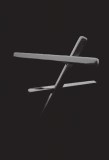
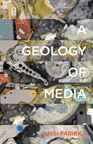
After just finishing reading the final proofs for A Geology of Media, I wanted to post the cover design online. The image motif is from the Crystal World project by Kemp, Jordan, and Howse; such an inspiring project that features especially in the book’s chapter III on Psychogeophysics.
 A Geology of Media is out in April 2015 – meanwhile, you might be interested in reading the short “single release”, The Anthrobscene (ebook)!
The Anthropocene to the Anthrobscene
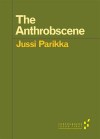
The Anthrobscene is now out and available as a short e-book in the new University of Minnesota Press series Forerunners. The short book (77 pp) extends on the notion of the deep time of the media (Zielinski) to talk of the geological and electronic waste layers that characterise media technological materiality. It consists of four short sections
1. And the Earth Screamed, Alive
2. An Ecology of Deep Time
3. A Media History of Matter: From Scrap Metal to Zombie Media
4. Conclusion: Cultural Techniques of Material Media
The sections outline the idea of materialities of media in the context of the Anthropocene – the suggested and widely discussed term for the geological period where the human being has had such a significant effect on the planet to merit a new periodization. But the idea is to extend this to emphasise the obscenities of the environmental damage that works across natural, social and media ecology.
The Anthrobscene is a preview or if you prefer, a single, of the forthcoming longer book A Geology of Media (out next Spring).

The book is one of three that kickstarts the new Forerunners series, “a thought-in-process series of breakthrough digital works written between fresh ideas and finished books” and characterized as “gray literature publishing: where intense thinking, change, and speculation happens in scholarship.” The series is edited at the University of Minnesota Press by Danielle Kasprzak.
The Anthrobscene is available for download directly on the UMP website as well as in your “local” Amazon (Kindle and the slightly more expensive print on demand paperback) and gradually in other e-book stores too, including now already on Barnes & Noble & Kobo. The Amazon-page has a preview of the content.
Smog: Cloud and Molecular Aesthetics
The text below an abstract, something I promised to present at the forthcoming Istanbul-conference on Cloud And Molecular Aesthetics. It riffs on my earlier post on smog as part of environmental art history, an ecological art history/aesthetic set of terms.
Media Moleculars of Smog Culture: An Alternative Aesthetic
Speaking of molecules, photochemical smog that covers so much of our surroundings especially in dense urban areas consists of Nitrogen Oxide (NO), Nitrogen Dioxide (NO2), Ozone (O3) and Volatile organic compounds (RH). This is the elemental media condition across aesthetics of contemporary landscapes of industrial and post-industrial life. An urban screen, hovering above cinematic places of Los Angeles, etc. The sunlight reacts with the pollutants, resulting in a weird set of visual media: photochemical smog.
A matter of concern for inhabitants and of course biochemists, it however is also an issue we can address in our context of aesthetics, imaging and visual culture. This talk proposes to address smog – and more widely environmental issues from pollution to issues of geophysics – as relevant parts of our visual culture, proposing another sort of an angle to the “molecular”. Indeed, the constituent definition of molecular that one inherits from Deleuze and Guattari sits in relation to the ontology of perception. This molecular becomes more than a chemical description and a way to address the dynamic constitution of the (molar) individual. As Tom Conley explains, this is a sort of a “chemical animism” speaking of the elemental molecular conditions that constitute systems of “complex interactions”.
The molecular is an ontological angle that for Deleuze presents a world of “tiny perceptions” which are not only small in size but qualitatively present a different view to the whole. Hence emerges the whole agenda of micropolitics of perception and what could be called a chemistry of individuation. However, in the context of this talk, I won’t go into a detailed discussion focusing on Deleuze so much as hint towards speculative ideas of a media history of smog, environmental pollution and the technologies of tele-sensing /smog sensors as constituting a different sort of a visual culture of “new media” of mixed temporalities: the ancient rays of sun, the modern fumes of the city, and the emerging technologies of tele-sensing. I argue that such topics bring an additional angle to the already important extension of aesthetics in the realms of biotechnologies, the molecular vision, and the new diffentiating scales at which perception is constituted. Perhaps it’s the smog screens, reacting with sun light, that execute the truly ancient new media environment of post WWII culture as a sort of a non-human staging of the environmental catastrophy as well as an art historical period outside the usual categorisations.
Deleuze and the New Humanities in Hong Kong
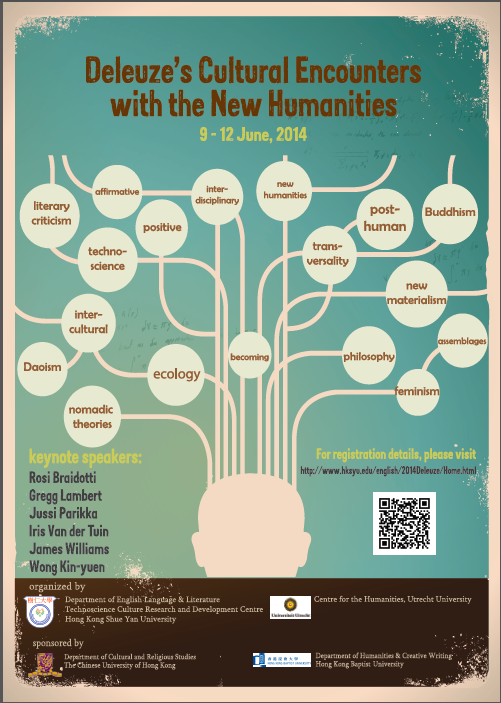
I will be speaking in Hong Kong in June and addressing Deleuze and digital culture. However, my argument is that instead of the usual suspect of starting with the Control Societies-text, Deleuze affords an understanding of the materialities of technological and scientific culture in many other ways too. As part of the geophysical materiality, we can talk about desire’s investment as an infrastructural issue of power – not ideology, just desire but that is infrastructurally effective.







 Machinology