Archive
The Environmental Audiotour at the Helsinki Biennial
Helsinki Biennial 2023 is now open and our Aarhus based research group was happy to be involved in the team of curators led by Joasia Krysa.
As part of our work, we also wrote the Environmental Audiotour that can be heard in specific locations in Helsinki and also online. Below a short introduction text to the tour that you can listen to both in English and in Finnish as “Ääniopastus kaupungin luontoon”.
Imagine immersing yourself in data as you discover the intricate architectures of environmental sensing that surround us.
The Environmental Audiotour takes us through different spaces and sites of Helsinki and Vallisaari, their past and future. Real and speculative stories unfold together with elemental forces in the extended urban environment, from water to air and from land to energy. The stories draw our attention to the ecological landscapes as we move through different ’islands’ in the city.
Written by Jussi Parikka, Paolo Patelli, and May Ee Wong, The Environmental Audiotour consists of six audiostories that can be experienced in the South Harbour near the Lyypekinlaituri (1st), in Vallisaari at the ruins of the old Weather Station (2nd), in Hietalahti (3rd), in the Kaisaniemi Botanical Garden (4th and 5th) and in Sörnäinen near the Uniarts Academy of Fine Arts – as well as online.
https://helsinkibiennaali.fi/en/event/critical-environmental-data-the-environmental-audiotour/
References
Samir Bhowmik, “From Nature to Infrastructure: Vallisaari Island in the Helsinki Archipelago.” Environment & Society Portal, Arcadia (Summer 2020), no. 28. https://doi.org/10.5282/rcc/9062.
J.R. Carpenter, This is a Picture of Wind. Longbarrow Press, 2020.
Lorraine Daston, Rules: A Short History of What We Live By. Princeton University Press, 2022.
Gary Genosko,”Four Elements” in: Posthuman Glossary, edited by Rosi Braidotti and Maria Hlavajova. Bloomsbury Academic, 2018.
Heikki Nevanlinna, Ilmatieteiden vaiheita ja vaikuttajia Suomessa. Societas Scientiarum Fennica, 2021
Dietmar Offenhuber, “Data by Proxy — Material Traces as Autographic Visualizations” arXiv:1907.05454, 2019.
Yoko Ono, “Painting for the Wind”, 1961.
Anna Lowenhaupt Tsing, The Mushroom at the End of the World: On the Possibility of Life in Capitalist Ruins. Princeton University Press, 2015.
The project was realised with support from the Helsinki Biennial and the Design and Aesthetics for Environmental Data project (AUFF, Aarhus University, 2022-2024) and the Weather Reports project (AHRC and DFG, 2022-2024).
Environment, Data, Contamination – Helsinki Biennial 2023
With the University of Arts (Helsinki) and the Uniarts Research Pavilion, we (at Aarhus University) started an artistic research studio on the topic of Environment, Data, Contamination. The collaboration is part of the run-up to the Helsinki Biennial 2023 where our Critical Environmental Data research group is also part of the curatorial team.
After our first semester with the studio, the first texts are out in the form of blog posts that outline some of the approaches the participants are developing (and will continue to develop).
Read the entries online: the rich and inspiring takes deal with mining industries and land art, Baltic sea pollution and other watery bodies, anatomies of deforestation, weathering, materials, and of course artistic methodologies and approaches.
Helsinki Biennial 2023 title is “New Directions May Emerge” and you can read more about the general curatorial line here.
Leonardo Reviews: Climate and Weather
The new batch of Leonardo (online) reviews includes both my short text on Yuriko Furuhata’s recent book Climatic Media as well as a review of the Words of Weather collection edited by me and Daphne Dragona. As Michael Punt points out in his review, “As such Words of Weather is possibly both a material and intellectual marker that the weather is no longer subsets of other disciplines but has acquired obtained an autonomy that might allow us to talk about it in relation to human agency.”
Same could be said about the topic of Furuhata’s book which amounts to one genealogy of geoengineering or at least, weather modification of the Cold War period.
“Furuhata’s book brings out well the range of techniques and their institutional affiliations to ground the epistemic underpinning of atmospheric control and elemental media. Computer simulations, meteorological knowledge, but also the sort of climactic and communication experiments as staged for example at Expo ’67 in Montreal and Expo ’70 in Osaka play here a role. Here the example of artificial fog by Nakaya Fujiko becomes an example that also ties, again, the two sides of the Pacific together when it comes to art and technology experiments.”
Both books could said to combine themes from environmental media studies with readings of, as well as experiments in, art-science-technology.
Words of Weather is available for purchase online – both in Greek and in English.


Weather Engines interview on Resonance FM
Here’s a recent radio interview recording about the Weather Engines project (2021/2022) funded by the Onassis Stegi (Athens). It also includes a discussion of the new film piece by Matterlurgy called “Hydromancy”, on at the Hansard Gallery in Southampton (do visit) as well as online. The work emerges from a residency at the National Oceanography Centre in Southampton, a co-commission by the John Hansard Gallery and Onassis Stegi.
A thank you to Jude Montagu for this chat.
Hydromancy by Matterlurgy
Hydromancy by Matterlurgy is a new film and installation on at the John Hansard Gallery (JHG). It is a commission by the JHG and Onassis Stegi (Athens) as part of our on-going Weather Engines project that I am curating with Daphne Dragona.
You can see it on the large digital screens at the Hansard in Southampton (and next year installed in Athens) but also online:
https://jhg.art/video/matterlurgy-hydromancy/
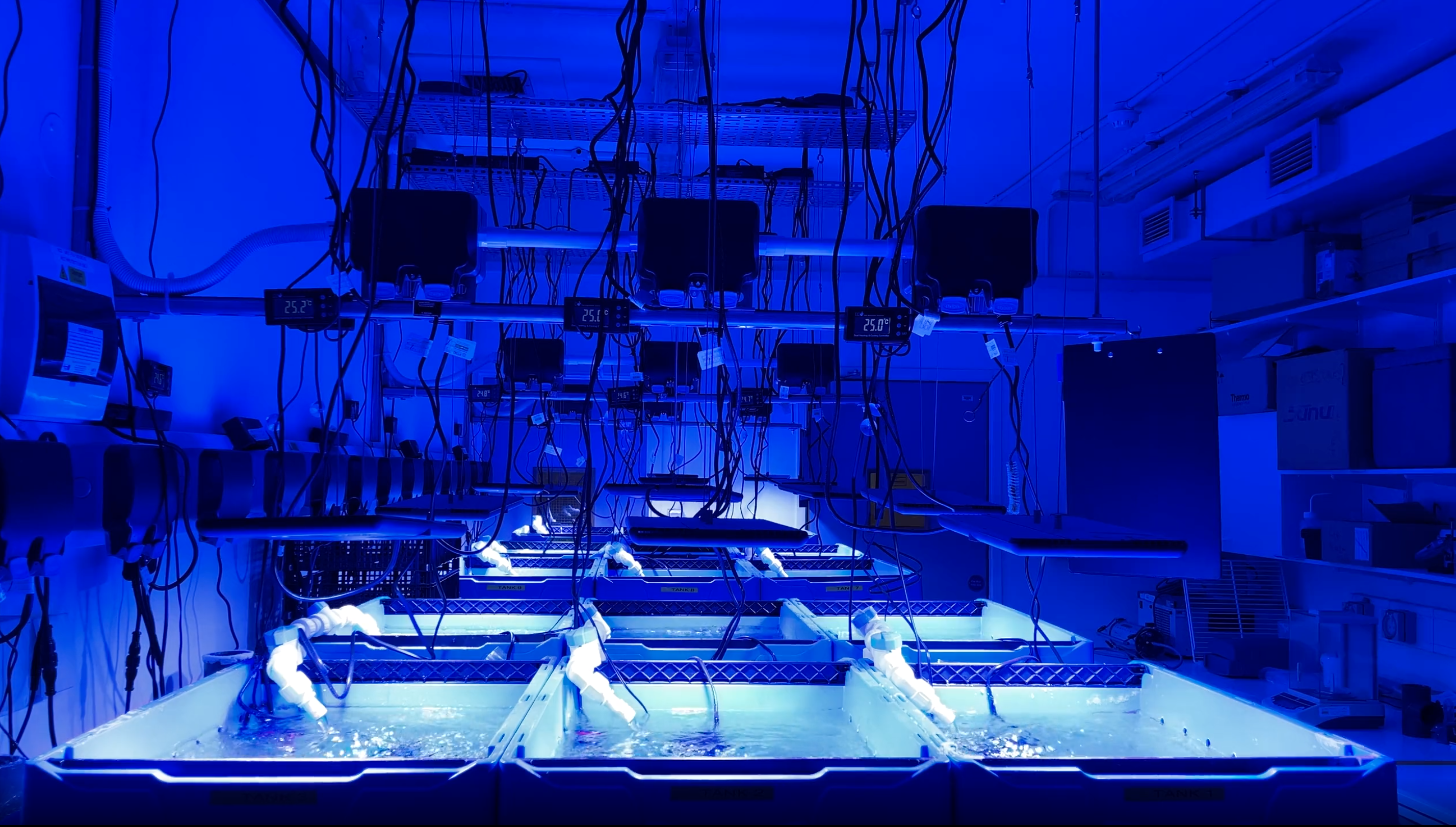
Hydromancy is “filmed on location at the University of Southampton’s National Oceanography Centre, a globally renowned centre for developing technologies that investigate the world’s oceans, earth systems and biosphere, Hydromancy blends documentary with artistic intervention, considering the ocean as both a sensory environment and scientific object. As viewers, we visit a coral lab bathed in blue light, an engineering workshop, and enter a room bubbling with algae and phytoplankton.”
Aarhus
Some news:
I will be starting as professor in Digital Aesthetics & Culture at Aarhus University in January 2022. I am excited to join a group of fantastic colleagues & the department of Digital Design & Information Studies (which is part of the School of Communication and Culture). I am happy about all sorts of new opportunities, collaborations, and projects that this will mean, among them a project and a research (/teaching) focus on critical environmental data (more on that later).
Of course, I will continue with certain projects and work with my colleagues at Winchester School of Art (and other parts of the University of Southampton) as well as in my role as project leader for Operational Images and Visual Culture at FAMU in Prague.
This new affiliation will also trigger the important question if I need to shift teams from Arsenal to Aarhus GF.







 Machinology