Launch events for Insect Media – Berlin and Cambridge
Now that Insect Media is out, I am organizing a couple of events sort of as book launches—with a little help from my friends!
One takes place in Berlin, at the Generalpublic.de cultural venue on Schönhauser Allee 167c ( 10435 Berlin) on March 4, Friday, 7 pm – Shintaro Miyazaki will be interviewing me , and hopefully with drinks and nibbles (there has been talk of some Japanese finger food!). Also the book is on sale there, with a small launch discount.
Even before that, in Cambridge, we are organizing a joint event with Joss Hands whose own book @ is for Activism came out in December as well! This takes place February 22, Tuesday, 5 pm at Anglia Ruskin University at 5 pm. The room will be Helmore 251.
Below, a short blurb about that event which we use to discuss more widely some interesting current and future directions of media studies as well:
‘New Directions in Media Studies: Questioning The Digital Turn’.
In their new books Anglia Ruskin lecturers Joss Hands (@ is for activism) and Jussi Parikka (Insect Media) address some of the pressing new issues in Media Studies emerging from the digital revolution in communication technology. This event will act as a book launch, but also offers the chance to address the relevancy of innovative cross disciplinary themes in contemporary Media Studies.
Both books are characterized by distinct theoretical and political perspectives on issues such as the impact of digital networks on collective action, the ontology of politics, economic production, the ‘post-human’ subject and science-arts interdisciplinarity.
Hands and Parikka will offer short introductions to key themes in their books and welcome questions and discussion over wine and nibbles.
The event is sponsored by CoDE – Cultures of the Digital Economy research institute at Anglia Ruskin, and the campus bookshop John Smith’s is offering both books to be purchased during the event.
>Dave Boothroyd talk on censorship, secrecy and memory in digital culture
>A forthcoming talk in Cambridge hosted by the Department of Humanities and Social Sciences and CoDE-institute, Anglia Ruskin University:
1 Feb, 17.00, Anglia Ruskin University, East Road, room Helmore 251
All welcome!
Dr Dave Boothroyd (University of Kent)
‘Lest we forget’: censorship, secrecy and memory in the age of total recall
Censorship and secrecy are widely regarded as antithetical to the open society and the public sphere. In the digital age the decentered communicative network of the internet facilitates the proliferation of data, data-storage capacity and the generalised intensification of surveillance as well as the apparent weakening of censorious control over information and the security of secrets all kinds. The ‘Wikileaks scenario’ not only exposes the easily ‘switchable’ nature of secrecy/disclosure in the context of digital communications culture, it raises issues pertaining to the technicisation of memory and the memorialisation of events.
In this paper I shall approach the interconnections between censorship, secrecy and memory in relation to contemporary techno-culture with a view to identifying the significance of this nexus for the cultural formation of ethical subjectivity (as Levinas, in particular, writes about this). I am not so much concerned here with normative ethical questions related to the technicisation of the censorship, secrecy and memory ‘nexus’ (interesting, even urgent as these often are) but more with how the ethical Subject is produced in this context.
Bio: Dave Boothroyd Director of Cultural Studies, School of Social Policy Sociology and Social Research, University of Kent. He’s the author of ‘Culture on Drugs: Narco-cultural studies of high modernity’ (Manchester University Press, 2006) and is currently writing a monograph for Edinburgh University Press, ‘Ethical Subjects in Contemporary Culture’. He’s a founding Co-Editor of the on-line journal ‘Culture Machine’.
>Wirelessness – radical empiricism in media theory

Adrian Mackenzie captures something extremely essential and apt in his fresh book Wirelessness – Radical Empiricism in Network Cultures (2010). Besides being an analysis of an aspect of contemporary “network” culture so neglected by cultural analysers, it offers a view into how does one conduct post-phenomenological analysis into the intensive, moving, profiliterating aspects of experience in current media culture. So much of what seems wired is actually wireless; so much of what seems experienced, is actually at the fringes of solid experience, which is why Mackenzie sets out to use William James’s exciting philosophical theories of radical empiricism as his guide to understanding wirelessness.
Let’s define it, or let Mackenzie define it:
“The key claim of the book is that the contemporary proliferation of wireless devices and modes of network connection can best be screened against the backdrop of a broadly diverting and converging set of tendencies that I call ‘wirelessness’. Wireless designates an experience trending toward entanglements with things, objects, gadgets, infrastructures, and services, and imbued with indistinct sensations and practices of network-associated changed. Wirelessness affects how people arrive, depart, and inhabit places, how they relate to others, and indeed how they embody change.” (5)
Indeed, Mackenzie does not remain content to just stick to the techy details or the phenomenology of how it feels to be surrounded by wireless devices and discourses, but sets out to treat these as a continuum. This too follows from James. Things go together well with our minds/brains. Thoughts are very much things even if at the other end of the spectrum than the more seemingly solid things of the world. Thinking and things cannot be separated. Mackenzie quotes James: “Thoughts in the concrete are made of the same stuff as things are.” The stuff of continuum.
Hence, what follows is also methodologically exemplary treatment of this weird phenomena of wireless communication. Already in its early phase, the fact that communication started to remove itself from solid bodies and the messaging human body, was a topic of awe and wonderment. James was roughly a contemporary to the buzzing discourses of electromagnetic fields and experiments in wireless communication closer to the end of the 19th century by such figures as Preece, Willoughby Smith and of course Marconi; this media archaeological aspect is not so much touched upon by Mackenzie. In any case, one would do well to look at it’s 19th century radical empiricist discourses as well, to examine the way bodies, solids, experience and media were being rethought in those early faces, here described in the words of one pioneer and early writer Sir William Crookes:
” Rays of light will not pierce through a wall, nor, as we know only too well, through London fog; but electrical vibrations of a yard or more in wave-length will easily pierce such media, which to them will be transparent.” (quoted in J.J.Fahie, Wireless Telegraphy, 1838-1899, p.197).
Even if not transparency, wirelessness affords new senses of mobility. For us, wireless is heavily an urban phenomena (even if touches on how rural areas are being connected, peripheries harnessed, and now, also, the human body and its organs individually connected to the internet with new wireless device surgery). For Mackenzie, the mobility relates to “transitions between places” and how such hotspotting of for example the urban sphere creates new forms of intensity that are not stable. In his earlier book Transductions Mackenzie was using Simondon’s vocabulary which offered the idea of the primacy of metastability, now James is doing the same trick with offering a conceptual vocabulary for an experience that is distributed, diffuse and coming and going.
What is fascinating is how Mackenzie moves between the various scales, and still is able to keep his methodology and writing intact. In addition the fact that the urban ex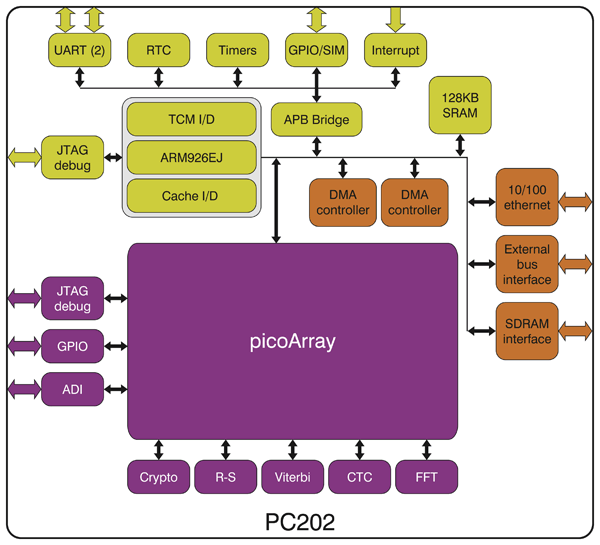 periences of humans is being enabled by the variety of wireles devices, networks, accesses, and so forth, he is after such radical technological experience where hardware and software relations within technology matter as well. Talking about chipsets such as the Picochip202, Mackenzie compares these to cities: “The ‘architectures’ of chipsets resemble cities viewed from above precisely because they internalize many of the relational processes of movement in cities.” (65).
The way bodies were moved and managed in urban environments has now been transposed as a problem on the level of chips and other seemingly “only” technical solutions. Yet, what Mackenzie does succesfully is to show how we need insights into such biopolitics that engage not only with human phenomenological bodies, but biopolitics of technological bodies too. This is what I find a very exciting and necessary direction, and while I know some of the great work done in Science and Technology studies, more media studies work in this direction of new materialism is very much welcome.
So now that we got talking about technological bodies in relation, and probably going soon so far that we could say that they have affects, would some critic say, does this not mean that we losing our grip on politics — that technology is such a crucial way of governing our worlds, offering meanings, and is itself embedded in a cultural field of representation and such?
Mackenzie does not however neglect representations, or the variety of materials of which the experience of wirelessness consists; from wireless routers to marketing discourses and adverts, the ontological claim that thinking and things do not differ work also as a methodological guideline for rigorous eclectism. Similarly, Mackenzie shows how his methodology and writing lends itself also to postcolonial theory in chapter 7 “Overconnected worlds”. Here, the claim is consist with a radical constructedness inherent in how transnationality and the global are created, not received, structures of experiencing; here, various wireless projects offer such platforms for both belief as well as physical connection.
Wirelessness overflows individual bodies and act as a catalyzer, intensifier, a field for experience perhaps in the sense as electromagnetic fields afford the technical signal between devices. What the book does as well is overflows in its richness – but it is clear that it is so rigorous in its take that media theory benefits from this for a long time. It picks up on some of the same inspiration that has been catalyzed into more philosophical takes on communication and contemporary culture by Brian Massumi, but is one of the first ones to take this mode of analysis of lived abstractions into concrete media analysis – similarly as he did with Simondon already in Transductions.
Insect Media is out!

A great birthday present — an email from your publisher saying that the book is out! Two days later, i.e. today, I got my first copy of the book, and despite the fact that I barely dare to open it in case I realize the greatest idiocy somewhere on the pages, one has to feel quite happy about this: Insect Media is finally out! After a 1.5 years wait since I submitted the final version, I get to see it turn into a book with nice retro cover, and with the blurb from Eugene Thacker:
“With Insect Media Jussi Parikka offers a theory of media that challenges our traditional views of the natural and the artificial. Parikka not only understands insects through the lens of media and mediation, he also unearths an insect logic at the heart of our contemporary fascination with networks, swarming, and intelligent agents. Such a project requires the ability to interweave cultural theory with a deep understanding of the sciences—something for which Parikka is well-suited. Most importantly, Insect Media reminds us of the non-human aspect of media, communication, intelligence. Insect Media is a book that is sure to create a buzz.”
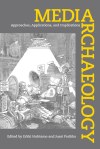
It was one of those projects really fun to write – even if raising a couple of eyebrows when trying to tell what it is about — to write modern media history from the point of view of these tiny animals. Not only a book about swarms, or recent years of media theory and media design that borrow from animal studies and understanding of insect life – but a wider take on the intertwining of animals and technology in modernity. A parallel methodology of theory in combination with cultural history, or let’s say “media archaeology”.
Hence, I came up with a summarizing way to describe what I am doing, and something that ended up as the opening words for the whole book:
“First, a practical exercise. Pick up an entomology book; something such as Thomas Eisner’s For the Love of Insects from a couple of years back will do fine, or an older book from the nineteenth century, like John Lubbock’s On the Senses, Instincts, and Intelligence of Animals with Special Reference to Insects (1888) suits the purpose as well. However, do not read the book as a description of the biology of those tiny insects or solely as an excavation of the microcosmic worlds of entomology. Instead, if you approach it as media theory, it reveals a whole new world of sensations, perceptions, movements, stratagems, and patterns of organization that work much beyond the confines of the human world.”
A big thanks to University of Minnesota Press, and Cary Wolfe, who accepted this to his Posthumanities-series…such an honour to be there, among so many fabulous academic writers.
Tiziana Terranova and JP in conversation; university cuts and the digital economy
This conversation between me and Tiziana Terranova took place in early November – actually just before the first mass demonstrations by students and academic staff in the UK – an event after which we have seen further resistance acts of various kinds, from more aggressive expressions of anger to such as the foundation of the University for Strategic Optimism. Resistance does not just exist; it needs to be invented, always anew.
This interview was published in the Italian newspaper Il Manifesto on 14 November 2010 (in Italian), and is now here available in English as well. This version is the original, and slightly longer as well. Of course, what we have seen since this interview was conducted was a development of certain themes; for example, the disagreement within Russell group universities seems to be escalating with students for example in Cambridge demanding that the university raises objections to the cuts; occupations of various universities are similar signs of calls for student-focus of a different sort than we get with the “tick-the-box” exercises of student happiness (the National Student Survey); the libdems are clearly having severe internal problems; the police use of dubious tactics against demonstrators are raising questions, and pointing towards a very scary response from the officials towards the resistance.
Tiziana Terranova:
In Italy, we have been facing substantial cuts to the public education sector for a few years now – cuts that have progressively undermined the value of public education, involving massive layoffs, a freeze on new posts, reduction of viable courses, more crowded classrooms, less hours of actual teaching and so on. These cuts have gone together with drastic reduction of resources for the cultural sector as well. Rather than being a local phenomenon, this public disinvestment in culture and education seems a core part of the economic and political restructuring following the financial crisis of 2008. In the UK, these cuts have taken a specific inflection: 100% cuts to the public funding of teaching in the arts, humanities and social sciences. How do you explain such a massive reduction especially in the wake of the much hyped investment in the cultural economy and creative industries?
Jussi Parikka
It’s a shock, and a shock in the very fundamental sense that Naomi Klein introduced as a doctrine of “disaster capitalism”. The recent events in the higher education sector, and naturally across other public sectors too are in themselves so terrifying that there is a danger that the surprise has worked. As you outline, and what applies to many other countries as well –the 2008 crisis did not take us back to a Keynesian culture of public investment, but to a further privatization of fundamental public goods – the expectation has been all along that the public sector is being run down. In terms of the university sector in the UK such cuts had been pre-empted for a long time; already before the elections that brought the Tories and Liberal democrats into the government, the sector was preparing for big cuts, or what seemed big cuts then: cuts of millions of pounds, and several percent from the higher education budget. The Browne commission to investigate models for the future of Higher Education in the UK was set by Labour. Labour had already during Lord Mandelsson’s rule shifted Universities as part of the Department for Business, Innovation and Skills, and in 2009 already he talked of hike in student fees, further consumer control of courses, straightforward employability as the key criteria for any public funding of a university course and so forth. So what happened when the new government came in was that they could easily take over the same discourse, same way of thinking. The talk turned to fears of 20 % cuts, then to feared 40% cuts, at which point people and critics started to say that it is just part of a game where they scare us off with such drastic cuts, and when “only” for example 20% of Higher education budgets are reduced, we breath out a relief. Well, the opposite happened: suddenly, only the privileged few were seen eligible for public funding, namely carefully selected STEM topics, i.e. science, technology, engineering and maths, and more or less all of the humanities, arts and social sciences left out with a sudden, complete privatization of their degree courses – and with feared reductions in research monies coming as well. Suddenly, the public university system was gone.
So indeed, it’s not only a pragmatic shift in terms of how the whole sector is being organized, but how the so-called cultural economy and creative industries are suddenly as if without a role as part of high-tech Britain. Cool, creative, hip, post-fordist Britannia was New Labour’s and Tony Blair’s brain child of the 1990s, that was carried over till now; that provided at least a minor shelter in some minds and institutions for the cultural studies and arts sectors, and courses, and some kind of justification for their existence. Meanings, representations, artistic practices could be integrated to that model of “creative capitalism” with a friendly artistic face. After all, culture – lifestyles, habits, arts, digital creation from music to publishing industries – was supposed to be leading the future of Britannia.
Yet, during the past couple of years, the creative industries discourse has been bit by bit replaced by that of “digital economy” as the new key words that is being circulated both in academic funding bodies and their calls, legislation as well as public discourse. Seemingly a slight change from creative industries to a more ICT oriented version, it actually is a further consolidation of the perception that digital culture equals the science and engineering solutions that contribute towards platforms and communication in the narrow signal processing sense; the Digital Economy Bill, and the following Act, and related debates focused on such projects as the Digital Infrastructure for Britain that is to guarantee high speed broadband; while it also contributed towards strict copyright infringement penalties which have been highly debated, the push has been towards technology – and technology as in infrastructure, engineering and science solutions that are able to provide more viable income streams than the always so vague service industry model of creativity. With the drastic cuts, the message in terms of how public goods, but also economic value are being defined is clear: despite statistics of the huge input by arts and humanities sector to even economic wealth creation, they are suddenly the superfluous, redundant sidekicks of the digital economy.
TT
Your analysis raises many interesting points. The first one concerns the continuity with Labour. The ground for the Browne report was prepared by the labour government and the cuts would have followed even if labour had actually continued to rule. It took fifteen years of neo-labor policies in higher education to ingrain the notion that public investment in higher education is justified because of the economic returns that it provides. This shift was made palatable to the arts, human and social sciences by acknowledging their importance as productive economic forces– in terms of new careers opening in the cultural and creative economy and in terms of the economic impact generated by artistic, cultural and social research. Hence the arts, humanities and social science were perceived as actually being worthy of public investment. Hence the shock in finding out that it took a simple change in government to cut off all public investment and be thrown in the jungle scenario of full privatization! The cuts are so massive, entire teaching budgets are being wiped out and as you said there is widespread incredulity about the sheer size the UK government’s gamble. The so-called elite institution will be able to raise tuition fees and focus on the very rich segment of the international students’ markets, but for most universities it will be dire. It will be an enormous shake out – opening the uk higher education sector to the takeover of multinational corporations of education, such as online degree factories and so on. There will be re-engineerings, layoffs, fusions, mergers, increasing use of low-wage, precarious labor. Before moving on to the subject of the transformation of the ways in which this was possible by the turn to the digital economy, I wanted to ask you about the current and possible future reactions to this dramatic scenario – both within and outside the universities.
JP
The reception of and reaction to the news has been varied, and this is emblematic of the situation. The so-called elite institutions –- in itself an interesting term and status, as it combines the eliteness of the “Old Britain” of class society, of private schools and Oxbridge/Russell Group with the new status of neoliberal, well-funded and global brands of those universities – have been greeting these news happily; for such institutions, it does not seem to be an issue in any ethical sense to triple their fees, it seems, whereas for smaller institutions such as ex-polytechnics it causes a potentially major shift in how they think their functioning. For a number of years, these smaller universities were strongly going to research, and moving from teaching only institutions to supporting new waves of research in media, culture and the arts in such ways not always found in the more establish, and also slowly changing and less experimental old institutions. Now many institutions might be forced to become mostly teaching ones again. And of course, we should not romanticize the younger institutions either; we saw what happened in Middlesex with the threatened closing down of their Philosophy Centre, that was however “sold” to Kingston University — and Middlesex replaced it with more teaching places in STEM-subjects.
Naturally the cuts are drastic to almost every institution – Russell group or not – but for Oxbridge and others the Browne review was good news in terms of the possibility to hike up fees, what however has been condemned by for example of course student bodies. It is indeed interesting to see how this develops as a rift between Russell group and others, and inside the elite institutions between students, staff and the senior management. The National Union of Students has been constantly insisting that we need to look at alternative forms for supporting the financial basis of the universities, backing up for example the graduate tax model instead of fees – and hiking fees. We see new rifts emerging, which is good for the dismantle and conquer-politics of the government and the Conservatives-Lib Dem alliance: so called elites are more or less welcoming some of the changes and playing along as they can always rely both on their international prestige as well as the fact a lot of their students come from a more wealthy background anyway. Despite the fact that the students would not be paying back any debts before they start earning £21,000 a year after graduation, the prospective students from lower earning families feel this as a scary horizon; the promised social rise that universities might be promising is not so much a rise, but a promise of a middle class debt. The situation has as much to do with a mental ecology of middle classification, and debt, as it has with fiscal policies and economic cuts. Suddenly, just like from a J.G.Ballard novel – I am thinking of Millennium People – the middle classes – or those wanting to become middle classes with a nice standard of living, jobs, house, a future – are faced with a situation that all they were promised with is actually clouded by the likelihood of debt, insecure futures, risk taking, and a whole new atmosphere where nothing seems fun anymore. Sounds banal, but there is a political edge to this mental ecology of a sense of time. It has to do with a sense – or lack of – futurity. The elections last spring played around with this sense of futurity with Liberal Democrats riding the wave of promises of getting rid of student fees, and again a mental ecology of a very different sense; now with the complete overturning of their promises, one can sense a lot of anger, frustration, and disappointment in politics of futurity.
Hence, in terms of reactions – the big demonstration is being organized for November 10 in London; there are local struggles that are getting some visibility, like at Goldsmiths college; at the same time some occupations of Vodafone shops as resistance to them being letting off a £6 billion tax debt; in Ireland students occupied the Department of Finance in Dublin for a short while — there are some things going on, but the further consolidation of that feeling, that affective state of discontent which is always in danger of turning into depression, into something that could provide a sustained political resistance that is actually registered on the governmental level is of importance. Having said that, I think thinking this in terms of politics of affect, the pre-cognitive, is important as well – in a manner that Nigel Thrift has spoken about political activism, and the need to understand the strong, emotional, and affective ties and investments on very small levels of everyday action; this level needs understanding, and support, and it might already start there. One of the things I still hope can provide something is a wider affective association between students and the teaching and administrative staff, even if for example Russell group wants to distance themselves from the rest of the universities. The danger is that most of media publicity voices primarily those views, even if there are about 100 other universities in addition to the handful of “elite” ones.
In terms of university reactions, as you say, it will cause new directions; most universities are forced to come up with alternative business models and income streams which means potentially shortening some courses to 2 years, increased partnership with the private sector – which in itself is tricky as the private sector does not really have any extra money in most industries, such as the creative industries, and the private sector too is facing unemployment, cuts in spending, etc. -, increased reliance on international students where I see dangers of forms of neo-colonialism where British universities sell the experience and prestige of the old Europe to the ex-colonialised and Asian countries with a high price, effective privatization of many sectors, where arts and humanities are less recognized as a general good for any critical, democratic society but only as an investment for a bit of luxury – being able to study for a couple of years such things as critical theory, feminist theory, postcolonial studies…
To be fair, some universities, even smaller and younger ones, might be able to use their “brand” in a way that strengthens their status in the global arena, and sell their status as leading arts, philosophy or cultural and media studies centres, but such models are indeed only local solutions, and do not offer a viable future for the dozens of other universities which lack that reputation despite the high quality research and commitment. Here we have to be cognizant of the various measures through which contemporary universities are already corporations with brands that are protected through meticulous measures continuously – such things as where you are placed (a pittoresque Cambridge, or buzzing London are sure to be attractions for the nice 3 year academic theme park ride to which you can send your kids to Europe, instead of the attractiveness of an old industrial town in northern England despite how great it might be intellectually), or indeed the academic brand – but only if it is marketed attractively…
TT
As you mentioned before, the whole notion of the creative cultural economy which was a leit motif of economic policy for the last fifteen years has been dispensed with quickly. The turn from the creative economy to the digital economy means that only science and engineering are now seen as providing economic value and hence worthy of public support. Everywhere the public funding of culture and critical thinking is under attack. As a new media researcher, how do you see this change? What do you think about Jaron Lanier’s position according to whom the Internet and the web 2.0 in particular are responsible for the devaluation of cognitive labor? Is there any relation between this dramatic shift in policy and the actual social and economic changes affecting the media and new media industry (such as the Web 2.0 hype)?
JP
The tricky bit about the cuts and the new shift in terms of emphasis from “soft skills” of information economy and post-Fordist culture to engineering, mathematics, and sciences is that there is no clear economic justification – or let’s say that it’s not that the creative industries had not been producing value. A quick look at statistics from the National Archives statistics concerning Creative Industries says that the sector grew approximately 5 % a year between 1997 and 2007, which is more than the average growth of the whole economy (around 3 %) – and of that, sectors such as software, computer games and electronic publishing grew even 9 %! And to continue on statistics, a recent report on the UK Higher Education institutions gave similar points; they produce huge amounts of economic value and effects throughout the society, signalling revenue of almost £17 billion in 2003-2004, which was bigger than what for example the pharmaceutical industry produced in this country! And the knock on effects: for every million pounds produced inside the sector the report said the sector produced an addition £1.52 million in related sectors, and in terms of jobs, a very similar story that 100 full time jobs in the university sector has been supporting the existence of another 100 jobs.
So it’s clearly something else than clear-cut economic rationale what is at play here, and would be tempting to read this as a major shift in terms of how labour is being seen and reorganized. This is what we used to call ideology, and at least part of a very meticulous, very subtle channelling of desires, and the aforementioned relation to temporality, as well as to production, creativity, participation. It’s a further emphasis in terms of how temporarity is being imposed as the normalized status of the “creative worker”, which indeed includes the university staff, and to which we training our students from the first day on; endure change, live as flexible, be prone to shift changes in what is being expected of you, and do not ask for a stable horizon that we used to call a future. The modes of labour that supported so much of creative and internet economics were indeed based on the psychic investment – enthusiasm, volunteering, chipping in – and remarkably that has been for a long time the basis of university work. Yet, what only yesterday it seems, in the 1990s, was celebrated by the likes of Pekka Himanen as the new work ethic of hacker spirit has proved to be a complete failure in terms of providing the tools for an expropriation of value from enthusiasm, openness and community, but the incapability of developing a creative economy from the point of view of labour. This is an interesting development, which forces us to understand the complexities in digital culture patterns of labour; what cultural pessimists see as the dangerous development that such participatory cultures brought about – perhaps indeed Lanier, but also a bunch of other writers – is part of a wider web of rise of collaborative cultures, which have been hailed as the new era of communities, of active prosumers, and all that – things we surely would not think of bad after the years of big bad broadcasting capitalism that we hated in a Adornoesque spirit, right? There is no going back to the earlier elitism, despite what some critics hint about the rise of the banal amateur culture – it’s more likely that the old elitism is finding new ways to sustain itself in neoliberal settings, as we are seeing in Britain with the old class based Russell group elitism turning into a managerially supportable, neoliberal form of global education trade that is based on global patterns that pick up the colonialist links of earlier times but now in the form of neo-colonialism of educational offering.
Yet, in terms of labour in social media and creative economies, what such patterns of participation and new eagerness, enthusiasm, volunteering, produced were not really, not yet at least, viable income models for cultural workers, and it has to an extent been a new way of capitalist capture in terms of the desire for participation. Capitalism has always been based on capturing certain kinds of social relations. A lot of cultural critics emphasize the bit about the affective labour (to which university work fits in perfectly): that it is a good way to tie in investment of time and energy to maintenance of the new “nice, participatory, cultural capitalism”. I would not go on saying and blaming the Internet, or be a pessimist about the new technologies as if they would be behind the demise of value of cultural labour and arts, but it’s actually a matter of a such political economy of labour in the digital age, that would be able to sustain the new patterns of how we engage, produce.
So what the digital economy emphasis can actually strengthen is the current situation; creative industries are perhaps recognized as symbolically important but expected to run on the privatized investment – and talking also of psychic investment of desire, eagerness – than subsided by for example public spending on the arts, culture and media industries. The capital heavy fields of tech and science are still recognized as needing that support, because of their overheads – the fact that it’s expensive often, both to educate with all that lab equipment, as well as to maintain. The maintenance of people, of that bit of the production process, is left to the assumption that it sorts itself out. People are really expensive for any corporation, but if you find a model where they do the same work for half the price, you are on to something. Just make sure you get the IP, and that the copyright and IP legislation is organized so that it maximizes the value to be extracted. You need to tie in the people and their skills with other means than money, and affective enthusiasm is one (even if at an increasing pace the psychological and even physical well being of higher education staff is at risk). Also, what this shift in terms of investment could mean is a shift of Britain from one of the inspiring hubs of critical thought and creation, from cultural theory and arts to pop culture, to a new corporatized science-tech hubs. High tech, but a bit grey.
Heroes – and the aesthetics of militarized Britain

I happened to catch a glimpse of the recent X-factor contestants Heroes-group performance apparently in tribute of the UK Armed Forces – a performance now also available as a Christmas single which helps the charity of those injured in service for the country. While embedded in good intentions, it sent the shivers down my spine when I saw the performance, the aesthetics of glory in white meeting the troops in combat wear – and I am now talking about aesthetics in a similar manner as Benjamin and Kracauer when analyzing mass culture of their age. The grandiose, the over-the-top versioning of the slightly more alternative David Bowie song, now with family relations, brothers and sisters but perceived through the army colours and a primary social bond created by the military service turned in my eyes and ears into a quasi-fascist performance of celebration of blood and soil, of sacrifice, and a militarization of the public culture as well (a continuation of the town marches to remember those who did not return). As said, while embedded in good intentions it’s nature of spectacle works much beyond the particular function of supporting those wounded; it fits in perfectly with the wider militarization of the public sphere of the UK evidenced in the events of past weeks.
During the student resistance marches and demonstrations – public spectacles of a different sort – a range of incidents involving police violence from kettling techniques against school kids to use of violence and horses charged into crowds as well as earlier reports about the use of unmanned drones (similar as used in battlefields eg. in Afghanistan) demonstrate the inherent link neoliberal governmentality has with violence. As a regime, neoliberal use of power is very much linked to “soft power” which for example in the current atmosphere of cuts has been demonstrated by the conceptual power of suddenly turning arts, humanities and social sciences into private investments (through the withdrawal of all teaching grants to those subjects) instead of public goods grounding democracy, critical society and those values which on paper all parties are in support of. Yet, through the effective, violent and cruel policing techniques a very different kind of Britain is emerging – one of sci-fi dimensions where kids are according to reports now emerging being beaten and indeed governed through such dubious, torture-like methods like kettling (hours without food, in freezing cold, without toilet), surveilled by drones, and student protests is being tackled with measures usually reserved for, well, slightly more dangerous people. The affective reactions that the cuts are starting to raise are being managed with further affective measures – as so well described by Laurie Penny in her New Statesman report from the inside of the kettle of 24th November:
“This is the most important part of a kettle, when it’s gone on for too long and you’re cold and frightened and just want to go home. Trap people in the open with no water or toilets or space to sit down and it takes a shockingly short time to reduce ordinary kids to a state of primitive physical need. This is savage enough when it’s done on a warm summer day to people who thought to bring blankets, food and first aid. It’s unspeakably cruel when it’s done on the coldest night of the year, in sub-zero temperatures, to minors, some of whom don’t even have a jumper.”
In other reports, there are also questions raised about what triggered the use of kettling. Apparently the official line is that some people attacked a police van, whereas it seems that the van was already abandoned and potentially even not in use. (See this speculation as well.)
The aesthetics of sacrifice and military power intertwined into aesthetics of sacrifice and glorifying blood was a key part of the earlier political sphere of 20th century Europe. Now, with neoliberalism, we are seeing as scary patterns rise their head as well and an increasing number of good cultural theory is picking up on this link between war and aesthetics – again, aesthetics understood in the broad sense of creation of perceptions concerning social relations. The conceptual arsenal mobilized during the election effectively tried to capture –as neoliberalism has done – various “good” terms such as freedom, responsibility and, of course, Big Society, which now, as someone I believe on Twitter during the first demonstrations on 10th of November expressed it is turning against itself: this is what happens when the big society turn up at once (apologies for not being able to make a proper reference to whoever tweeted that phrase). Indeed, hopefully these events are able to spark something of a different kind of a perception of the possibility of social relations for students, school kids etc. And hopefully something less cheesy as the militarized X-Factor version.
Who broke the first window, David?
I am also despising and condemning these vandals, indeed intent on violence and destruction. Breaking glasses and windows, raising a riot, causing criminal damage and public unrest. And then they destroyed what was remaining of the university system, as well as the welfare system.
I was referring to the Bullingdon Club boys actually — not the couple of hundred students of pretty much the same age as those ones attending evenings of the Bullingdon Club, an exclusive invitation only dining and drinking club at Oxford University, in the 1980s incidentally including figures such as David Cameron, George Osborne and Boris Johnson. Part of the rituals of the club was to hire a venue, get sloshed and thrash the place. Sounds familiar?
The same people were first to condemn the events in London on the Demo 2010-day, strategically (and with the help of most mainstream media) maneuvering the attention from the 50,000+ demonstrators against this cynical, in itself violent attack against the universities, students and the welfare benefits to the minority who in anger and frustration stormed the Millbank Tory HQ.
“Look, people who assault police officers or who smash windows or who break property they are breaking the law and, yes, those people I hope that they will be prosecuted. They should be.”, were the words of Cameron himself on the next day commenting on such thrashings.
Yet, this smashing of windows or breaking things did not start yesterday; it started some decades ago in Bullingdon Club, and continued with the trashing of education, expectations of future for those who cannot pay the bill as conveniently as some can after breaking a couple of glasses, and those who are continuously being bullied by the such elites, that conveniently transfer that privilege from the old system of class based bullingdons to a neoliberal system of 21st century elitism. These boys are trying to live up to the Big Mother figure of Thatcher perhaps, but as K-Punk notes in his blog post on the parallels between 1980s and contemporary Tory-Lib Dem coalition , it’s not that easy — and won’t happen if we can do anything about it.
Transmediale 2011 theory award nomination for Zombie Media
Slightly perhaps shadowed by the Nobel prize announcements, the nominees for the Transmediale 2011 theory award – the Vilem Flusser award – were revealed this week.
I happy and excited being one of them, for the piece we wrote together with Garnet Hertz: “Zombie Media: Circuit Bending Media Archaeology into an Art Method”. The text is a theoretical excavation into thinking such art methods as circuit bending as media archaeological, and hence, expanding the notion of media archaeology from a textual method into something more strongly connected to the political economy of clipped shut information technology and material digital culture art practices: tinkering with technology that is not meant to be opened, changed, modified. Hence we mobilize such key themes as “black boxes” which have of course been well thematized in Science and Technology Studies (STS), but now in a media archaeological and hacktivist setting. Hence, the name zombie media: not dead media, even if old, passed away even; we write in the conclusions: “media never dies. Media may disappear in a popular sense, but it never dies: it decays, rots, reforms, remixes, and gets historicized, reinterpreted and collected. It either stays as a residue in the soil and in the air as concrete dead media, or is reappropriated through artistic, tinkering methodologies.”
Here the info from the Transmediale 2011-website:
Vilém Flusser Theory Award
Congratulations to the following four nominees of Vilém Flusser Theory Award 2011!
The Vilém Flusser Theory Award (VFTA) promotes innovative media theory and practice-oriented research exploring current and pending positions in digital art, media culture and networked society. The call was open to publications, positions, and projects from a broad range of theoretical, artistic, critical or design-based research that seeks to establish and define new forms of exchange, vocabularies and cultural dialogue.
Zombie Media: Circuit Bending Media Archaeology into an Art Method
Garnet Hertz & Jussi Parikka
GATHERINGS 1: EVENT, AGENCY, AND PROGRAM
Jordan Crandall
_Social Tesseracting_: Parts 1 – 3
Mez Breeze
Digital Anthropophagy and the Anthropophagic Re-Manifesto for the Digital Age
Vanessa Ramos-Velasquez
Anna Munster talk at the CoDE-institute
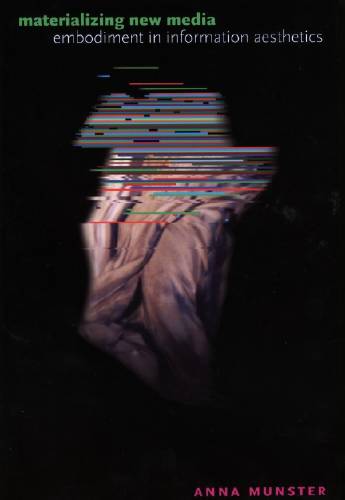
The next CoDE-talk:
Dr Anna Munster on biopolitics, death and digital aesthetics
at Anglia Ruskin, East Road, Cambridge
Organized by Cultures of the Digital Economy institute, in collaboration with the New Network Politics-project
October 14, Thursday, 16.00-17.30
Room: Helmore 112
‘Out of the biopolitical frypan and into the noopolitical fire: death and finitude as emerging trends in digital culture and aesthetics’
Abstract:
This paper tracks the emergence of a digital ethos that is cognisant of consequence, finitude and even death. On the one hand, sectors of the digital entertainment industry – specifically computer games developers – and new start-up industries are concerned with the question of how to m…anage ‘death’ digitally. On the other hand, death and suicide have become the impetus for creative expression. Bernard Stiegler’s analysis of technicity goes some way toward unfolding a political analysis of the relations between ‘life’ and ‘death’ in the recent and current aesthetics of digital code. Specifically, his more recent work is concerned with the over-reaching of biopower into what he terms ‘psychopower’ and with inventing a ‘noopolitics’ that can respond to this.
But I will also argue that his articulation of noopolitics fails to provide us with a way to conduct ourselves digitally in the light of the spread of technologies and cultures of cognitive capitalism. It does not take account of either the recuperative noopolitics of aesthetic practices in an economy of cognitive capitalism or the productive and differentiating potential of aesthetic practices of digital ‘coding’ that suggest lines of flight for contemporary technoculture. I focus upon the relation between recuperated and critical software practices and the constitution of provisional networked publics that transversally produce lines of flight toward a more transformative noopolitics for digital aesthetics.
Bio:
Anna Munster is a writer, artist and educator. She is the author of Materializing New Media (Dartmouth College Press, 2006) and one of the founders of the online open-access journal The Fibreculture Journal. Her theoretical and artistic research covers the politics and aesthetics of networks and media technologies, biopolitics and information societies, embodied perception and neuroscience. She is currently working on a database for generating dynamic concepts about contemporary media (http://www.dynamicmedianetwork.org/), and a book on how networks experience. She is an associate professor, College of Fine Arts, University of New South Wales, Sydney Australia.













 Machinology