Archive
Signals, not signs
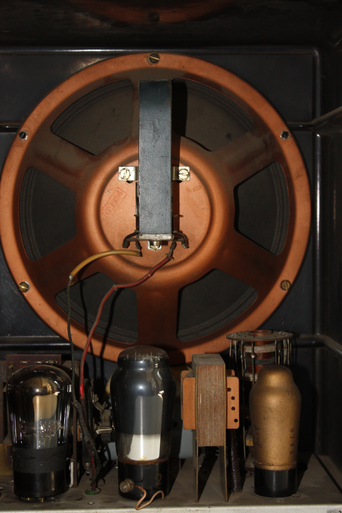 Most of my text-slaughter (i.e. cutting down the word count of my new book ms Media Archaeology and Digital Culture, and posting some blurbs online) happens here, but wanted to add this note, extracted from a chapter on”archives, in this blog space. It deals, very briefly, with some aspects of Wolfgang Ernst’s media theory:
Signals instead of signs, physics instead of semiotics – such a turn is at the core of how Wolfgang Ernst wants to define media theory. How do you do that methodologically? Theoretical work, analysis of diagrams, epistemologies, scientific frameworks for technical media are completemented in the case of Ernst by the existence of the media archaeological fundus – a certain kind of an archive of media archive – but an operational one. This is what he describes as based on the idea of epistemological “toy” – epistemisches Spielzeug (where the “Zeug” includes a Heideggerian connotation). Whereas I deal with Ernst, the fundus and their contexts in more detail in a range of forthcoming publications (in Theory, Culture &Society, in a book on Digital Humanities edited by David Berry and in my introduction to the forthcoming volume of Wolfgang Ernst writings from University of Minnesota Press) here is a short blurb into the direction of signs:
One of the aims of the fundus is to show that our perceptions are dependent on the signal processing capacities of our devices. This is evident with the example of online streaming, especially with a slightly slower internet connection that halts at times to load the content. But you can find this reliance on the signal as a time based process in earlier mass media as well. Perceptions become a function of the signal processes and the signal-to-noise ratio that is governed by complex diagrams usually more familiar to engineers and mathematicians whether we are talking about the statistics inherent in transmission, or the specific colour worlds this has related to:
“However, the broadcast of any football game illustrates the signal-to-noise ratio between plays on the field and amorphous shots of the spectators in the stadium only statistically. The archeology of media searches the depths of hardware for the laws of what can become a program. Has not the character of television shows after the introduction of color sets been determined decisively—indeed down to the clothes of the hosts—by the new standard and what it can do in terms of color and motion? Even today, the color blue has a mediatic veto in chroma key resolution; the same goes for the blue screen, and for manipulations of resolution and color filters. […] For media archeology, the only message of television is this signal: no semantics.” (Ernst: “Between Real Time and Memory on Demand: Reflections on/of Television” The South Atlantic Quarterly 101:3, Summer 2002: 627-628)
In such perspective, media artists such as Nam June Paik have been at the forefront of illuminating these technical aspects of transmission of signals by investigating the noise and non-meaning inherent in the medium. In one way, this is a reforumation of a McLuhan idea of medium as the message – the materiality of the mediation as the importance, but here turned into a more concrete physical detail: we would not see or hear anything were it not for the work of signals to transport, to transmit such phenomenological details to us.
Whitehead into media theory
Complementing the biomedia-theme of the conference (Response:ability) of this year, the final panel of Transmediale 2011 featured two important writers in media theory and arts: Marie-Luise Angerer and Mark B.N. Hansen. Angerer was very interesting in her presentation that focused on the notion of affect, talking about Massumi, the disappearing half a second in registration of sensations, and dance, but I want to mention here especially Hansen (partly because of the selfish reason of having been recently occupied with the idea of time-critical media, and microtemporality).
Amusingly introduced in the programme as the other Mark Hansen – who teaches statistics at UCLA – this Mark Hansen at Transmediale is of course the author of New Philosophy for New Media and Bodies in Code; both important, interesting books in embodiment and the media artistic cultures of perception. As was pointed out during the session, partly by Hansen himself, his theoretical trajectory has moved in new directions during these years: from a very strong phenomenological focus influenced by Maurice Merleau-Ponty, to a much more Gilbert Simondon influenced Bodies in Code, and now he is framing his project through A.N.Whitehead. This is interesting, as it shows yet another contemporary cultural and media theorist moving in that direction. Well known are the Whitehead writings of Massumi and Manning in Montreal, and of course the recent Whitehead writings of Steven Shaviro, the debates around object oriented philosophy that take a lot aboard from Whitehead, and naturally the ideas of such pioneers as Isabelle Stengers and Bruno Latour. So Hansen as well has joined this crew enthusiastic about the superject instead of subject, and the distributed field of prehensions instead of the primacy of the human body and sensory system as the focal point in aesthetics.
Hansen’s current project is more generally framed as a move from objects to processes. Hansen argues that so much of media theory (including his own work) has been focusing on objects as the primary, uhm, object of media theory. Instead, contemporary culture of distributed ubiquitous media environments demands something else. The presentation itself was packed full of theoretical arguments that are hard to unpack in a good brief way, but I just want to point towards some key concepts.
Hansen argues that this new media culture demands new concepts – a new culture of media processes has to be complemented by a specificity paying attention to how it happens on such levels that are not always directly registered on the human sensorium. Interestingly, he pointed towards Guattari as well, even if not so strongly as talking about Whitehead. In short, the indebtedness to Guattari could be summarized through the idea that machines talk to machines before talking to us. Hansen takes this concretely, in a similar manner to Wendy Chun, and pays attention to how much happens in our media machines (take smart phones that all the time are connected due to the GPS system etc) before we actively use them. The sensibilities inherent in such regimes of software cultures are indeed beyond the normal accounted for 5 senses that media theory has traditionally recognized. And here kicks in Whitehead.
Instead of the body focus of previous (new) media theory, Whitehead offers ways to rethink embodiment. The body is in such a theoretical frame “a vast set, a society of sensibilities.” Similarly Whitehead complicates the notion of perception by two important specifications: perception as presentational immediacy, as it has been understood in so much of history of philosophy and perception as causal efficacy. Without me being able to go into enough detail here, causal efficacy points towards the way Whitehead wants to take into account the way actual entities in the world are created through their relations to other entities, preceding them, and in midst of which entities are determined. It points towards the processual nature of perception being born – not the end result, but the “sensory processes leading up to and informing perception.”
When Shaviro asked the question of how would contemporary cultural theory look like if we had focused more on Whitehead, instead of Heidegger as the 20th century philosopher, Hansen seems to ask: how could we bend Whitehead into a media theorist? Whitehead hardly wrote anything related to media or technology per se (even if writing lots on science which we can argue of course being of huge importance to any understanding of media culture). For Hansen, the key point is how Whitehead’s perspective affords us to think about nonperceptual sensation. It gives agency to the environment instead of the focal subject effected and affected by that environment, and offers the perspective of the superject for media theory: how the individual is the end result of the environmental datum prehended by this focal point.
This in a way pairs up with the nature of the processual environments – that when we need to talk about processes as the central “object” of media studies, we need to see this both in the sense how e.g. Whitehead can offer such theoretical perspectives (causal efficacy) as well as how the distributed, ubiquoitous software environments are processes, unfolding in their nature. This is where Hansen’s perspective ties together with the recent debates concerning time-critical perspectives that especially the Berlin Humboldt media theorists have promoted (again, see Axel Volmar’s Zeitkritische Medien, 2009, as well as Wolfgang Ernst’s writings). Yet, there is an important difference as Hansen seems to argue that it’s only the recent new media has made the processual approaches crucial. But is this not already the case for such earlier media as wireless, cinema even, and for example television? Hansen does not fully address why the earlier media of signal processing of various forms does not qualify for the microtemporal ideas he is arguing for, where the circulating nature of the electric, electromagnetic, and then electronic signal is processual. I would argue that here some media archaeology should step in and offer a broader perspective concerning technical media and time, affect of technological relations, and process.













 Machinology