Archive
Berlin, BWPWAP, and Book Launch
Transmediale starts today with its puzzling, great theme Back When Pluto Was a Planet (BWPWAP). Except conceptual, temporal and spatial shifts and displacings of various sorts. This is the first year our Winchester School of Art also is collaborating with transmediale, and as part of that we are hosting a panel on military  technologies, space and Cold War.
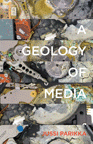
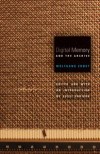
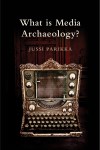
In addition, I am sharing a book launch with Wolfgang Ernst: It is the book I edited of his writings alongside my own What is Media Archaeology? Join us for that on Friday, 1st of February.
And as a Kittlerian cherry on top, on Saturday evening I am participating in the performance Sources, Synths, Circuits that focuses on the reconstruction of the late Prof Kittler’s synthetizer. We discuss that from the perspective of not only Kittler, music, technology but also archives.
WSA and transmediale partnership
Winchester School of Art, and our research centre in Global Futures is happy to announce a new partnership with the transmediale-organisation and festival in Berlin! This coming year’s theme is Back When Pluto Was a Planet (BWPWAP) and we are besides participating with a panel and a range of other talks also already thinking ahead to the future years with the great folks of tm. They have a great track record of working with universities, including Aarhus and now Leuphana. I could not be more excited about this link to Berlin – tm has been one of those festivals /conferences that get my mind actually working. And it’s socially such a good spot to catch up with lots of people. One of the most exciting things happening in our field of critical arts/media/practice/theory at the moment. And Berlin is great.
Below the more official press release.
WSA to collaborate with a leading European festival for art and digital culture
The Winchester School of Art (WSA) has formed a new partnership with the organisers of one of Europe’s most significant festivals for art and digital culture.
The WSA, part of the University of Southampton, will engage academics and students in a wide range of activities with transmediale, the world-renowned festival and year-round project based in Berlin.
From Winchester, the key activities will be co-ordinated through the WSA’s Centre for Global Futures in Art Design & Media which shares a number of areas of mutual interest with transmediale across the fields of media arts, cultural theory and politics, aesthetics and digital culture.
Future activities linking the WSA and transmediale related to these shared interests shared research projects, joint workshops, curatorial developments related to transmediale and its all-year platform “reSource transmedial culture,” various educational platforms and events, and WSA’s participation in the planning activities and events leading towards transmediale festivals and the reSource activities.
Academics and students are already making plans to participate in transmediale from February 2013. WSA and transmediale are also keen to involve students as an active part of the partnership and establish a long-term link that represents the Winchester scholars’ interest in digital culture, media and critical contemporary arts. It also consolidates important high-level links the School has with Europe.
“We’re very excited by the prospects and benefits that working with transmediale will bring to the Winchester School of Art,” said Professor Ryan Bishop, Co-Director of the Winchester Centre for Global Futures in Art Design & Media. “The activities supported by transmediale offer an important interface between academic research, the arts and the general public which creates a perfect fit with the ethos and activities of our own Centre. In return, the WSA is perfectly positioned to facilitate additional collaborative links across partner institutions, providing a dynamic network of researchers working on related and complementary concerns which we believe will benefit everyone involved in organising and participating in transmediale each year.”
The artistic director of transmediale, Kristoffer Gansing reinforced this perspective by saying that “For transmediale, the collaboration with WSA and the Centre for Global Futures represents a great opportunity to develop new activities within a burgeoning international research setting. “ Stressing the transdisciplinary nature of the festival, “the combination of art and research is central to our critical approach to media art and digital culture” Gansing continued, adding that he is “hoping for new creative approaches to joint presentations of artistic and academic research between the two institutions.”
Each year, transmediale presents new positions in the fields of art, culture and technology to an audience of more than 20,000 visitors who experience an extensive range of exhibitions, conferences, screenings, performances and publications. transmediale’s broad cultural appeal and high artistic quality is recognised by the German federal government which supports the festival through its programme for beacons of contemporary culture.
Critically concerned with art and design practices of making, thinking and representation, the WSA engages in education and enterprise, exploring the contribution of media, materials and technologies to the improvement of human societies globally. In addition to producing world class research and engaging in educational possibilities, the WSA’s Centre for Global Futures hosts a wide array of issue-based activities that centre around globally relevant topics such as the environment, society, politics, art and demographics. By involving high profile academics, artists, curators and filmmakers, the Centre is creating a platform for the local and regional communities to engage in these areas.
The Photosculptural Hypothesis
 3-2-1- A whistle blows and 24 shutters go “click”. Again, with a different model, head help up straight and still by a support.
3-2-1 the whistle blows. Click-click-click-click…
It’s image making but not just photography – instead, it provides an alternative route for histories of media; instead of a preference for the centrality of the seriality of the moving image, try starting from the cybernetic. “The cybernetic hypothesis”, as Alex Galloway coined it in his talk at the Winchester Centre for Global Futures that was a kick-starter for the project.
The whistle, the 24 cameras, set around a circular studio, a rotunda on which a stool for the model – an assemblage that connects the early 1860s with the 2012 reconstruction inside which I too sat to be photographed, and to be sculpted from those 24 shots. Originally this was Francois Willeme’s photosculpture, a curious arrangement and a patent from 1860s Paris that defined what Galloway calls one early model for parallel media.
Winchester School of Art Fine Art undergraduate students took up the original blueprints and the idea as their own model for a project led by Ian Dawson and Louisa Minkin and produced a fantastic remake of the Willeme-device. Inspired by Alex Galloway’s talk, and partly framed as a media archaeological project, it presents indeed a very inspiring way to address sculpture, parallel imaging and informational culture. Like so many media archaeological art works, it suggests how you can presence old media ideas – often not very mainstream – in current settings; like taking an alternative viewpoint not only to media art history, but also to current image cultures.
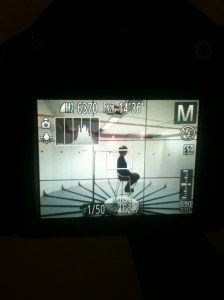
The photosculpture – which indeed as sculptural mediates the imaging into physical three dimensional objects and presents a sort of an archaeology of 3-D digital imaging/modelling – shifts our perceptual coordinates. It forces itself as a rather (in a good way) weird part of the cultures of digital imaging with its historically “out-dated” way of understanding media. That is the beauty of the device and the arrangement; it is a historical and media archaeological exercise in practice-led activity that investigates the conditions of visuality and perhaps even cybernetic culture, as Galloway claims.
“A sculptor and the sun will become collaborators working together to fashion in 48 hours busts or statues of a hitherto unknown fidelity of such great boldness in outline and admirable likeness.” Those were the words of the journalist Henri de Parviel, describing the original piece by Willeme. You can see how it describes the emerging business in quickly produced, sculpted visuality – a bust in “admirable likeness” in no time! The WSA project taps into the way in which visual technologies were starting to be mobilized into consumer products and services, but old media ideas can be cheap R&D too (to use the phrase by Garnet Hertz) for artistic ideas and reappropriations, and engage with the multiple medialities that our media technologies consist of: it’s not only about the photographic visuals, nor just sculpture, nor just a genealogy of the informatics, but a folding of various medialities. Even a single technological assemblage and practice can contain so much, as the project demonstrated. Media are never about single objects, devices or apparata – but a multiplicity of techniques and technologies assembled. Hence, a hands on assembling is itself a process of thinking through this multiplicity of media and arts apparata in order to get a sense of the delicate materialities and techniques which they enable, and how they are themselves enabled.
(For further reference, a film from 1939 from the Pathe archives, with Marcus Adams in his studio demonstrating the photosculpture)
WSA MA Students’ Final Show
Opening on the 30th of August, 5 pm, at the Winchester School of Art campus!

Torsten Lauschmann at Hansard Gallery
I recently gave a talk about Torsten Lauschmann’s art. This took place in Southampton, at the Hansard gallery with my great colleague prof. Ryan Bishop. In my quite informal presentation, I picked up on points such as… (excerpts to follow):
…
What several of Lauschmann’s pieces conjure is a different way of seeing media than just as communication. Media is trickery, a way of modifying realities, and has been for a long time; deceptions of the senses, of virtual realities and false impressions – this is the work of media, which brings it closer to the military psy-ops, and a history of hallucinations, other realities and indeed – magic. In other words, forget the idealistic notions of media as communication between people to exchange messages – instead, entertainment worlds are even down to their physiological effects about tricking the eye, the ear and the mind in ways that attract and affect the spectator. Media is sometimes closer to sorcery, It can conjure and produce realities in very effective ways – think of the long lineage from indeed magic and sorcery to current PR culture… (Fuller and Goffey, Evil Media).
…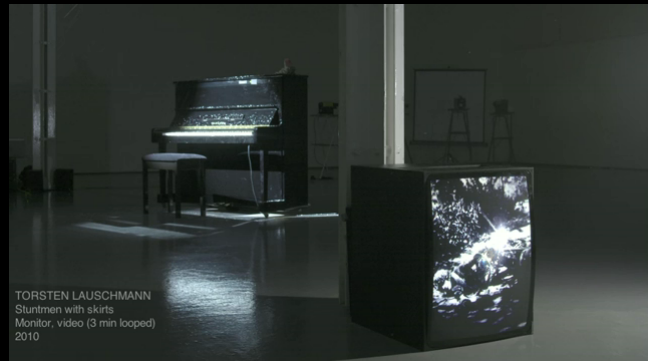
What is significant is perhaps exactly this imagining a parallel world of media that borrows from past. But what is borrowed are perhaps not always very suitable ideas. Yet such can be employed as tools of investigation, critical ways to see our current media culture. It can also be about picking up individual motifs, minor details or ideas, and working them into the art piece, like Lauschmann seems often to do. More generally, in differing ways such works mix the way in which we understand media time – it is not only a progression from the old to the new, but how ideas got discovered and rediscovered, recycled, like concretely in some recycling based DIY art; or in the midst of our reborn enthusiasm for 8-bit pixelated aesthetics, vinyl music listening, of retrogames you remember from 1980s, also old technology presents itself as an alternative way of understanding the new: to take an old piece of technology, visual or audio, and try to think how it enables a different way of understanding media aesthetics.
Defective ideas and forms become standardized as our ways to think of time and media.
“We make our journeys out there in the low light of the future, and return to the bourgeois day and its mass delusion of safety, to report on what we’ve seen. What are any of these ‘utopian dreams’ of ours but defective forms of time-travel?” ( Pynchon, Against the Day, 2006)
Couldn’t we say the same thing about the past: journeys to the past that are like defective forms of time-travel? To past times when old technologies were once new too, and puzzled and awed, with their low lighting, crackling, noise, and pixelated style? The obsolescent entertainment device, the pianola, melancholicly playing its tune in the middle of the room reminds of such time-travels from which Lauschmann poached ideas and devices that trigger much more than nostalgia.
…
In his part of this double act, Bishop talked about Lauschmann in relation to histories of automation, labour and for instance mechnical music, including the player piano.
What is Media Archaeology? — out now
It’s out, and gradually in book stores — What is Media Archaeology? (Polity),
my new book about media archaeology (what a surprise)!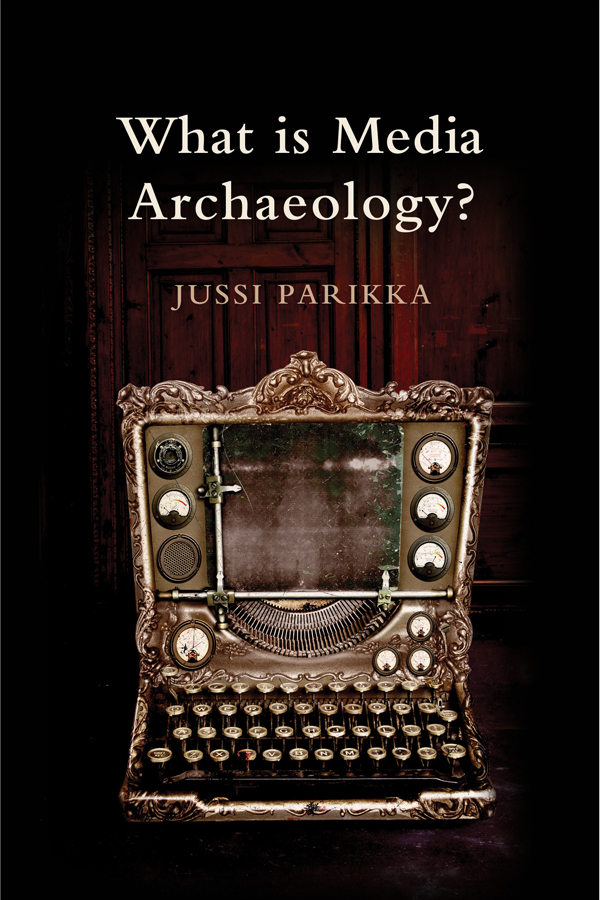
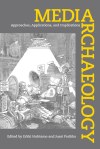
It picks up where the edited volume Media Archaeology: Approaches, Applications, and Implications (Huhtamo and Parikka) left off; this means the implications bit, and how media archaeology relates to other recent discussions in art, cultural and media theory: software studies, new materialism, archives, and more. In other words, it complements the earlier collection.
So in short,
1) What IS media archaeology?
– depends who you ask. If you ask Erkki Huhtamo or Siegfried Zielinski, you might get a different answer than from asking me. For Huhtamo, it is the recurring topoi/topics of media culture; for Zielinski, a poetic exploration of deep times and variantology; and so forth. For me, it is an exciting theoretical opening to think about material media cultures in a historical perspective. However, it expands into an experimental set of questioning about time, obsolescence, and alternative histories as well. In one way, it is about analyzing the conditions of existence of media cultural objects, processes and phenomena. It picks up on some strands of “German media theory”, but connects that to other debates in cultural theory too.I like what Bernhard Siegert has said about the early ethos of media archaeology being that of Nietzschean gay science — experimental, exploratory, radical. Perhaps in this vein, media archaeology is one answer to the need to think transdiscplinary questions of art, science, philosophy and technology.
2) Isn’t it just media history that tries to rebrand itself?
– No, not really. A lot of the media archaeological work expands to strong theoretical arguments as well as quite different sorts of historical inquiry than one recognizes in media historical work. Having said that, perhaps this is where the interesting connections are emerging; how media archaeology can contribute to media historical inquiry as well as to thinking about archives and cultural memory. There is one chapter on archives in this new book. A lot of media archaeology owes to earlier new cultural histories and new historicism, so the link is there.
3) Isn’t media archaeology only a footnote to Kittler’s work?
– That would be unfair towards a bunch of other theorists, German and non-German. Kittler himself denied being a media archaeologist, even if a lot of the stuff has taken much inspiration from him and the idea of looking at “conditions of existence” of cultural formations through (technical) media. Even Germany is filled with media archaeological work, since 1980s, and a lot of that expands to such new directions as Cultural Techniques (Siegert, Krajewski, Vissman, and others) as well as other media archaeologists — not least Wolfgang Ernst. In addition, the book offers an insight to other media archaeological theories, such as Huhtamo’s, Zielinski’s, new film history (Elsaesser et al) as well as the links to emerging media studies fields such as digital humanities (eg Kirschenbaum’s work).
4) Sounds like the book is all theory, huh?
There is more than just media theory — although I admit, that because of the nature of the book, was not able to work too much of new empirical material there. However, one key thing that pops up in the book is the use of media archaeology as an artistic method. There is a whole chapter dedicated to that. I think one of the most exciting directions is to see how these methodologies can be used in design, arts and other fields of creative practice that anyway are interested in themes of obsolescence, media and technological affordance, the environment and ecology, remix and for instance hardware (even analogue!).
5) What next?
– No more media archaeology for me. Well, I have jokingly promised that I won’t use the term anymore, even if I am interested in seeing where this term might take us. I will come up with a disguise, a theoretical disguise.
6) your chance to ask me a question!
– and I will answer, if I can.
Meanwhile, here is the info about the book:
(From the Publisher’s catalogue and website):
This cutting-edge text offers an introduction to the emerging field of media archaeology and analyses the innovative theoretical and artistic methodology used to excavate current media through its past.
Written with a steampunk attitude, What is Media Archaeology? examines the theoretical challenges of studying digital culture and memory and opens up the sedimented layers of contemporary media culture. The author contextualizes media archaeology in relation to other key media studies debates including software studies, German media theory, imaginary media research, new materialism and digital humanities.
What is Media Archaeology? advances an innovative theoretical position while also presenting an engaging and accessible overview for students of media, film and cultural studies. It will be essential reading for anyone interested in the interdisciplinary ties between art, technology and media.
And the blurbs:
‘Jussi Parikka offers a lucid, concise, and highly readable account of a new and exciting field – media archaeology. He demonstrates that contemporary media forms are rooted to the past by multiple threads – untangling them helps us understand the media frenzy that currently surrounds us.’
Erkki Huhtamo, University of California Los Angeles
‘A fabulous map of media archaeology that, as its subject compels, produces its territory anew.’
Matthew Fuller, Goldsmiths
‘The most comprehensive coverage to date of this fascinating area of study. Parikka’s book offers an excellent overview of connections between the material and social aspects of media technology. He provides a thorough review of the diverse and sometimes contrasting theoretical foundations and provides a host of concrete examples of media-archaeological practice that serve to bridge the gap between heady theoretical trajectories and the concerns of practicing artists, users and other readers who take their technology seriously.’
Paul DeMarinis, Stanford University
Table of Contents
Chapter 1
Introduction: Cartographies of the Old and the New
Chapter 2
Media Archaeology of the Senses: Audiovisual, Affective, Algorithmic
Chapter 3
Imaginary Media: Mapping Weird Objects
Chapter 4
Media Theory and New Materialism
Chapter 5
Mapping Noise and Accidents
Chapter 6
Archive Dynamics: Software Culture and Digital Heritage
Chapter 7
Practicing Media Archaeology: Creative Methodologies for Remediation
Conclusions: Media Archaeology in Digital Culture
Note: the book is hitting the bookstores now in the UK (May), and soon in North-America (June) and rest of the world.
Launch of Winchester Centre for Global Futures in Art Design & Media
This is our new centre (where I am a Senior Fellow). All welcome!
Launch of Winchester Centre for Global Futures in Art Design & Media
Wednesday 1 February 2012, 5:00 p.m. to 8:00 p.m.
Lecture Theatre A (above the WSA Gallery; Westside Building)
University of Southampton
Park Avenue, Winchester, Hampshire, SO23 8DL
WSA is very proud and excited to announce the launch of its new research centre: the Winchester Centre for Global Futures in Art Design & Media.
To mark this occasion, the Centre will be hosting an evening of talks on Wednesday, 1st February 2012, 5:00pm to 8:00pm. Speakers will include Winchester Centre’s newly appointed Professor, Turner Prize nominated artist Jake Chapman, artist and Head of School Bashir Makhoul, and art historian Jonathan Harris, Director of Research at WSA.
Newcastle University’s Professor of Cities and Society, Stephen Graham will also speak on the topic of ‘Cities Under Siege: The New Military Urbanism,’ which explores the import of visual technologies and practices in the complex intersection of urbanism, militarisation and artistic practice. Professor Graham will be introduced by Winchester Centre Co-Director Ryan Bishop, who will explore the links between Graham’s theoretical work and Makhoul’s upcoming solo exhibition at the Yang Gallery in Beijing this spring.
A drinks reception will follow the talks in the WSA Gallery.
Winchester Centre embodies the ethos of research-led practices in Art, Design and Media at Winchester School of Art. The Centre highlights historical, contemporary and future roles for art, design and media within globalization. Its members build sustained collaborations with international partners in public service, the creative industries and civil society. Critically concerned with art and design practices of making, thinking and representation, the Centre actively engages in education and enterprise, exploring the contribution of media, materials and technologies to the improvement of human societies globally.
Led by recently appointed professors Ryan Bishop, Sean Cubitt, Jonathan Harris and Bashir Makhoul, Winchester Centre will make a decisive contribution to the work of WSA and the University at large, as well as to the larger communities of Winchester, Southampton and Southeast England.
More information about the Winchester Centre’s activities, research interests and events can be found at http://www.soton.ac.uk/wrc
Admission is free and all are welcome.
Winchester Centre for Global Futures in Art Design & Media

I am now officially a member of the new Winchester School of Art Research Centre — a Senior Fellow at the Winchester Centre for Global Futures in Art Design & Media — and yes, all part of the University of Southampton!
The Centre is led by professors Jonathan Harris, Ryan Bishop and Sean Cubitt, and outlines its mission as follows:
The Winchester Centre for Global Futures in Art Design and Media highlights historical, contemporary and future roles for art, design and media within globalization. Its members build sustained collaborations with international partners in public service, the creative industries and civil society. Critically concerned with art and design practices of making, thinking and representation, the Winchester Centre actively engages in education and enterprise, exploring the contribution of media, materials and technologies to the improvement of human societies globally.
Winchester Speaker Series: Phillips and Milne
We are today kicking off our new research centre seminar series with John Phillips (National University of Singapore) and his talk “Seeing Things” – which promises to address Bernard Stiegler, military technologies and critical theory.
And next week Thursday, continuing with Esther Milne with Siegert, not Stiegler!
THE WINCHESTER CENTRE FOR GLOBAL FUTURES IN ART, DESIGN & MEDIA
Seminar Series: 3 November 2011, 5 pm at seminar room 8-9.
‘Technologies of Presence: Intimate Absence and Public Privacy’
Esther Milne
Intimacy, affect and image are always intertwined at the level of technology. The practices of mail-art, for example, are enabled by the material conditions of the postal exchange. In turn, the economies of this exchange are underpinned by the dance between absence and presence: writing a letter signals the absence of the recipient and, simultaneously, aims to bridge the gap between writer and recipient.
This paper traces the production of presence across nineteenth century postal networks in order to make some preliminary remarks about twenty first century platforms of social media, such as Twitter. In particular it explores the emergence of contemporary patterns of ‘public privacy’ through their socio-technical historical settings. Postcard media offers one such site. As Bernhard Siegert and Jacques Derrida have demonstrated, the postcard operates as a liminal figure for the reformulation of public and private communication.
‘Public Privacy’ describes the ways in which subjects use the public signifying systems of social media to produce images of love, desire and pain. Yet such rhetorical strategies are not unique to distributed digital platforms. After all, the eighteenth century epistolary network, often called ‘The Republic of Letters’, was responsible for reconfiguring the public and private domain. Through an exploration of mail-art practice, this paper identifies the postal principle of Twitter to challenge recent claims for the ‘death of privacy’.
BIO: Dr Esther Milne is Deputy Head of Humanities, Arts and Social Sciences at Swinburne University, Melbourne, Australia. She researches in the areas of celebrity production within legislative and cultural contexts; and the history of networked postal communication systems. Her recent book, Letters, Postcards, Email: Technologies of Presence, is published by Routledge.
WSA MA Degree Show 2011
My new job at Winchester School of Art – and the students graduating of the 2010-2011 courses – is having its annual Masters Degree show. Chuffed about this. Includes a wide range of expertise from fine art to communication design, (advertising) design management to fashion and textile design.The Degree show kicks of September 1st with a Private View.
WSAMA 2011 launch and private view = 01/09/11 1800-2000 HRS
(Warning: the video has strong flicker).
For more info (and no-flicker), see the blog at http://wsama.wordpress.com/.








 Machinology