Archive
Complicity with Anonymous Media
Thomas Pynchon’s Gravity’s Rainbow (1973) and its paranoid military-scientific worlds of technology, sexuality and hallucination became one inspirational figure for a whole wave of media theory. What could we do with Reza Negarestani’s Cyclonopedia (2008) then, which seems to include some similar stylistic elements, of transdisciplinary writing that wanders across rats and soil, petrol(ology) and archaeology to understand Middle-East? From Pynchon’s WWII Europe, to Negarestani’s Middle-East, politics of petrol.
The archaeological method of Negarestani’s Cyclonopedia represents a theory-fiction alternative for media archaeology too. What if we employ the same hallucinatory, inspiring way of investigating the subterranean, the secret, the ground that is not defined by stability but dynamic flux of sediments alive, burrowed by rats, worms and archaeologists? We can call this investigation new materialist because it believes in agency of matter, and multiplicity of things both organic and non-organic. What does this multiplicity mean? It means a microworld that unravels when you zoom close: close enough, and the skin is not a unity, but porous folding, layered, and filled with bacteria. The soil is not stable, but a constantly slowly pulsating topology, with its own affordances, and indeed, again, bacteria and other forms of life. Same applies to everything, even metal, or as Deleuze and Guattari would say, especially to metal. In their metallurgical thinking, it is the body without organs, here better understood through the idea of what flows through everything – metallurgical cosmology. This is why they insist on the relatedness of machinic phylum and metal – and why they say that everything is a machine (not because it would be modelled on any already existing machine or technology!)
“Even the waters, the grasses and varieties of wood, the animals are populated by salts or mineral elements. Not everything is metal, but metal is everywhere.” (DG)
In Cyclonopedia, the character Parsani calls the approach to the subterranean “bacterial archaeology” – an archaeology that starts from the non-human agents and microscopic attraction points within matter. And the matter extends to politics, society, and power:
“Bacterial Archeology. It is imperative for Parsani, in his approach to the Middle East, to make clear that everything related to the Middle East emerges, moves, diffuses, escalates and engenders itself through and out of the holey Hezar’to (A Thousand Insides; the Persian word for labyrinth) and the Petrologies of Bacterial Archeology.’”
The earth moves, and hums.
The methodology is that of exhuming, which both archaeologists and rats share.
“If archeologists, cultists, worms and crawling entities almost always undertake an act of exhumation (surfaces, tombs, cosmic comers, dreams, etc.), it is because exhumation is equal to ungrounding, incapacitating surfaces ability to operate according to topologies of the whole, or on a mereotopological level. In exhumation, the distribution of surfaces is thoroughly undermined and the movements associated with them are derailed; the edge no longer belongs to the periphery, anterior surfaces come after all other surfaces, layers of strata are displaced and perforated, peripheries and the last protecting surfaces become the very conductors of invasion. Exhumation is defined as a collapse and trauma introduced to the solid part by vermiculate activities; it is the body of solidity replaced by the full body of trauma. As in disinterment — scarring the hot and cold surfaces of a grave — exhumation proliferates surfaces through each other. Exhumation transmutes architectures into excessive scarring processes, fibroses of tissues, membranes and surfaces of the solid body.”
Just for speculative reasons, let’s use the same logic of thought to our technological excavations and use this as inspiration to think of the exhuming we do with media cultural topics – or machines themselves. One cannot help relating this to the epistemology and hallucinatory methods of Microresearch Lab, where the processes of soil and nature already technological are excavated in order to proliferate new surfaces – like the skin of the machine, that does not stop at the visible surface (interface/cover). It is topological, and folds in to a multiple surfaces, some inside, some abstract, some irrational.
In terms of animality, Cyclonopedia talks about rats as one agency of exhuming, parallel to archaeologists. How about then: Rats as archaeologists, or rats as media theorists? Such animals work less as metaphors than as vectors to think through the non-human force of analysis. To actually end up somewhere else than with more human focused vocabulary of cultural theory and methodology.
Furthermore, can we even extract ideas for archaeological politics – a politics for the military-industrial complex in the age of advanced science and technology?
“Parsani claims that ‘archeology, with it’s ingrained understanding of Hidden Writing, will dominate the politics of future and will be the military science of twenty-first century’.”
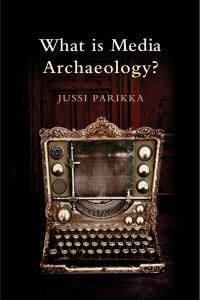
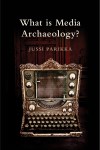
A Visual Teaser – What is Media Archaeology?
Just to offer the first glimpse of what’s to come. And what I was occupied with for the past 12-18 months.
It’s All in the Technique
Heads up on what looks like a great little Dossier of German Media Philosophy – in the new issue of Radical Philosophy (169). Indeed, as Eric Alliez in his short (hence telegraphic?) afterwords points out, this is not philosophy of media, as we might tend to think, for instance in the English language academia. It is not so much of philosophy about the media, but how philosophy and media share a certain a priori.
I myself co-edited a collection of Continental Media Philosophy in Finnish in 2008, following this idea of (positive) separatism of a certain German agenda concerning philosophy in the age of media. And it’s not only the slightly worn idea that we need to rethink philosophy because we have the internet, but understanding how the a priori of humanities might actually be technical media. This is not a techno-determinist statement in the a-historical sense, but something that at least tries to account for the birth of modern humanities in the 19th century at the same time technical media was giving us a new ontology (and hence epistemology) of the world.
What is disturbing about this special issue is the generic problem of German academia and often media theory: it’s lack of women. Whereas one could say that the dossier and the conference at Kingston University that preceded it just honestly replicates the situation, it merely replicates the bias. Lack of such people like Sybille Krämer, Marie-Louise Angerer or Eva Horn – or any younger scholars! – is unfortunate, and it seems that this blind spot was transported along with the conference, the translations to Radical Philosophy now.
This of course does not take strength away from some of the texts. Without offering a full-fledged review of the issue, I just want to point out the joy it brings me to read Bernhard Siegert. This time his short text “ The Map Is The Territory” is about something, well, not obvious to media studies: maps. But what the article turns out to be is both an investigation into the epistemological cultural practice, or technique, of map-making, the question of representation and explication what Cultural Techniques are for the German media theorists. As pointed out in a recent e-mail to me, Geoff Winthrop-Young (who is the true expert in these matters) too underlines how important of a concept it is, and represents something that the Anglo-American reception of “German media theory” has still not started to grasp. As such, for the English speaking audience, Siegert’s text is the best entry point to the concept that does not reduce itself to Marcel Mauss’ bodily techniques, nor even completely to Michel Foucault’s ideas of practices (where it however takes a lot of its inspiration).
As Siegert emphasizes, the concept is post-media but not as leaving media behind, but post as in “post-new-media” and wanting to take distance from Internet studies or mass media studies (not a surprise if you are a scholar in the Kittlerian vein). It seems like a mixed bag, the way he outlines it, inclusive of techniques of measurement and time, like calendars, to techniques of hallucination and trance. And yet, as a mixed bag, it resonates closely with what emerged since the 1980s as “German media studies” – often referred to as media archaeology too:
“The concept of cultural techniques thereby took up a feature that had been specific to German media theory since the 1980s. This specific feature set apart German media studies from Anglo-American media studies, as well as from French and German studies of communications let alone sociology, which, under the spell of enlightenment, in principle wanted to consider media only with respect to the public. German media analysis placed at the basis of changes in cultural and intellectual history inconspicuous techniques of knowledge like card indexes, media of pedagogy like the slate, discourse operators like quotation marks, uses of the phonograph in phonetics, or techniques of forming the individual like practices of teaching to read and write. Thus media, symbolic operators and practices were selected out, which are today systematically related to each other by the concept of cultural techniques.” (14)
I think that long quotation was worth it to illuminate the centrality of the concept, which has enjoyed a bit of visibility in the name of such institutions as the Berlin Helmholtz Centre for Cultural Techniques.
In another context, Siegert has called this media archaeological 1980s as a phase of gay science– of exploration and fresh ideas. Indeed, I have to agree on some of his critique that he points towards some of the dogmatic media and cultural studies that already from the beginning know the research results: The Marxists always find the commodity form, and Cultural studies always finds race, gender and class. Interestingly, whereas a lot of Cultural and Media Studies for instance in the Anglo-American world brought with it a suspicion of ontology as something that still smells like the old library books of metaphysics, and a focus on epistemology (preferably linguistically determined, representational, or at least empirical), the emphasis on knowledge and epistemology that one finds in cultural techniques is slightly different. Epistemology is indeed embedded in a range of practices from the body to science (obviously), but at the same time Siegert insists that part of the work of analysis of cultural techniques is to investigate how cultural practices are everywhere – to take his example, for instance no time outside techniques of time. And yet, Siegert does not turn his back on ontology. Let’s quote again: “ This does not imply, however, that writing the history of cultural techniques is meant to be an anti-ontological project. On the contrary, it implies more than it includes a historical ontology, which however does not base that which exists in ideas, adequate reason or an eidos, as was common in the tradition of metaphysics, but in media operations, which work as conditions of possibility for artefacts, knowledge, the production of political or aesthetic or religious actants.” (15) There is no mention of Ian Hacking in this context by Siegert, but for someone with a bit time on their hands, there are possibilities to track some connections to recent years of “new materialism” too.

Don’t worry if its not mass media, it is at least a cultural technique.
When Siegert picks up on Gilbert Simondon, the critique of hylomorphism and embracing the idea of cultural techniques (and as I too have called media archaeology) as Deleuze-Guattarian nomadic science, we are on to the specific emphasis on materiality again. This however is not a materiality determined by a clean-cut causality chains from scientific-engineering solutions, but one that investigates them in a bundle with techniques of various ranges. Across a historical hylomorphic assumption of separation of content and form, things interfere across such regimes – like in maps, materiality infects the content. And as such, the interference offered by some such texts might be a really excellent distraction if you are bored reading the introductions to mass media or introductions to representations of media content, that still fills our media studies understanding.
Operative Media Archaeology
If interested in Friedrich Kittler, German media theory, and new approaches to archives, technical media and media archaeology – check out Wolfgang Ernst’s work. My article on his media archaeology is out now, in Theory, Culture & Society.
Having said that, Ernst is someone who is not – despite some misunderstandings in especially Anglo-American reception – a student of Kittler’s, and to make things even more complex, Kittler himself denounced being a media archaeologist. Despite such figures even in Germany as Bernhard Siegert referring to the 1980s and 1990s vibrant German media theory discussions as an age of media archaeology & Nietzschean Gay Science, Kittler himself recently took a bit distance from this particular term (even if, underlining how symphathetic he is to Ernst’s approach).
In any case, you can find the article here. I hope it to work as an introduction to Ernst’s work which is still not very well known in Anglo-American discussions. And more to come: next year or so, University of Minnesota Press is putting out a collection of Ernst writings (edited by me), which gives a deeper insight of why he might just be relevant not only as a “post-Kittler” theorist to spike up our theory discussions from that Berlin directions but also as someone who could bring an additional angle to thinking about archives and digital humanities.
The podcasts are back – with a Paul Demarinis interview
Creative Technologies Review
A podcast on technology and creativity, technology mostly misused, unintentionally artistic technology and music technology with the odd splattering of digital economies by Julio d’Escriván and Jussi Parikka.
The Creative Technologies Review podcasts are continuing: we have a new episode online and available on Itunes, and it ranges from discussion about kidneys to Antarctica – and yet, the highlight is the Paul Demarinis-interview. I interviewed Demarinis, well known and rewarded for his various electronic(s) art projects since the 1970s, in Berlin in July. We talked about media archaeology, artistic methods and a whole range of other topics.
What also merits mentioning is the fact that the podcast is now “sponsored” not only by the CoDE-institute but also Winchester School of Art (University of Southampton), who are my new employer. This also means future interviews with exciting artists, theorists and lecturers affiliated with WSA. However, next episode promises more Berlin: an interview with Martin Howse, from the Microresearch lab: so more media archaeological art on its way. Meanwhile, enjoy our chats on selling body parts, talking Antarctica, and Paul Demarinis.
So22
Media theory has a place – and last night it was very much about Sophienstrasse 22, Berlin. Friedrich Kittler was running his institute there, and developed it over years into a classic Berlin location, that was also internationally known not only as the place of Berlin media theory (material, historical, technically specific, and weird) but more specifically as Sophienstrasse 22. This is not to say it’s the only place, and dissemination has worked – in Germany, and internationally.
Yesterday was the final academic event at Sophienstrasse, and our cadre of speakers was spectacular: Ernst, Pias, Hagen, and of course, with his red wine, his cigarettes, his Greek – Kittler. After that, our book presentation on Media Archaeology with some of the same speakers as well as Anthony Enns – a Kittler translator.

Wolfgang Ernst
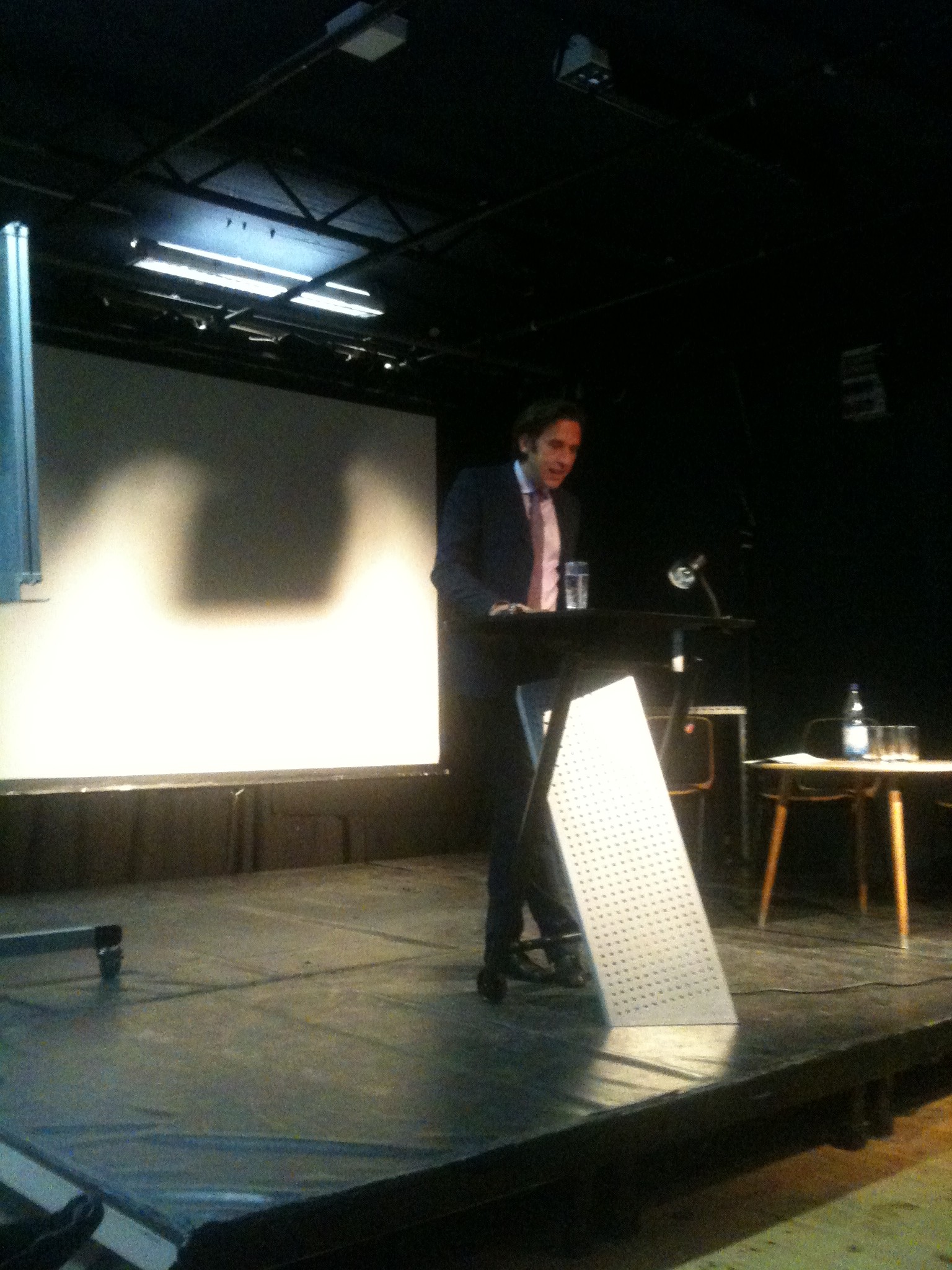
Claus Pias
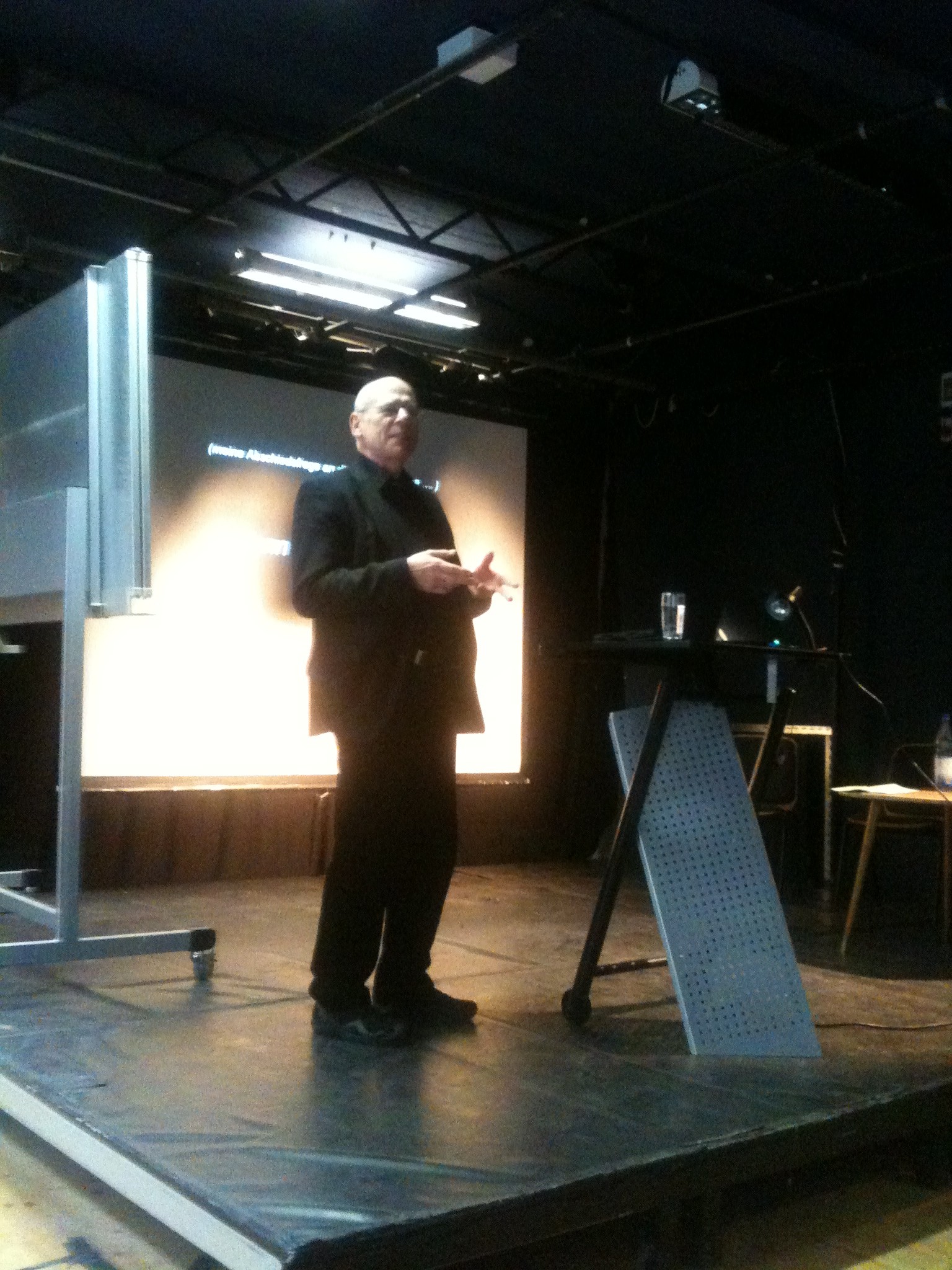
Wolfgang Hagen

Friedrich Kittler and the red wine.
Humm your code, “dah-dit-dah-dit”
Media amateurism has been an integral part of modern culture way before social media kicked in with its own DIY spirit. The electronic hobbyists and tinkerers of 1970s were themselves too preceded by so many earlier forms of learning communication and building circuits. Code-based culture does not then begin with software as we know it – from the emergence of computing and the much later emergence of computer languages as separate entities that relate to the mythologies of coders, hackers and controlling the hardware through the magical language of code (for a wonderful recent excavation into ontologies of software, see Wendy Chun’s Programmed Visions).
“Thousands of Radio Amateurs find it easy to Learn Code”, read a main title in Popular Science (March 1932), describing the process of getting a radio amateur license and the earlier technological discourse concerning machine-knowledge. Radio amateurism and wireless DIY of the earlier decades of 20th century represents itself perhaps one of the most important media archaeological reference points when thinking about contemporary technological DIY culture, and one can find interesting ideas from that discourse. The way knowledge about machines, code and the professionalism is standardized and practice is itself fascinating – DIY as a crash course into key scientific discoveries of modernity, practically applied. Electrical functions needed to be internalized into a hands-on skill, as the article describes: “You must first master the elementary principles of electricity as given in the simpler textbooks on the subject. Then you must apply the principles of magnetism and electromagnetic action plus an understanding of the radio vacuum tube to mastering simple radio transmitting and receiving circuits. […] You don’t have to know all the ins and outs of complicated radio broadcast transmitting circuits, nor do you require a detailed knowledge of elaborate receiving circuits such as the heterodyne.” (72)
This class of amateurs was however someone who was part of a nationally regulated standardization process flagging the importance of this system of transmission – this regulation had to do with technical knowledge, ethics and legalities as well as speed of communication, or skills more widely: The amateur operation license test was the way to become an operator – the mythical figure still living in such discourses as The Matrix-film(s), the one in charge of the communication field – what message goes where, interpreting of code, sending of things, packets, people to addresses.
But it was grey, this area of knowledge – or at least reading through the regulations. Take paragraph 9 of the Radio Division Regulations for Operators: “Amateur Class. Applications for this class of license must pass a code test in transmission and reception at a speed of at least 10 words per minute, in Continental Morse Code (5 characters to the word). An applicant must pass an examination which will develop knowledge of the adjustment and operation of the apparatus which he desires to use and of the international regulations and acts of Congress in so far as they relate to interference with other radio communications and impose duties on all classes of operators.” Speed – speeding up of communication as part of modernity – was something that was still tied to the skills of the operators, and slowed down by the human needing to be trained.
Code, as indicated in the passage, meant of course Morse Code. Dit-dit-dit-dah. A tip given in Popular Science relates to a sensory approach to code as not only abstract pattern but something that relates to your ears and mouths: “In memorizing the code, try to think of the letters as different sounds rather than as so many dots or dashes. Think of the letter C, for example, as “dah-dit-dah-dit” and as dash followed by dot, followed by dash, followed by dot.” (73) Carnal knowledge? Code in the flesh sounds much too poetic, but at least we could say, code in your mouth, ringing in your ears, feedback to your fingers tapping. Code, signal processing, transmission share so much with cultures of music, rhythmics, sound and voice.
(Forthcoming and related: a podcast interview with Paul Demarinis about hands-on, carnal knowing of technical media and media archaeological art.)
Transmit, Process, Store: Launch of Media Archaeology and Goodbyes to Sophienstrasse
 Welcome to our July 15 event at Institute of Media Studies, Humboldt University in Berlin – where we are both celebrating the launch of Media Archaeology and even more importantly, processing (excuse the pun) the closing of a certain era of German media theory. The by now legendary address of Sophienstrasse 22 is closing down and the institutes are moving premises. This is the address where Friedrich Kittler worked, and a whole generation of German media theorists can consider their alma mater…
TRANSMIT, PROCESS, STORE
Goodbye Sophienstrasse – Book presentation Media Archaeology
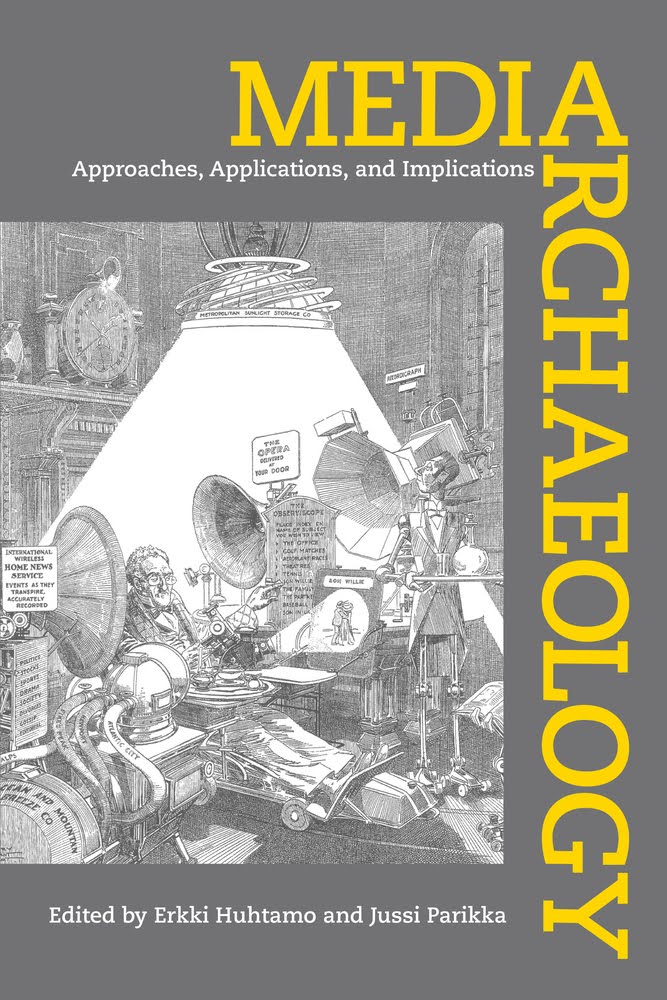
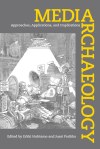
On the 15th of July 2011, the time of the Institute for Media Studies at Sophienstraße 22a is coming to an end and together with the other institutes, we will relocate to the Pergamon Palais on Kupfergraben, on the site of Hegel’s house. This transmission marks an occasion to bring together teachers, researchers, students and friends of Sophienstraße to process and store the times and ideas which emerged in this spot, in order to duly celebrate our farewell. Furthermore, we will present the new volume Media Archaeology, edited by our current research fellow Jussi Parikka together with Erkki Huhtamo.
We cordially invite you to join us in talks, discussion and celebration on Friday, July 15th 2011, starting 4 p.m. Berlin’s best book store Pro qm will be present with a book table.
Program:
Location: Medientheater (ground floor of Sophienstrasse 22a):
4 p.m.
Welcome: Prof. Dr. Wolfgang Ernst, Paul Feigelfeld und Dr. Jussi Parikka
4.15 – 5.45
Contributions by: Prof. Dr. Friedrich Kittler, Prof. Dr. Wolfgang Ernst, Prof. Dr. Claus Pias, Prof. Dr. Wolfgang Hagen
5.45
Book presentation “Media Archaeology” (University of California Press), edited by Jussi Parikka and Erkki Huhtamo. Talks and discussion with Jussi Parikka, Claus Pias, Wolfgang Ernst and Anthony Enns.
Followed by drinks and music, until security shuts us down.
A Manifesto for Digital Spectrology
Digital Spectrology is that dirty work of a cultural theorist who wants to understand how power works in the age of circuitry. Power circulates not only in human spaces of cities, organic bodies or just plain things and objects. Increasingly, our archaeologies of the contemporary need to turn inside the machine, in order to illuminate what is the condition of existence of how we think, see, hear, remember and hallucinate in the age of software. This includes things discarded, abandoned, obsolete as much as the obscure object of desire still worthy of daylight. As such, digital archaeology deals with spectres too; but these ghosts are not only

From the Microresearch Lab project pages "Detection workshop"
hallucinations of afterlife reached through the media of mediums, or telegraphics, signals from Mars, the screen as a window to the otherwordly; but in the electromagnetic sphere, dynamics of software, ubiquitous computing, clouds so transparent we are mistaken to think of them as soft. Media Archaeology shares a temporality of the dead and zombies with Hauntology. Dead media is never actually dead. So what is the method of a media archaeologist of technological ghosts? She opens up the hood, looks inside, figures out what are the processual technics of our politics and aesthetics: The Aesthetico-Technical.
– inspired by the work of MicroResearchlab – Berlin/London, the short text was written for Julian Konczak/Telenesia.
Ding to Process – Object (and Non-Object) Oriented Media Studies
(Originally a removal from the manuscript of Media Archaeology and Digital Culture, this short post reworked and posted here:)
With Bruno Latour at the forefront, several theorists in the humanities and social sciences have been pointing out that how through both scientific practices, political decision making, and media technological assemblages, non-humans play a crucial part in constituting the social. In fields such as speculative realism as well as “new materialism” there is an intensive engagement with how to renew our vocabularies of the material with philosophical, cultural and media studies tools.
Latour (2005) outlines this intertwining of matter and things as part of the body politic by the conceptual move from “object-oriented-software” to “object-oriented-democracy.” In fact, the usually non-technological, non-object body politic of modernity that we find from Hobbes onwards is actually filled with such stuff which is the assembly point of concerns, networks and themes political. Such “composite bodies” in foundational meditations of politics such as Hobbes’ are for Latour (2005: 6) actually
thick with things: clothes, a huge sword, immense castles, large cultivated fields, crowns, ships, cities, and an immensely complex technology of gathering, meeting, cohabiting, enlarging, reducing and focusing. In addition to the throng of little people, summed up in the crowned head of the Leviathan, there are objects everywhere.
Whereas Latour’s thoughts have been a crucial node in the recent debates concerning “object-oriented-philosophy” as well (see e.g. Harman 2009: 151-228), we are also able to extend such ideas to a neologism as “object-oriented-media studies.”
What would that mean? Perhaps in a Latourian spirit we could start paying more attention to how objects, or processes that are technologically defined, enable new forms of sociability and action, as well as politics and aesthetics, and for that, we need to understand much more about the circuits, switches, relays, cables, protocols, various levels of software, screen technologies, and electromagnetic fields which are the at times neglected “media” in the middle of our media relations. Such are the “phantoms” (cf. Latour 2005: 28, 31) that constitute, ontologies and conditions for knowledge of technical modernity, but also the way politics and the public is constituted in the liminal zone of objects, things and constructions of the social. Hence, similarly as we for Latour need to include our objects in our politics – and move from Realpolitik to Dingpolitik – perhaps we need more object and technology focused media studies?
And yes, objects do not need to be objects only. Increasingly, this is the way in which we need to rethink materiality – post-objects, post-object vocabularies, and more for instance in terms of processes, or for instance events (I am here thinking of the temporality of the calculational machine called computer, it’s cycles, halts and interrupts). 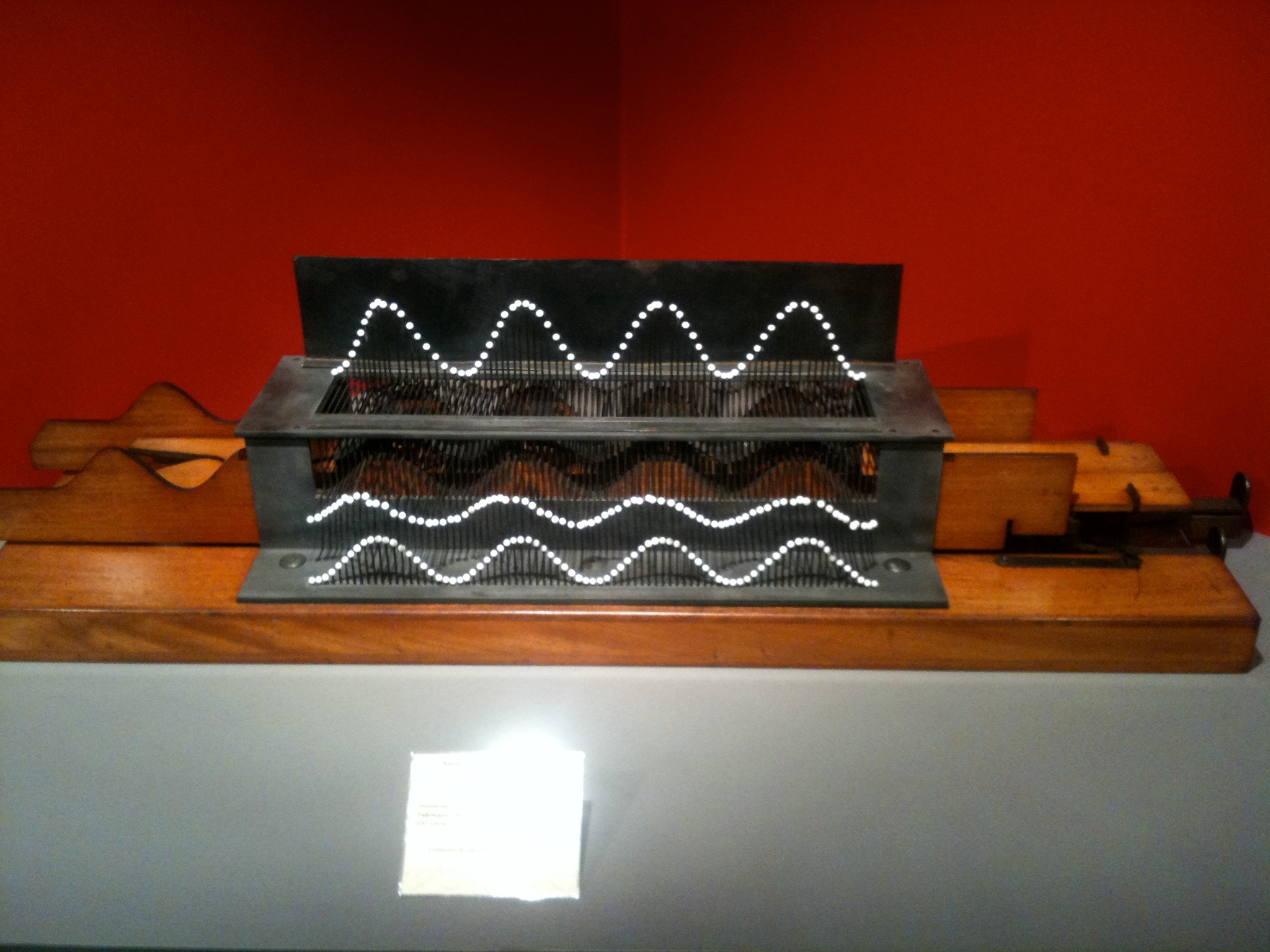
Media archaeology has been one rich curiosity cabinet collection, but how do we approach the non-object worlds of waves and streams, flows and cycles, oscillations and vibrations? Instead of things, it’s these materialities that we should turn to – both in terms of new materialist epistemology, aesthetics, as well as the political task of understanding the aesthetico-technicalities of cognitive capitalism.
Harman, Graham (2009) Prince of Networks. Bruno Latour and Metaphysics (Melbourne: re.press).
Latour, Bruno (2005) “From Realpolitik to Dingpolitik or How to Make Things Public, in Making Things Public – Atmospheres of Democracy, edited by Bruno Latour and Peter Weibel (Cambridge, MA: The MIT Press), 4-31”
ps. check out the recent-ish Mark Hansen talk, relates to process-oriented-media studies.








 Machinology