Archive
TOC for Media Archaeology
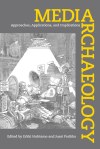
Some information on our forthcoming Media Archaeology: Approaches, Applications, Implications-book that we edited together with Erkki Huhtamo, forthcoming Spring 2011 from University of California Press… no cover image yet, and no table of contents online, hence I am posting at least the contents here! For clarity’s sake, this is the one that is ready, and I am writing at the moment another book, a single authored one on the same topic.
1. Introduction: An Archaeology of Media Archaeology –Erkki Huhtamo and Jussi Parikka
Part I: Engines of/in the Imaginary
2. Dismantling the Fairy Engine: Media Archaeology as Topos Study –Erkki Huhtamo
3. On the Archaeology of Imaginary Media –Eric Kluitenberg
4. On the Origins of the Origins of the Influencing Machine –Jeffrey Sconce
5. Freud and the Technical Media: The Enduring Magic of the Wunderblock –Thomas Elsaesser
Part II: (Inter)facing Media
6. The “Baby Talkie,” Domestic Media, and the Japanese Modern –Machiko Kusahara
7. The Observer’s Dilemma: To Touch or Not to Touch –Wanda Strauven
8. The Game Player’s Duty: The User as the Gestalt of the Ports –Claus Pias
9. The Enduring Ephemeral, or The Future Is a Memory –Wendy Hui Kyong Chun
Part III: Between Analogue and Digital
10. Erased Dots and Rotten Dashes or How to Wire Your Head for a Preservation –Paul DeMarinis
11. Media Archaeography: Method and Machine versus History and Narrative of Media –Wolfgang Ernst
12. Mapping Noise: Techniques and Tactics of Irregularities, Interception, and Disturbance
–Jussi Parikka
13. Objects of Our Affection: How Object Orientation Made Computers a Medium –Casey Alt
14. Digital Media Archaeology: Interpreting Computational Processes –Noah Wardrip-Fruin
15. Afterword: Media Archaeology and Re-presencing the Past –Vivian Sobchack
[edit 21/12/10]: Endorsement by Sean Cubitt:
“Huhtamo and Parikka, from the first and second generations of media archaeology, have brought together the best writings from almost all of the best authors in the field. Whether we speak of cultural materialism, media art history, new historicism or software studies, the essays compiled here provide not only an anthology of innovative historical case studies, but also a methodology for the future of media studies as material and historical analysis. Media Archaeology is destined to be a key handbook for a new generation of media scholars.”
– Sean Cubitt, author of The Cinema Effect
What is New Materialism-Opening words from the event
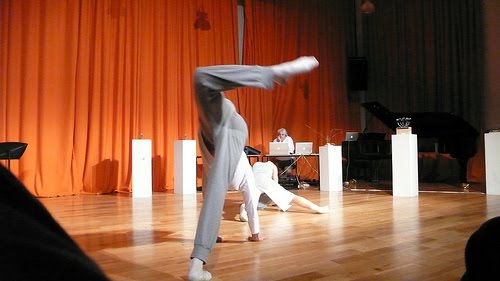
As promised, please find below the opening words to the recent New Materialisms and Digital Culture-event by Milla Tiainen and me. The event was filled with great talks by a range of scholars with differing disciplinary backgrounds, and ended up with the dance/technology-performance Triggered (composed by Cheryl Frances-Hoad, Tom Hall and Richard Hoadley, choreography by Jane Turner). In the midst of the text, images (taken by Tim Regan) from the performance and the conference. A warm thank you to all speakers, performers and our great audience in both parts of the day!
 NEW MATERIALISMS AND DIGITAL CULTURE
Anglia Ruskin University
CoDE: Cultures of the Digital Economy –research institute and Dept. of ECFM, convened by Milla Tiainen and Jussi Parikka
21-22 of June, 2010
Milla Tiainen and Jussi Parikka
Opening words: What is New Materialism?
I
As stated in the programme we’d like to begin by just briefly engaging with one of the key components, or actants, of the symposium’s setup: the concept of “new materialism.” The purpose of this is definitely not to identify a stable referent for that term so much as to point towards some of the problems it arguably connects with. Whereas I will in few words consider the concept’s broader resonances across current cultural, social and feminist theory, Jussi will subsequently comment on ‘new materialist’ modes of questioning in conjunction with digital media culture.
Aptly, there are three books forthcoming soon whose respective titles include the concept “new materialism”—while it in each case links with varying further concepts and associated planes. “New Materialisms: Ontology, Agency, and Politics”, to be published by Duke, features such writers as Rosi Braidotti, Sara Ahmed and Jane Bennett; the essay collection “Carnal Knowledge: Towards a New Materialism through the Arts” is edited by Barbara Bolt and Estelle Barrett and involves contributions by Australian and European scholars including a chapter by Jussi and myself; and two of the speakers of this symposium, Iris van der Tuin and Rick Dolphijn, are currently working on a book on philosophy of science that is entitled “New Materialism” and will come out later this year. Thus, as these particular ‘capturings’ of ongoing research for their part evidence, the concept of new materialism is increasingly partaking in the flows of language and thought of specific areas of cultural and critical thought; its “rhythms of arrival and departure”, to borrow Brian Massumi’s expression (Parables for the Virtual 2002, 20), as well as connections with various other concepts are becoming growingly regular and rich in intensity within these flows. A momentum of at least some intensive magnitude is gathering round “new materialism.” Or, perhaps better put, the concept is being utilized so as to try and couch such a momentum which is unravelling transversally across fields of inquiry whilst at the same time displaying a notable degree of consistency in terms of the implicated topics of concern.
What, then, are the problems that would lend “new materialism” its meaning or usefulness? Evidently, the precise configurations of sense and effect that the concept invokes are singular to its every usage along with being more generally in the making within the debates involving it. At its broadest, nonetheless, new materialism can be said to concern a series of questions and potentialities that revolve round the idea of active, agential and morphogenetic; self-differing and affective-affected matter. Indeed, this summary would probably be endorsed by most proponents and sceptics of new materialisms alike. To be sure, this ideational assemblage or its part-problems have also already inspired incisive critique from prolific scholars. These critics remain unconvinced about both ‘new materialism’s attempts to reconfigure the persistent dichotomies of nature/culture, body/thought, concrete/abstract etc. and the allegedly dubious politics of the category of the ‘new’ in the concept of new materialism. To paraphrase one prominent critic, Sarah Ahmed (it will be interesting to see what her contribution to the New Materialisms essay collection looks like!), the new materialist conceptions of dynamic human and non-human materialities that acquire shapes, operate and differentiate also beyond human perception and discursive representational systems are, at least within feminist new materialisms, in danger of positing matter as an it-like fetish object precisely because of their insistence on its ontological distinctiveness (Ahmed, “Imaginary Prohibitions: Some Preliminary Remarks on the Founding Gestures of the ‘New Materialism’” 2008, 35). This fetishizing is moreover enabled, according to Ahmed, by strategic amnesia regarding the previous rich engagements with biology, the body and matter that were carried out within science and technology studies and other areas of human and social sciences (again her focus lies mainly in feminist genealogies). Ahmed therefore concludes that despite intentions to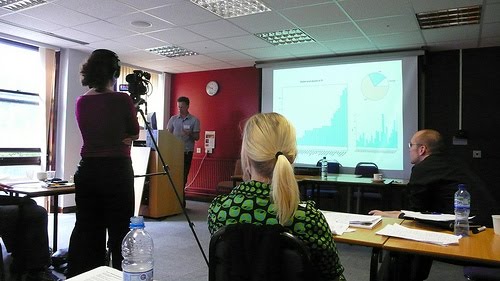 the contrary many new materialist gestures actually solidify rather than ‘fluidify’ the boundaries between nature/culture and matter/signification. At the same time these projects’ declarations of the newness of their endeavours conveniently conjure up an image of theorists who embark “on a heroic and lonely struggle” (32) against the collective non- or anti-materialism of former cultural and social-theoretical stances.
Now unhinging and confounding habitual dual oppositions remains undoubtedly a challenge for any ‘new materialist’ (as well as a theoretically differently oriented) project. Yet in order to end my part of these opening words I would like to point out three aspects that go some way in responding to the criticisms Ahmed presents—along with hopefully resonating with the talks of today.
Hence:
1) First of all, one of the signalling features that cuts across the heterogeneous projects we would like to propose as new materialist is their sustained commitment to developing models of immanent and continuously emergent relationality. Through insisting on the felt reality of relations for instance in the wake of William James, on the irreducibility of the in-betweens to the connecting terms, and on the intensive topological spaces of co-affectivity these models, we would argue, provide some of the most effective means on offer at the moment for thinking past the traditional rigid dualisms of nature/culture, subject/object and so on and for articulating the intuited processual co-substantiality of these facets.
2) Secondly and connectedly, the notion of the outside or virtual, which within new materialist undertakings relates or overlaps with such more specific concepts as affect, potential and variation, certainly diminishes the risk of ending up with a re-essentialized and reified conception of matter.
3) Thirdly and finally, we would like to think that the newness in the ‘new materialism’ refers less to a discrete stage let alone a point of culmination on a teleological line of theoretical understanding than to a multiplicity of attempts to live with newly composed problems whilst refreshing the vocabularies of cultural, artistic and feminist theory with “conceptual infusions” (Massumi 2002, 4) from hitherto overlooked or presently rediscovered sources.

II
In the context of digital media culture, the notion of “materiality” occupies a curious position in itself. As observed by Bill Brown in his entry for the recent Critical Terms for Media Studies (Chicago UP, 2010), our understanding of the media historical modernity has been infiltrated early on with the idea of “abstraction” — abstraction as a driving force (as with standardization of techniques, processes, and messaging) and an effect (represented in forms of power, subjectivities, cultural practices) of modernity. Recognized by a range of different writers from Karl Marx to Debord and Baudrillard, such a process has been influential in forcing us to rethink not materiality but dematerialisation as crucial to understanding the birth of technical media culture. Regimes of value, and regimes of technical media share the same impact on “things” – homogenisation, standardisation, and ease of communication/commodification in a joint tune with each other are in this perspective, and a perspective that branded critical theory for a long time, crucial aspects in any analysis of media culture’s relation to materiality.
Hence, the move from the critical evaluation of emergence of capitalist media culture seemed to flow surprisingly seamlessly as part of the more technology-oriented discourse concerning “immateriality” of the digital in the 1980s and 1990s. Here, in a new context, materiality was deemed as an obsolescent index of media development overcome by effective modes of coding, manipulating and transferring information across networks that become par excellence the object of desire of policies as much cultural discourses.
Yet, the recent years of media theory introduced an increasingly differing elaboration of how we should understand the notion of “medium” in this context. Instead of being only something that in a Kantian manner prevents access to the world of the real or material, or things (Brown, p.51) the medium itself becomes a material assemblage in the hands of a wave of German media theorists, who have develop a unique approach to media materialism, and hence new materialist notions of the world. Here the world is not reduced to symbolic, signifying structures, or representations, but is seen for such writers as Friedrich Kittler (and more recent theorists such as Wolfgang Ernst in a bit differing tone under media archaeology) as a network of concrete, material, physical and physiological apparatuses and their interconnections, that in a Foucauldian manner govern whatever can be uttered and signified. This brand of German media theory came out as an alternative exactly to the Marxist as well as hermeneutic contexts of theory dominating German discussions in the 1960s-1980s, and carved out a specific interest to the coupling of the human sensorium with the non-human worlds of modern technical media. In this insight, and ones shared by writers such as Jonathan Crary, on the one hand, the birth of modern media culture owed to the meticulous measuring of the human sensorium in various physiological settings and extending to experimental psychology labs in the late 19th and early 20th century. On the other hand, modern technical media showed such wavelengths, speeds, vibrations and other physical characteristics in itself that it escaped any phenomenological analysis, and hence tapped into a material world unknown per se to humans.
Without wanting to sound too reductionistic, I believe this is one of the key directions where media theory more recently has developed its own enthusiasm concerning a new more material understanding of media. Naturally filtered into new contexts, and transforming the way it works, such directions have however inspired also in the Anglo-American world new directions, new interests in material constellations of “platforms, interfaces, data standards, file formats, operating systems, versions and distributions of code, patches, ports and so forth”, to paraphrase Matthew Kirschenbaum. Naturally, post-representational approaches are present in a wide range of work and other thinkers, from the Deleuze-inspired cinematic philosophies of Steven Shaviro to sociological ideas of Nigel Thrift, the new materialist mappings of subhuman bodies such as blobs by Luciana Parisi to the politically tuned analyses of network culture of Tiziana Terranova — and the range of theories and theorists we are able to enjoy today.
Indeed, if I would be forced to summarize the intimate link between the analytical perspectives that go under the general umbrella term New Materialism and media theory and digital culture, it would have to do with at least three directions
1) The seemingly immaterial is embedded in wide material networks; information is informed by the existence of material networks, practices, and various entanglements, that expand both to the materiality of political economy of ownership, access and use, but also to the material assemblages which govern the way we are in media milieus.
2) Yet, technical media is also defined by non-object based materialities, which makes it slightly more difficult to conceptualise. As a regime of electromagnetic fields, of pulsations, electricity, and such fields as software, technical media and digital culture escape the language of solids.
3) The intimate connection between the dynamic human/animal body and media tech, which since the 19th century and for example experimental psychology labs has now extended to the various design practices in HCI and such that tap into the physiological thresholds of the human being in novel ways – hence the interest in affect, emotion, non-conscious and s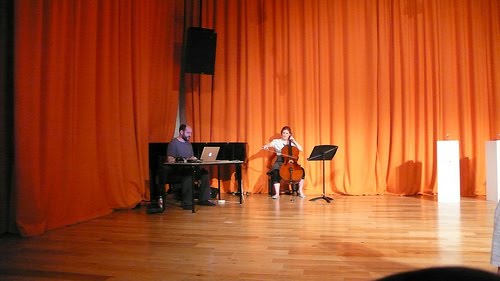 omatic levels of the human body, and emergence of various forms of interfacing, whether from the consumer tech of Kinect-gaming body-in-movement-meets-Xbox interface to still very aspirational Brain-2-Brain, B-2-B, networking and such. Its here that the knowledge about the kinetic, dynamic, and relational body feeds into understanding the moving-situatedness of us in mobile network cultures.
Wolfgang Ernst in Cambridge talk — Media archaeology
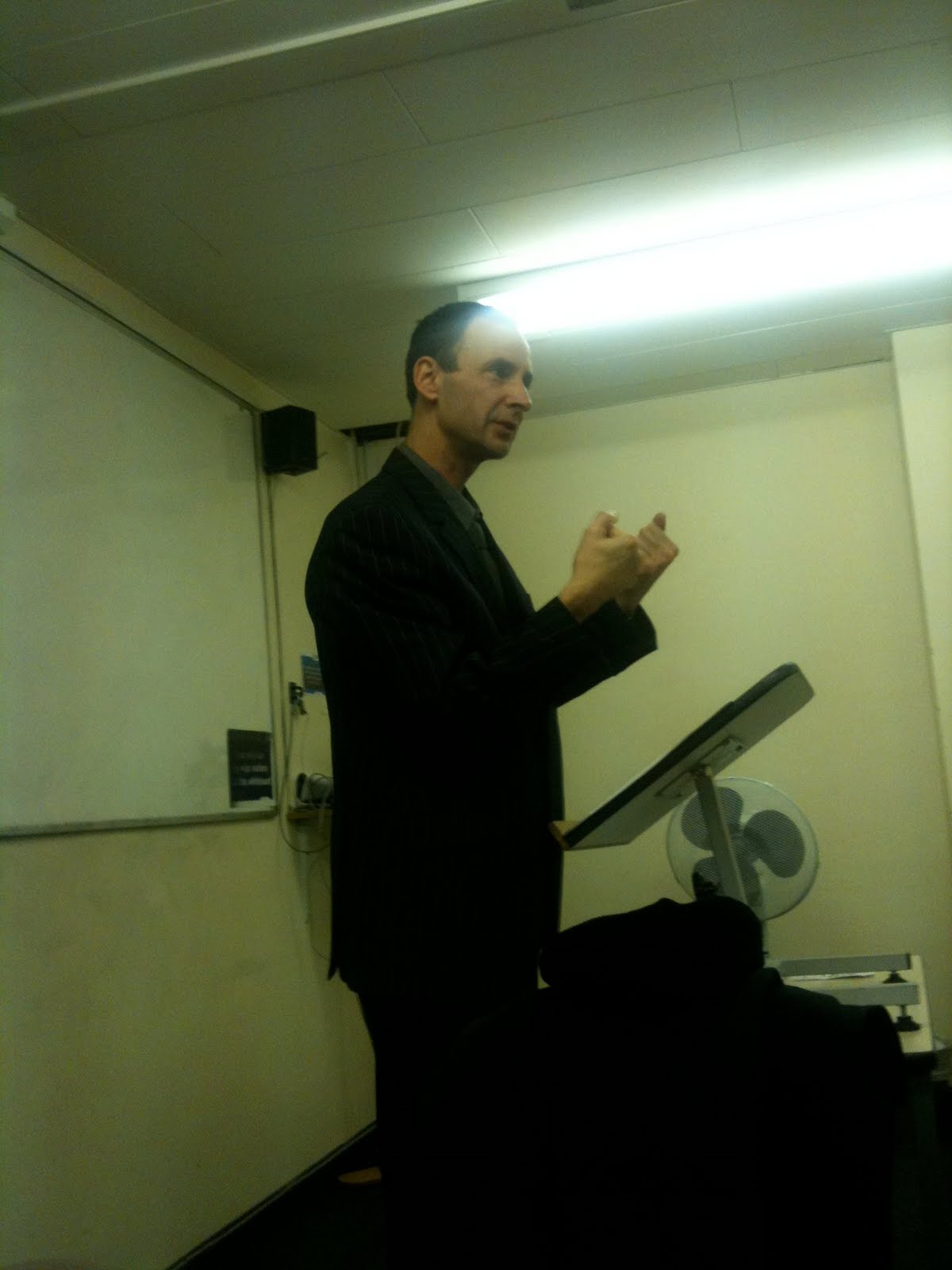
We had the pleasure of hosting a talk (November 18, 2009) by professor Wolfgang Ernst from Humboldt University Berlin, who is not only someone who is continuing the spirit of the almost legendary Sophienstrasse 23 address (where Kittler worked as well) but is as much a representative of the new wave of German media theory that still remains to a large extent to be translated. It is rare to hear these German scholars in Anglo-American contexts so our ArcDigital talk was even more significant in this sense of really tapping into what is new and fresh in international media studies.
Ernst’s talk on media archaeology as a method and a theory really introduced the various radical implications that his brand of doing media archaeology has. I have already before pointed towards the points about “operative diagrammatics” or media history that his take on the past and present media encompasses, and the talk outlined well the positions — even provocative – where he wants to place media studies. What the audience was left with was a number of positions and claims/challenges to tackle. To me, these include:
1) media studies is not only cultural studies, or even cultural technics, but something Ernst wants to brand as cultural engineering. Media studies should be an exact science, not (only?) about semantics and semiotics as he provoked but leaning towards the mathematical conditions of our techno-condition. I.e. media studies curricula should include mathematics. The only way to understand digital media, or technical media more generally, is to understand how it puts mathematics into operation, makes formulas into commands, and how engineering routes and automates so many functions that we mistake as human.
2) Media archaeology is processual, it focuses on the time-critical processes which engineer our lives. This means that media archaeology does not tap only to the past but can dedicate itself to opening up technologies in an artistic vein. Ernst’s examples of media archaeological arts were actually less about artists working with historical material than about hardware hacking, open software and circuit bending. Media archaeology is hence also about microtemporal processes. For an example on such media artistic practices, see the Microresearch lab in Berlin.
3) Arche is not only the beginning but in the Derridean sense a command as well. Archaeology as the beginning of our techno-condition is an active command, perhaps execution in the software sense, of orders, procedures and patterns/routines. Ritualistic but not in the human-religious sense, perhaps?
4) Media archaeology does not narrate, it counts. Because machines do not narrate, they count. Counting, algorithmics etc. precede narration.
5) So why not just relegate media archaeology as part of sciences faculties? Because it is still interested in the epistemological conditions in which the commands, executions and operations take place. This seems to point towards the political contexts of media archaeology, but gets rarely articulated in this brand of German media theory. Still, I would argue, it is radically political and taps into the political economic condition of closed systems, opening them up, and teaching that institutionalised conditioning as contingent. Universities then have according to Ernst a special situation, and a responsibility, to open up systems.
6) Media archaeology is a-historical, even unhistorical perhaps. It is not necessarily about contextual information about past media, but creating such situations where you get into contact with media in its radical operability and temporality. Archives in this sense are time-machines; Ernst told us about going to King’s college library to see Turing’s unpublished papers earlier that day, and that situation was branded not by a historian’s interpretative touch but by sharing the mathematical situation in its non-historical presentness. This applies again to machines as well; their functioning operations are the media archaeological moment that is at its core un-historical.
7) Machines are agents of history as well. They record, transmit, and do not always ask for a permission from the human being.
8) Media archaeology has some connection with software studies. Ernst pointed the connections to Manovich’s point about the double-nature of software studies between the cultural interface and the computational heart. I would add, both share an appreciation of processuality.
9) Provocation is almost methodological to Ernst and certain brands of German media theory.
Questions that I did not have the chance to ask:
What are the implications of this approach to the cultural heritage, display and archiving of culture in the age of technical machines – or culture of technical machines? I am guessing it has to do with processuality, with such methods of curating and archiving that are able to articulate the lived (machine-lived) temporality of such technological assemblages. How do you curate or archive software is a related question, but it also touches on earlier technical media such as radios and televisions. Furthermore, it has to do with the generalisation of the notion of the archive with new modes of distributed archiving, digital objects, and such.
What is time-criticality? I still cannot get my head around it completely, i.e. the question of how it differs from time-based processes? Video artists etc. are doing a splendid job as articulators of temporality and materiality, but where does the dividing line between time-based and time-criticality lie?
Wouldn’t it be possible to develop more positive and affirmative relations with some emerging cultural analytical approaches that come from e.g. the Anglo-American world? This point I flagged already in my short post on the Zeitkritische medien-book, and I keep on insisting that perhaps we can find the common areas of interest and shared agendas with such approaches as media ecology (á la Fuller), radical empiricism and Whitehead (Massumi) and e.g. feminist studies of science and technology (for example Barad).
Time-Critical Media – a short reminder of a book that deserves attention
I have flagged in many contexts my interest for new materialist cultural analysis, and how it should be articulated together with a new sense of temporality. When I say “a new sense” it’s a bit misleading, but I mean the rigorous rethinking of temporality that we find across the board from Delanda to Whitehead-inspired accounts and so forth. Whereas Grossberg already pointed towards a non-signifying accounts as a mode of spatial materialism, we need to develop similar approaches that stem from radical temporality; that the world outside the human being is too dynamic, unfolding, temporal; that temporality is itself folded together with the various material assemblages of the world; that temporality is a crucial non-human force we need to articulate to understand the molecular, as well as the long durations of nature (not least in the midst of our eco crisis).
One key context for my interests comes again from Germany, and has been recently been “summed up” as a book. Axel Volmar as the editor of Zeitkritische Medien (Time-Critical Media, Kadmos Verlag, Berlin, 2009 ) has done a good job in collating together recent trends in German media theory, and approaches to the very peculiar, but even more so exciting version of media archaeology that they have been developing in the Media Studies department at Humboldt University, Berlin. Under the guidance of Professor Wolfgang Ernst, the notion of “time-criticality” and an eye towards temporal processes as a key to understand modern technic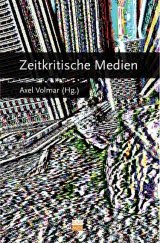 al media we find a brand of media archaeology that extends not so much historically into past media but towards the microscopic workings of media machines; and how they modulate time, and the structuring temporal processes of societies.
By digging into the “microtemporalities” of media machines the introduction and the chapters try to excavate how such micro-layers are articulating the perception of reality. This means extending the media studies agenda (not surprisingly as we are in the territory of German, Kittlerian inspired media theory after all) to non-human agents and processes that however structure the phenomenological worlds of our perception and reality-effects as well. This leads furthermore to the realisation of the new realms of relations between machines themselves — no link to the human is always needed in the age of automated processes and machines communicating between themselves before they talk to the human (Guattari — who however is missing as theorist from this volume).
Paul Virilio who is well used in this book has argued for the importance of time and speed for war (and hence a link to media as well), but this book extends this to a very meticulous technical excavation into the dispositifs of how actually time gets articulated and articulates media. Technophobes beware! This brand of German media theory is not afraid of getting its hands greasy, whether we are talking of analogue media or digital algorithms (or algorythmics as Shintaro Miyazaki extends the concept in his chapter). This is where Virilio’s ideas gain real strength, or a new context when by systematic and rigorous steps machines and technologies are opened up from the logic of bitmapping (Peter Berz) to the problems of noise and signal-transmission (Hirt and Volmar).
It would be crucial to see more work of this kind in English in order to really start rethinking fundamentals of media studies. This is happening already, partly due to a Kittlerian influence, and other new waves coming e.g. from Italy (post-Fordist thought), France (e.g. Latour, Guattari, Deleuze of course) and onwards to e.g. games (Pias) with an amount of chapters that with ease move between visual media, the sonic and computational platforms. But definitely new German media studies and archaeology has a lot to say to the problems of materiality of technical media. It would benefit itself from a more elaborated discussion and joining of forces of some other similar approaches that come from different directions. Ideas of temporality have been developed e.g. in materialist feminism (Barad) and e.g. Whitehead inspired radical empiricism (Massumi, Mackenzie,etc.) and through creations of new circuits for circulation of ideas, we could have soon something really exciting on our hands. Well, the previous sentence was not to mean that all this stuff is not already that — exciting. Just that developing such creative clashes might be seen as a good method for movement of thought. Of course, its not the Germans who are the only ones doing this work; recently I have been following the stuff coming out from Utrecht direction as well whether in terms of some of the feminist work in the wake of Braidotti but also the great ideas from the New Media and Digital culture programme who also address materiality with historical, temporal methods.
Anyhow, media studies is developing into a great articulation of the interlinks between science, art and cultural analysis/philosophy, and we need to keep this movement alive with more translations and engagements. Such are the directions where UK media studies field should turn its attention to.







 Machinology